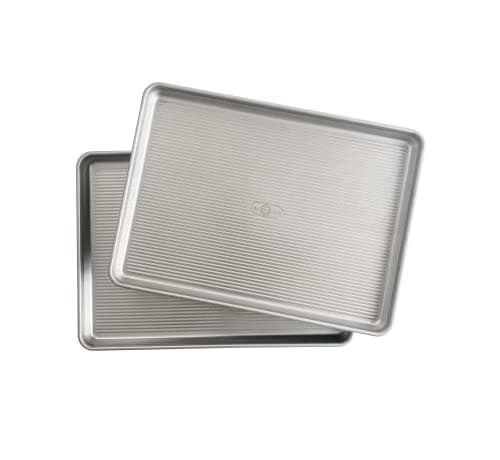
Buy the USA Pan half sheet 2-pack if you want one answer: it is the closest like-for-like alternative to the Nordic Ware Naturals sheet pans most people own, in aluminized steel with USA Pan's PTFE-free Americoat surface and a published 450°F ceiling — so you get a release coating where the Naturals pan has none. Shape by shape: the USA Pan 1085FT fluted tube pan is the coated substitute for a Bundt, Fat Daddio's anodized 8 x 3 pans are the layer-cake alternative and the only pans here rated to 550°F, the USA Pan 1140LF replaces a Naturals loaf pan at the true 8.5 x 4.5-inch size, and the 1200MF is the muffin pan. The budget pick is the Chicago Metallic Commercial II 9-inch round, which is also the only pan on this page published as dishwasher safe — which, as you will see, is half the reason people look for an alternative at all.
What Nordic Ware is known for
Worth being accurate about, because the alternatives only make sense against it.
Nordic Ware's Naturals line is bare, uncoated natural aluminum with an encapsulated steel rim, made in Minneapolis and sold under a lifetime warranty. Light aluminum conducts heat fast and browns gently and evenly rather than aggressively, which is why half-sheet pans in professional kitchens look like this and why a sponge baked in a Naturals round comes out level and pale-golden. There is no coating, which means there is nothing to scratch, blister, or wear out in year three. On the uncoated commercial muffin pan Nordic Ware publishes a 500°F oven rating — higher than any coated pan on this page.
The company also created the Bundt pan, and its cast-aluminum Bundt is still the reference for that shape: a thick, heavy casting holds and releases heat slowly, which is what prints a crisp fluted edge instead of a soft rounded one. Nordic Ware publishes 425°F for the Original Bundt and makes it without PFAS.
None of the pans below beats that on even browning, and none of them beats a coating-free pan on having nothing to fail. If you line pans with parchment as a matter of habit, the honest recommendation is to keep buying Nordic Ware — our Nordic Ware roundup ranks the line on its own merits.
Why people look for an alternative
Four reasons, and the first two come from Nordic Ware's own published guidance rather than from any complaint we are making.
1. There is no coating, so release is your job. Bare aluminum is not a release surface. Every Naturals bake needs greasing and flouring, or a parchment round, or paper liners — and for the shapes where that is hardest (a fluted tube pan, a muffin well, a tall cake), a coated pan is simply easier. This is the single most common reason people switch, and it is a preference about process, not a defect.
2. Nordic Ware says hand wash. Dishwasher detergent and heat discolor bare aluminum permanently, which Nordic Ware states plainly. If your household loads everything into the machine, an uncoated aluminum pan will not survive that routine looking like a pan you want in the kitchen. Coated aluminized steel is the usual answer, and the Chicago Metallic Commercial II pan here is explicitly published as dishwasher safe.
3. Aluminum darkens and mottles. Purely cosmetic — a darkened pan bakes the same — but it is real, it is permanent, and plenty of people would rather have a pan that still looks new. Hard-anodized aluminum (Fat Daddio's) and coated steel both age more gracefully.
4. The oven ceiling, in one specific case. The cast Original Bundt publishes 425°F, which is fine for every cake recipe and a limit if you want to use a fluted pan for something hotter. The coated USA Pan fluted tube publishes 450°F and the anodized Fat Daddio's pans are rated to 550°F. Note that this cuts both ways: the uncoated Nordic Ware muffin pan publishes 500°F, above the coated pans.
A fifth reason shows up in the search suggestions and we cannot solve it: people outside the US looking for a locally stocked equivalent. Every price and listing on this site is the US Amazon market, so if you are shopping elsewhere, use this page for the specifications to match — aluminized steel, a published coating, a published ceiling — rather than for the links.
What switching costs you
Three honest trades, stated before the picks rather than after.
A coating is a consumable. Americoat and the Commercial II coating are both good and neither is permanent. Metal utensils, abrasive pads and stacking pans unprotected all shorten a coating's life, and when it eventually degrades the pan is finished in a way an uncoated pan never is. USA Pan's lifetime warranty covers manufacturing defects, not a worn surface.
Coated pans usually publish a lower ceiling. 450°F on the USA Pan range against 500°F on Nordic Ware's uncoated muffin pan. For cake, cookies, muffins and quick breads that difference is theoretical. For high-heat roasting on a sheet pan, it is not, and bare aluminum is the better pan.
Darker pans bake darker. The gentler, more even browning of light bare aluminum is a genuine advantage, particularly for a long sugary bake. Coated aluminized steel is darker and absorbs more radiant heat, so edges set sooner. Our aluminum versus nonstick comparison goes into that trade in detail, and if even browning is your priority, it argues for staying put.
Shape by shape
Sheet pans
The USA Pan half sheet 2-pack is the direct swap: aluminized steel, the Americoat silicone-based coating, a published 450°F maximum, a wire-reinforced rim and a lifetime warranty, sold as a pair exactly as the Naturals pans are. Where the Naturals pan makes parchment effectively mandatory, this one releases a cookie on its own. The corrugated base is USA Pan's own signature and does change airflow under the pan. Compare the two directly in our Nordic Ware versus USA Pan baking sheet comparison, and see the whole category in the best baking sheets.
Bundt and fluted tube pans
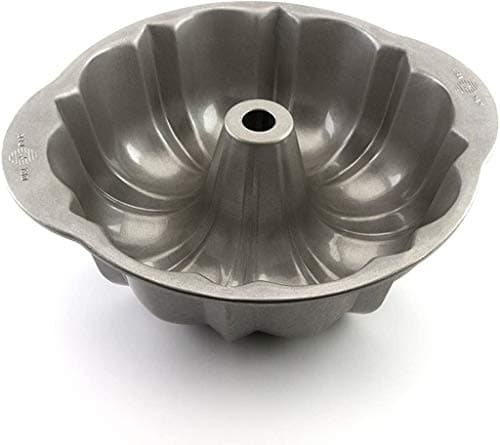
This is the shape where a coating earns the most, because greasing every flute of an intricate pan is the fiddliest job in baking and a stuck Bundt is unrecoverable. The USA Pan 1085FT is 10 inches across and 3.75 inches deep in aluminized steel with Americoat, published to 450°F. What you give up is the thing the cast pan is best at: a thin formed-steel pan prints a softer edge than a heavy casting, so a highly decorative pattern comes out less sharp. If the pattern is the point, buy the cast pan and grease it properly — our Bundt pan roundup covers both.
Round cake pans
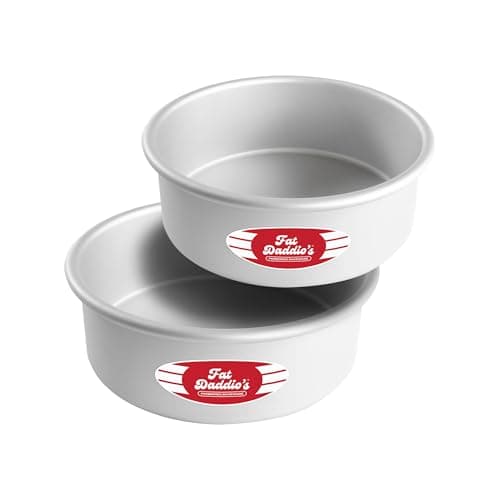
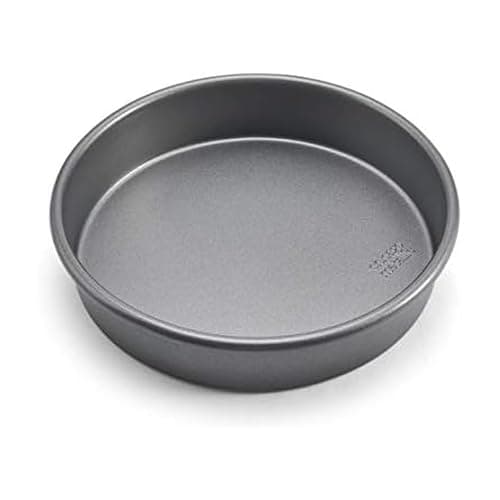
Two answers depending on budget. Fat Daddio's PRD-83SET is the upgrade: 16-gauge hard-anodized aluminum, 8 x 3 inches of straight-sided interior, rated to 550°F and covered by a lifetime warranty. Anodized aluminum keeps aluminum's browning behavior while being harder and far more resistant to discoloration, and the extra depth gives you a tall layer you can torte. The Chicago Metallic Commercial II 9-inch round is the budget pick: a coated aluminized steel pan at a fraction of the price, published dishwasher safe, which is the one box bare aluminum cannot tick. Both sit in the best cake pans.
Loaf pans
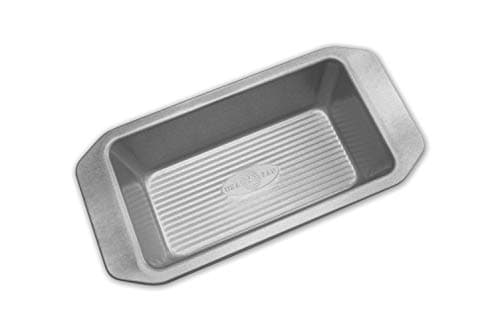
The USA Pan 1140LF is the coated answer at a true 8.5 x 4.5 x 2.75-inch interior — the size most yeast sandwich-bread recipes are actually written for, where the Naturals pan is the larger 1.5-pound quick-bread size. Aluminized steel, Americoat, 450°F, made in the USA. See USA Pan versus Nordic Ware loaf pan for the head-to-head and the best loaf pans for the field.
Muffin pans
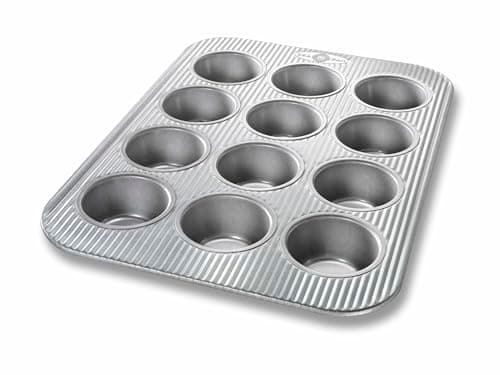
The USA Pan 1200MF is the coated 12-well alternative, with published well dimensions and the same Americoat surface, for people who want to bake muffins without liners. Be clear-eyed about the comparison, though: Nordic Ware's uncoated commercial muffin pan publishes a higher oven rating and has no coating to fail, so this is a straight release-versus-longevity choice rather than an upgrade. The best muffin pans ranks the category.
Coated or uncoated: pick the routine you will actually follow
That is the whole decision, and it is worth saying in one line: buy uncoated if you will line and hand wash pans, buy coated if you will not.
A coated pan forgives a baker who forgets the parchment and loads the dishwasher. An uncoated pan forgives a baker who scrapes with a metal spatula and keeps the same pan for thirty years. Neither is better in the abstract, and the common failure is buying one and treating it like the other — which is how uncoated pans get a reputation for sticking and coated pans get a reputation for not lasting.
If you want to go the other way entirely, our uncoated bakeware roundup is the coating-free set, and alternatives to USA Pan is this page in reverse — where, for the same reasons in the opposite direction, Nordic Ware is one of the answers.
How to switch without regretting it
Match the size, not the name
Nordic Ware's Naturals loaf pan is the 1.5-pound size, which is close to a 9 x 5, and the USA Pan equivalent on this page is the smaller 8.5 x 4.5. Those two pans are not interchangeable for a yeast dough: the same dough climbs in the smaller pan and spreads in the larger one. Check the interior dimension your recipe assumes before buying a replacement — see how to choose a loaf pan.
Grease a coated pan anyway, the first few times
A new coating releases almost anything. A coating two years into its life releases most things. Greasing a coated pan costs nothing and is the difference between a cake that leaves cleanly in year three and one that tears. For fluted pans, use softened butter and a brush into every groove, then flour it.
Keep metal away from the coating
No knives cutting portions in the pan, no metal spatulas, no abrasive pads, no scouring powder. Slide a silicone or nylon tool under the edge instead, and stack pans with a sheet of paper between them so they do not grind against each other in the cupboard.
If you keep the Nordic Ware pans, line them
Parchment on sheet pans, a parchment round plus greased sides for cakes, paper liners in muffin wells. That is the routine bare aluminum is designed around, and it is quicker than it sounds once it is a habit. How to grease and line a loaf pan covers the technique for the awkward shapes.
Do not mix the care routines
The one rule that spans both camps: put nothing uncoated in the dishwasher, and put nothing coated under an abrasive pad. Most bakeware that dies young died of being treated like the other kind of pan.