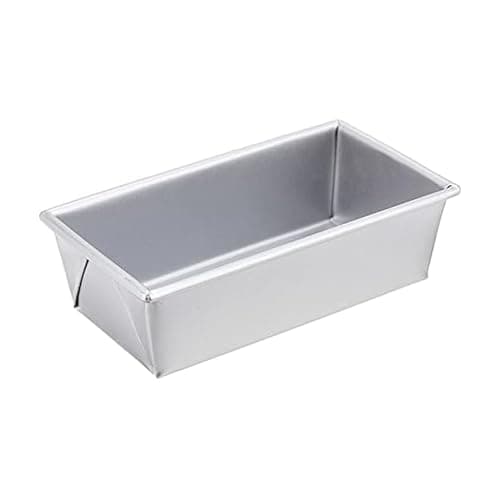
Buy the USA Pan American Bakeware Classics 1-lb loaf pan. It has a true 8.5 x 4.5-inch interior, and that is the whole answer: a standard yeasted sandwich loaf built on about three cups of flour is sized for an 8.5 x 4.5 pan, and in the 9 x 5 pan most households actually own, the same dough spreads sideways instead of climbing and you get a short, wide loaf with slices too small for a sandwich. Add heavy aluminized steel, a fluted surface, a steel-wire-reinforced rim and a PTFE-free Americoat coating that releases without a fight, and it is the pan to buy. Take the Chicago Metallic Commercial II instead if you would rather have no coating at all — same footprint, same gauge, nothing to wear out, usually cheaper, and you grease it every single time. Take the USA Pan Pullman with lid if you want genuinely square slices with flat tops. The Nordic Ware Naturals 1.5-lb is here as the pan to buy instead if your loaves are banana bread rather than sandwich bread.
The spec that decides this, and why nobody mentions it
Loaf pans are sold in two sizes that look almost identical on a shelf: the 1-pound pan, with roughly an 8.5 x 4.5-inch interior, and the 1.5-pound pan, with roughly 9 x 5. One inch of length and half an inch of width does not sound like a decision. In a yeasted loaf it is the decision.
A yeast dough rises by pushing against whatever constrains it. In a pan with tight walls the dough has nowhere to go but up, so it climbs, and you get the domed, tall loaf with a tight crumb that slices into sandwich-shaped pieces. Give the same dough another inch of floor and it spreads to fill it first, rises second, and comes out low and wide — the loaf people describe as having “not risen,” when in fact it rose fine and simply rose outwards. King Arthur's own guidance on choosing a bread pan, cited below, makes the same point: match the pan to the dough weight.
Quick breads behave the opposite way, which is why the bigger pan exists. Banana bread, zucchini bread and pound cake are chemically leavened batters, not doughs: they have no gluten structure to climb with, they are wet and heavy, and in a tight pan the middle is still raw when the edges have set. They want the 9 x 5. Buying one pan for both jobs means getting one of them wrong, and the pans cost little enough that owning both is the sane answer.
Published dimensions of the four picks
| Pan | Published size | Surface | Oven ceiling | Right job |
|---|
| USA Pan Classics 1-lb (1140LF) | 8.5 x 4.5 x 2.75 in | Americoat, PTFE-free | 450°F | Yeasted sandwich loaves |
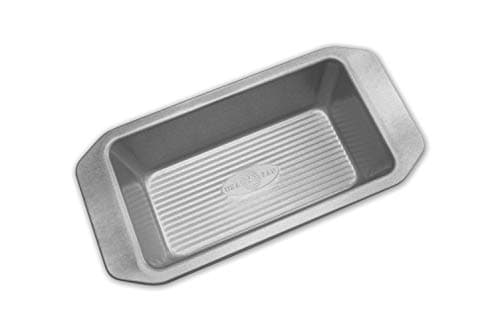
| Chicago Metallic Commercial II 1-lb | 8.5 x 4.5 x 2.75 in | Uncoated aluminized steel | Not published | Sandwich loaves, no coating |
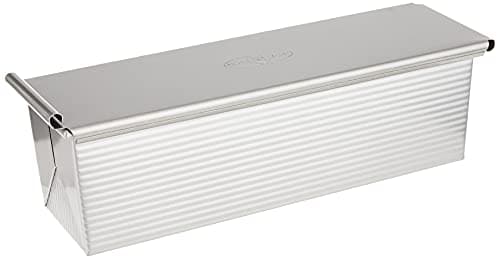
| USA Pan Pullman with lid | 13 x 4 x 4 in | Americoat, PTFE-free | 450°F | Square-sided pain de mie |
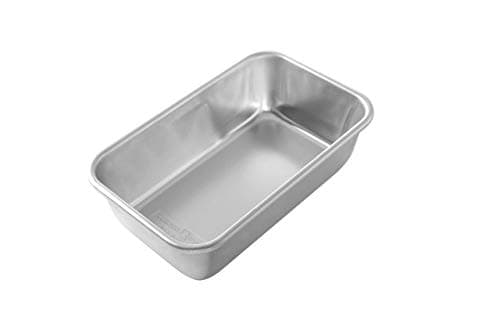
| Nordic Ware Naturals 1.5-lb | 9.1 x 5.3 x 2.8 in inside | Uncoated aluminum | Not published as a limit | Banana bread and quick breads |
Dimensions are the manufacturers' published figures, cited in Sources below; we have not measured pans with a rule and how we pick says so. Two notes on the ceiling column: “not published” on the Chicago Metallic means we could not find a figure, and “not published as a limit” on the Nordic Ware means bare aluminum has no coating to blister so no ceiling is published — neither is a verified unlimited rating, and we will not present an absence as a claim. The 450°F figure on both USA Pans is real and worth knowing if you bake hot.
The short answer
Quick picks
| # | Product | Best for | Score | Price |
|---|
| 01 | USA Pan American Bakeware Classics 1-lb Loaf Pan (1140LF)The pan most yeast-bread recipes are actually written for: a true 8.5 x 4.5-inch baking surface in heavy aluminized steel, with USA Pan's fluted profile and its PTFE-free Americoat surface. It browns evenly rather than aggressively and releases a loaf without a fight, and it is built to outlast a stack of supermarket pans. | Everyday sandwich loaves | | $20.99·Amazon |
| 02 | Chicago Metallic Commercial II Uncoated 1-lb Loaf PanThe bakery pan. Same 8.5 x 4.5 footprint and the same heavy aluminized steel as our top pick, but with no coating at all — nothing to scratch, nothing to blister, nothing to wear off. You grease it every single time; in exchange it is the pan on this list most likely to outlive you, and it usually costs the least. | Bakers who don't want a coating | | $14.99·Amazon |
| 03 | USA Pan Pullman Loaf Pan with Lid (13 x 4 in)The pan for square-sided sandwich bread — pain de mie — and the sturdiest loaf pan most bakers will own. Heavy aluminized steel with a corrugated surface bakes evenly and resists warping, and the sliding lid gives you a flat-topped loaf that slices into perfect squares. It's made in the USA and built to outlast a stack of thin store pans. | Square sandwich loaves (pain de mie) | | $41.95·Amazon |
| 04 | Nordic Ware Naturals 1.5-lb Loaf PanThe quick-bread pan. Uncoated natural aluminum in the larger 1.5-pound size, with an interior close to the classic 9 x 5 that banana bread, zucchini bread and pound cake recipes are written around. Light aluminum browns gently, which is exactly what a long, sugary bake needs so the edges don't set hard before the middle cooks. | Banana bread and quick breads | | $11.79·Amazon |
#ad · Live prices from the Amazon Product API, as of October 11, 2026. Where we have no verified live price we show none — a gap beats a number that has rotted.
In detail
The picks, in full
Everyday sandwich loaves
USA Pan American Bakeware Classics 1-lb Loaf Pan (1140LF)
8.5 x 4.5 x 2.75 inAluminized steelAmericoat nonstick450°F maxMade in USA
The pan most yeast-bread recipes are actually written for: a true 8.5 x 4.5-inch baking surface in heavy aluminized steel, with USA Pan's fluted profile and its PTFE-free Americoat surface. It browns evenly rather than aggressively and releases a loaf without a fight, and it is built to outlast a stack of supermarket pans.
- Accuracy
- 9
- Build quality
- 9
- Ease of use
- 8.5
- Versatility
- 8
- Value
- 8.5
Pros
- +A true 8.5 x 4.5-inch baking surface — the size most yeast sandwich-bread recipes assume
- +Heavy aluminized steel with a fluted surface and a steel-wire-reinforced rim resists warping
- +Americoat coating is made without PTFE, PFOA or BPA and releases loaves cleanly
Cons
- −Rated to 450°F, so it is not the pan for a very hot artisan-style bake
- −USA Pan recommends hand-washing, so it is not a throw-it-in-the-dishwasher pan
- −The fluted surface prints faint ridge lines down the sides of the loaf
Don't buy this if…
…your recipes are written for a 9 x 5 pan — this is the smaller 8.5 x 4.5 size, and a batter sized for 9 x 5 will crest and spill over it.
Bakers who don't want a coating
Chicago Metallic Commercial II Uncoated 1-lb Loaf Pan
8.5 x 4.5 x 2.75 inAluminized steelUncoated surfaceWire-rod rimLifetime warranty
The bakery pan. Same 8.5 x 4.5 footprint and the same heavy aluminized steel as our top pick, but with no coating at all — nothing to scratch, nothing to blister, nothing to wear off. You grease it every single time; in exchange it is the pan on this list most likely to outlive you, and it usually costs the least.
- Accuracy
- 8.5
- Build quality
- 9
- Ease of use
- 7.5
- Versatility
- 8
- Value
- 9
Pros
- +No coating to scratch, blister or wear out — the baking surface is simply steel
- +Folded corners and a wire-rod reinforced rim keep it flat through repeated hot bakes
- +Chicago Metallic's Commercial II line carries a lifetime warranty, and this pan is usually the cheapest here
Cons
- −Uncoated means greasing, flouring or a parchment sling on every single bake
- −Bare aluminized steel darkens with use — it will never look new again
- −Sticky, high-sugar batters grab harder than they would on a nonstick surface
Don't buy this if…
…you want to skip the greasing step — an uncoated pan asks for butter, oil or parchment every time, and it punishes you the one time you forget.
Square sandwich loaves (pain de mie)
USA Pan Pullman Loaf Pan with Lid (13 x 4 in)
13 x 4 x 4 inAluminized steelSliding lid incl.Corrugated surfaceMade in USA
The pan for square-sided sandwich bread — pain de mie — and the sturdiest loaf pan most bakers will own. Heavy aluminized steel with a corrugated surface bakes evenly and resists warping, and the sliding lid gives you a flat-topped loaf that slices into perfect squares. It's made in the USA and built to outlast a stack of thin store pans.
- Accuracy
- 8.5
- Build quality
- 9
- Ease of use
- 8
- Versatility
- 7
- Value
- 8
Pros
- +Sliding lid makes a flat-topped, square pain de mie for even sandwich slices
- +Heavy corrugated aluminized steel heats evenly and resists warping
- +Americoat nonstick coating is PTFE-, PFOA- and BPA-free and releases loaves cleanly
Cons
- −Hand-wash only, and rated to 450°F — not dishwasher-safe
- −Costs several times what a thin supermarket loaf pan does
- −The coating can darken with heavy use, and some bakers still grease it to be safe
Don't buy this if…
…you only bake the occasional quick bread or banana loaf — a basic loaf pan does that fine, and the lidded Pullman shape is wasted on you.
Banana bread and quick breads
Nordic Ware Naturals 1.5-lb Loaf Pan
9.1 x 5.3 x 2.8 in insideUncoated aluminumGalvanized steel rim1.5-lb loafMade in USA
The quick-bread pan. Uncoated natural aluminum in the larger 1.5-pound size, with an interior close to the classic 9 x 5 that banana bread, zucchini bread and pound cake recipes are written around. Light aluminum browns gently, which is exactly what a long, sugary bake needs so the edges don't set hard before the middle cooks.
- Accuracy
- 8
- Build quality
- 8
- Ease of use
- 8
- Versatility
- 8.5
- Value
- 9
Pros
- +The larger 1.5-lb size matches the 9 x 5 pan most quick-bread recipes call for
- +Pure uncoated aluminum conducts heat quickly and browns gently instead of scorching the crust
- +Encapsulated galvanized steel rim resists warping, and it is made in the USA
Cons
- −Nordic Ware advises against the dishwasher — detergent and heat discolor bare aluminum
- −Uncoated, so it needs greasing or lining like any bare pan
- −Too big for an 8.5 x 4.5 yeast-bread recipe, which will rise sideways rather than up in it
Don't buy this if…
…your main job is a yeasted sandwich loaf from a three-cup-of-flour recipe — that dough wants the smaller 8.5 x 4.5 pan to climb, not this one.
Coated or uncoated, for a sandwich loaf?
This is the second decision, and it is closer than the sizing one. A yeasted sandwich loaf is not a sticky bake — it is a lean-ish dough with a little fat, and it releases from a greased bare pan perfectly well. So the coating is buying convenience rather than rescuing you.
Coated (USA Pan). Americoat is a silicone-based surface USA Pan lists as made without PTFE, PFOA or BPA, and it releases a loaf cleanly with minimal greasing. The costs: it is a wear item, USA Pan recommends hand washing, and the fluted surface prints faint ridge lines down the sides of the loaf. Also 450°F, which covers every sandwich recipe but not a very hot artisan bake.
Uncoated (Chicago Metallic Commercial II). Nothing to scratch, blister or wear off, folded corners and a wire-rod reinforced rim, a lifetime warranty, and usually the lowest price of the four. The cost is a habit: you grease, flour or line it every single bake, and it punishes you the one time you forget. Bare aluminized steel also darkens with use and will never look new again, which bothers some people and no loaves.
If you bake a loaf most weeks and do not mind the routine, the uncoated pan is the better long-term object. If you want to tip the loaf out and get on with your day, buy the coated one. Either way, see how to grease and line a loaf pan — a parchment sling is the trick that makes an uncoated pan behave like a coated one.
When the Pullman is the right pan
The lidded Pullman is a different proposition. It is 13 x 4 x 4 inches with a sliding lid, and the lid is the point: it caps the rising dough so the loaf bakes into a rectangular block with a flat top and square corners instead of a dome. Slices come out the same width and shape all the way up, which is the closest a home kitchen gets to a supermarket sandwich loaf — this is the pan for pain de mie, for a loaf you intend to slice thin, and for anyone who has been annoyed that their domed loaf wastes the top third of every slice.
Two honest caveats. It is a bigger pan and takes a bigger dough — you cannot bake a three-cup recipe in it and expect it to reach the lid, so you will be scaling recipes up. And it is a specialist: if you also want to bake banana bread, the Pullman is the wrong shape for it. Our full Pullman review covers the pan on its own, and Pullman pan vs regular loaf pan is the head-to-head if you are weighing the two.
Four things that improve a sandwich loaf more than the pan does
- Weigh the flour. A cup of flour varies by up to 20 percent depending on how it was scooped, and in a sandwich loaf that shows up directly as a dough that is too stiff to climb or too slack to hold a shape. See how to measure flour by weight and our ranked kitchen scales.
- Use bread flour. Higher protein builds more gluten, which is what lets a loaf hold its height in a tight pan rather than collapsing after a good rise — bread flour vs all-purpose flour covers when it matters and when it does not.
- Proof to the right point, not to the clock. A loaf that over-proofs in the pan rises, peaks, and then falls in the oven. The visual and finger tests are in how to proof bread dough.
- Bake to temperature. A sandwich loaf is done at a specific internal temperature, not a specific number of minutes, and that is the single most common cause of a gummy centre. See our bread thermometer pick.
Where this sits
The pan is the cheap end of a sandwich-bread setup; the dough is the expensive end. If kneading by hand is the bottleneck, our best stand mixers for bread dough is the page to read, and how to make bread in a stand mixer is the method. If you would rather the machine did all of it, including the bake, that is the best bread machine for sandwich bread — though note that only one machine there bakes a rectangular loaf, which is precisely the advantage a loaf pan hands you for a fraction of the money. For the whole loaf-pan field rather than the sandwich cut, see the best loaf pans.
How we picked
We don't run a testing lab
We read the manuals, compiled the published specifications, did the wattage-to-dough math and weighed aggregated owner reviews, then scored each product against a published rubric. The scores are judgments from documented research — they are not measurements we took, because we do not have a lab and we're not going to pretend we do. Every spec is the manufacturer's published figure, cited in Sources.
Questions
Frequently asked
What size loaf pan is best for sandwich bread?+
An 8.5 x 4.5-inch pan, which is sold as a 1-pound loaf pan. That is the size a standard three-cup-of-flour yeast recipe is written for: tight walls give the dough nowhere to go but up, so it climbs into a tall loaf whose slices suit a sandwich. In a 9 x 5 pan the same dough spreads to fill the floor first and comes out low and wide. The 9 x 5 is the quick-bread pan — see
how to choose a loaf pan.
Why is my sandwich loaf short and wide?+
Almost always the pan is too big for the dough. A yeast dough rises against what constrains it, so in a roomy pan it spreads sideways before it rises, and you get a low, wide loaf that looks like it failed to rise when it rose perfectly well. Move a three-cup recipe from a 9 x 5 pan to an 8.5 x 4.5 and the same dough comes out tall. The other two causes worth ruling out are under-kneading and over-proofing.
Should a loaf pan be nonstick or uncoated for bread?+
Either works, because a yeasted sandwich dough is not a sticky bake and releases from a greased bare pan fine. Coated pans like USA Pan's Americoat are more convenient and are a wear item; uncoated bakery pans like the Chicago Metallic Commercial II have nothing to wear out, carry a lifetime warranty and usually cost less, but ask you to grease every time. A parchment sling makes either behave the same —
how to grease and line a loaf pan has the method.
Do you need a Pullman pan for sandwich bread?+
No, but it is the only pan that gives you genuinely square slices. The sliding lid caps the rising dough so the loaf bakes flat-topped with square corners instead of domed, which is what you want if you slice thin or dislike wasting the top of a slice. The trade is that it is a bigger pan needing a bigger dough, and it is a specialist — it is the wrong shape for banana bread. See
Pullman pan vs regular loaf pan.
Can you use a glass loaf pan for sandwich bread?+
You can, but it is not the pan for it. Glass heats slowly and browns the sides more gently than metal, so you get a paler, softer crust, and King Arthur's standing advice is to drop the oven temperature 25°F when baking in glass. It is a good pan for things you want to cover and refrigerate. The full comparison is in
glass vs metal loaf pan.
Receipts
Sources
We don't run a testing lab, and we don't pretend to. Specs are the manufacturer's published figures, cited above; scores are our judgments from that research. Where we couldn't verify something, we say so on the page rather than quietly leaving it out. Read our full method.