We'd rather talk you out of a stand mixer you don't need than sell you one. A stand mixer is a genuinely useful appliance for the right baker and a countertop-hogging waste of money for the wrong one — and the difference isn't about how much you love baking, it's about what you actually make and how often.
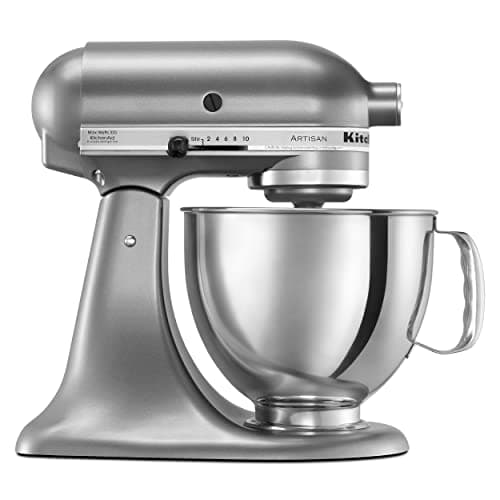
You're the baker a stand mixer is for if any of this is true: you make bread dough regularly, even just a loaf a week; you bake in batches large enough that holding a hand mixer for ten straight minutes is genuinely unpleasant; or you want to walk away mid-recipe to prep something else while the mixer runs. A machine like the KitchenAid Artisan earns its counter space for that baker fast — the bowl locks in, the motor runs unattended, and it becomes the default tool you reach for.
You're probably fine without one if you bake a few times a month, mostly make cakes, cookies or quick batters rather than bread, or you're short on storage and counter space. A good hand mixer covers that baking honestly, for a fraction of the price and none of the storage commitment. There's no shame in that — plenty of excellent home bakers never own a stand mixer. And if counter space is the real constraint, the honest audit is the whole counter, not just the mixer: the same footprint-versus-frequency question decides whether a countertop air fryer earns its spot.
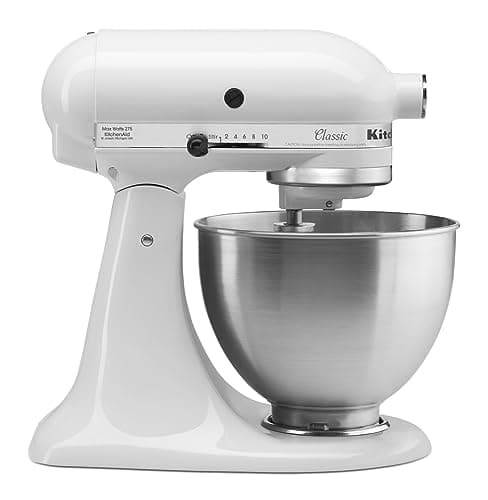
A simple way to think about it: match the machine to your hardest job, not your average one. If the toughest thing you mix is cake batter or cookie dough, even an entry model like the KitchenAid Classichas the motor for it. If your hardest job is bread — especially stiff, low-hydration dough — you need real headroom above that job, not just enough to limp through it, because a motor that's constantly working at its limit wears out faster and heats up more.
The short answer
Quick picks
| # | Product | Best for | Score | Price |
|---|
| 01 | KitchenAid Artisan 5-Qt Tilt-Head (KSM150)The default for a reason: 5-qt tilt-head, a mature attachment ecosystem, and enough motor for a couple of loaves a week. Not the mixer for daily heavy dough — but that's a small slice of home bakers. | Most home bakers | | $499.00·Amazon |
| 02 | KitchenAid Classic 4.5-Qt Tilt-Head (K45SS)The cheapest way into the KitchenAid ecosystem. Slightly smaller bowl and a hair less power than the Artisan, but the same attachment hub and the same 10-speed planetary action. For occasional bakers this is the smart buy. | Budget / occasional bakers | | $322.99·Amazon |
#ad · Live prices from the Amazon Product API, as of October 20, 2026. Where we have no verified live price we show none — a gap beats a number that has rotted.
In detail
The picks, in full
Most home bakers
KitchenAid Artisan 5-Qt Tilt-Head (KSM150)
325 W rated5-qt bowl10 speedsTilt-headPowerHub port
The default for a reason: 5-qt tilt-head, a mature attachment ecosystem, and enough motor for a couple of loaves a week. Not the mixer for daily heavy dough — but that's a small slice of home bakers.
- Motor / dough
- 8
- Capacity
- 8
- Build & durability
- 8.5
- Ease of use
- 9
- Value
- 8.5
Pros
- +Huge attachment ecosystem (grinder, pasta, ice cream) via the front PowerHub
- +5-qt bowl handles roughly a double batch of cookie dough or 2 loaves of bread dough
- +Holds resale value and parts availability better than any rival brand
Cons
- −Tilt-head flex shows on very stiff, low-hydration dough
- −325 W rated motor is mid-pack — it will bog if you knead dense dough daily
Don't buy this if…
…you knead stiff bagel or heavy rye dough every day — a bowl-lift or a Bosch has the motor headroom you'll keep asking for.
Budget / occasional bakers
KitchenAid Classic 4.5-Qt Tilt-Head (K45SS)
275 W rated4.5-qt bowl10 speedsTilt-headPowerHub port
The cheapest way into the KitchenAid ecosystem. Slightly smaller bowl and a hair less power than the Artisan, but the same attachment hub and the same 10-speed planetary action. For occasional bakers this is the smart buy.
- Motor / dough
- 7
- Capacity
- 7
- Build & durability
- 8
- Ease of use
- 9
- Value
- 9
Pros
- +Usually the lowest price for a genuine KitchenAid planetary mixer
- +Takes the same front-hub attachments as the pricier models
- +4.5-qt bowl is plenty for single batches
Cons
- −275 W rated motor is the weakest in the line
- −4.5-qt bowl gets tight on a full double batch
- −Fewer bowl/color options than the Artisan
Don't buy this if…
…you routinely bake double batches or bread — the extra half-quart and motor of the Artisan is worth the step up.
How to weigh motor headroom against your dough
Rank your baking by difficulty, not frequency
Frequency tells you whether to buy at all; difficulty tells you which model. Whipping cream and creaming butter are light jobs. Cookie dough is a medium job. Bread dough — especially stiff or low-hydration doughs like bagels — is the heaviest job a home mixer faces. Size your purchase to the hardest thing you actually make, not the average week.
Headroom, not just capability
A mixer that can just barely finish your toughest dough is a mixer that will bog down, run hot, and wear out faster than one with headroom to spare. If bread is a regular, heavy part of your baking, that's the case for stepping past an entry tilt-head toward something with more sustained torque — see our KitchenAid vs Bosch comparison for how that trade plays out between two real machines.
Entry point vs the safer buy
If your baking is mostly light-to-medium — cakes, cookies, occasional bread — the KitchenAid Classicis a genuinely good, cheaper way into the category. It shares the same planetary action and attachment hub as pricier models, so you're not giving up the ecosystem, just some bowl size and motor headroom you may never need. If you know bread or big batches are coming, the extra half-quart bowl and motor of the Artisan is worth paying for up front rather than upgrading twice — buying twice almost always costs more than sizing up correctly the first time.
Still not sure? Start smaller
If you're on the fence, a hand mixer is the lower-risk way to find out how often you actually bake before committing counter space and money to a stand mixer. A few months of honest use will tell you whether you're reaching for it weekly or leaving it in a drawer, and that answer is worth more than any spec sheet. Our stand mixer vs hand mixer guidelays out that exact decision, including the point where it's clearly time to step up, and stand mixer vs hand kneading answers the version of the question where the alternative is no machine at all.
How we picked
We don't run a testing lab
We read the manuals, compiled the published specifications, did the wattage-to-dough math and weighed aggregated owner reviews, then scored each product against a published rubric. The scores are judgments from documented research — they are not measurements we took, because we do not have a lab and we're not going to pretend we do. Every spec is the manufacturer's published figure, cited in Sources.
Questions
Frequently asked
How do I know if I need a stand mixer?+
If you bake bread regularly, mix large batches often, or want to walk away from a recipe mid-mix, a stand mixer pays off. If you bake occasionally and mostly make cakes or cookies, a hand mixer likely covers you for far less money and storage space.
Is a cheaper stand mixer like the KitchenAid Classic worth it?+
Yes, if your baking is light-to-medium — cakes, cookies, occasional bread. It shares the same 10-speed action and attachment hub as pricier models. Step up to the Artisan if you know bread or big batches are a regular part of your baking.
What's the biggest mistake people make buying a stand mixer?+
Sizing the mixer to their average baking instead of their hardest job. A mixer that barely finishes your toughest dough runs hot and wears out faster than one with headroom to spare — buy for the worst week, not the typical one.
Receipts
Sources
We don't run a testing lab, and we don't pretend to. Specs are the manufacturer's published figures, cited above; scores are our judgments from that research. Where we couldn't verify something, we say so on the page rather than quietly leaving it out. Read our full method.