Skip to content
Plug & Prep

Hub 04 · Baking Gear · Baking Gear

Glass vs metal loaf pan

Metal is the better baking pan; glass is the better dish. The crust is where the difference shows, and there is a temperature rule that makes glass behave.

By Stephen V.Updated How we pick
#ad

We earn a commission when you buy through our Amazon links, at no extra cost to you. It never changes our rankings, and we say so when the cheaper product is the better buy. How this works.

Use metal for bread and glass for dishes you want to cover and put away. Metal conducts heat fast and radiates it into the sides and base of a loaf, which is what browns a crust; glass is a poor conductor that heats slowly and then holds that heat for a long time, which gives you a paler, softer-sided loaf and a bake that keeps cooking after it leaves the oven. Neither is wrong. They are different tools, and the mistake is using glass for yeast bread and then wondering why the crust is disappointing.

There is also a practical rule that matters more than the theory: when you bake in glass, drop the oven temperature by 25°F and expect to check early. That is King Arthur Baking's standing guidance, cited below, and it exists because glass's slow heat-up and long heat-hold means a recipe timed for metal over-bakes the edges of a glass-pan bake by the time the centre is done.

What the material actually changes

Conduction, and therefore crust. Aluminum and aluminized steel move heat quickly from the oven air into the batter. The pan wall gets hot fast, the dough in contact with it sets and browns, and you get the defined side crust a sandwich loaf is supposed to have. Borosilicate glass conducts far more slowly, so the sides of the loaf spend longer at a lower temperature: they set, but they do not brown the same way. On a yeast loaf this is the whole difference, and it is not subtle.

Heat retention, and therefore carry-over. Glass is heavy and holds heat. A glass pan coming out of the oven keeps cooking its contents for several minutes in a way a thin metal pan does not. For a custardy bake or a casserole that is a feature. For a loaf you wanted to stop at a specific internal temperature, it is a reason to pull it a little early — and a reason to use a thermometer rather than the clock. See our bread thermometer pick.

Visibility. The one genuine advantage glass has for a baker: you can see the bottom and the sides of the loaf browning through the pan. For anyone learning to judge doneness, that is a real teaching aid.

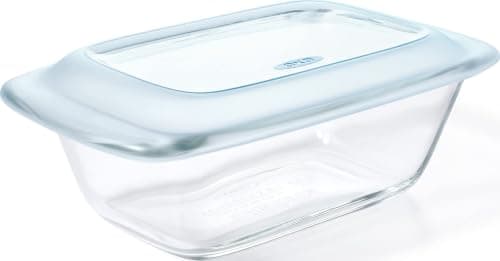
Convenience, which is where glass wins outright. A glass loaf pan with a lid is a baking dish and a storage container in one object. Borosilicate is built for temperature swings, so an OXO glass pan goes from freezer or fridge straight into the oven, and then into the fridge with its lid on, with no transferring of leftovers. It is also microwave- and dishwasher-safe, which no metal loaf pan here is.

What each material is for

JobUseWhy
Yeasted sandwich breadMetalBrowns the sides and base; crust is the point
Banana bread, quick breadsEitherMetal for a better crust; glass if you will store it in the dish
MeatloafGlassCover and refrigerate in the same dish; no browning needed
Pound cakeMetalA long, sugary bake needs gentle even conduction, not held heat
Baked oatmeal, bread puddingGlassCarry-over heat helps; it goes to the fridge afterwards
Anything above 450°FNeither of theseCoated metal is capped at 450°F; glass is not a high-heat pan

The short answer

Quick picks

#ProductBest forScorePrice
01
OXO OXO Good Grips Glass Loaf Pan with Lid (1.6 qt)
OXO Good Grips Glass Loaf Pan with Lid (1.6 qt)

The bake-it-and-store-it pan. Thermal-shock-resistant borosilicate glass with proper handles and a slosh-proof lid, so a meatloaf or a banana bread goes from freezer to oven to fridge in one dish. Glass is the wrong tool for a crusty yeast loaf, but for everything you want to cover and put away, it is the most convenient pan here.

Bake, cover and refrigerate
8.0
$17.95Amazon
02
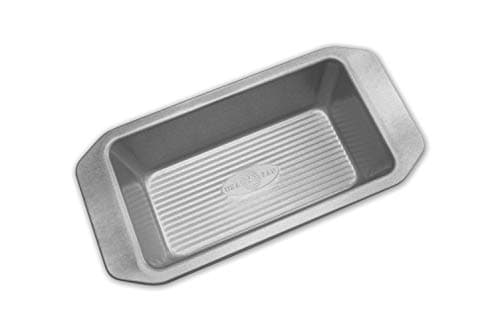
USA Pan USA Pan American Bakeware Classics 1-lb Loaf Pan (1140LF)
USA Pan American Bakeware Classics 1-lb Loaf Pan (1140LF)

The pan most yeast-bread recipes are actually written for: a true 8.5 x 4.5-inch baking surface in heavy aluminized steel, with USA Pan's fluted profile and its PTFE-free Americoat surface. It browns evenly rather than aggressively and releases a loaf without a fight, and it is built to outlast a stack of supermarket pans.

Everyday sandwich loaves
8.6
$20.99Amazon
03
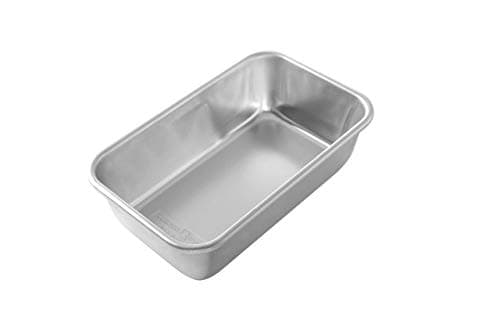
Nordic Ware Nordic Ware Naturals 1.5-lb Loaf Pan
Nordic Ware Naturals 1.5-lb Loaf Pan

The quick-bread pan. Uncoated natural aluminum in the larger 1.5-pound size, with an interior close to the classic 9 x 5 that banana bread, zucchini bread and pound cake recipes are written around. Light aluminum browns gently, which is exactly what a long, sugary bake needs so the edges don't set hard before the middle cooks.

Banana bread and quick breads
8.3
$11.79Amazon

#ad · Live prices from the Amazon Product API, as of October 11, 2026. Where we have no verified live price we show none — a gap beats a number that has rotted.

In detail

The picks, in full

01
OXO OXO Good Grips Glass Loaf Pan with Lid (1.6 qt)

Bake, cover and refrigerate

OXO Good Grips Glass Loaf Pan with Lid (1.6 qt)

1.6-qt capacityBorosilicate glassSlosh-proof lidDishwasher-safeFreezer to oven
8.0/10

The bake-it-and-store-it pan. Thermal-shock-resistant borosilicate glass with proper handles and a slosh-proof lid, so a meatloaf or a banana bread goes from freezer to oven to fridge in one dish. Glass is the wrong tool for a crusty yeast loaf, but for everything you want to cover and put away, it is the most convenient pan here.

Accuracy
7
Build quality
8
Ease of use
9
Versatility
8.5
Value
7.5

Pros

  • Borosilicate glass is built for temperature swings, so it goes from freezer or fridge straight to the oven
  • The lid turns the baking dish into a storage container — no transferring leftovers
  • Microwave-, freezer- and dishwasher-safe, and you can watch the bottom crust brown through the side

Cons

  • Glass heats slowly and holds heat, so King Arthur's standing advice is to drop the oven 25°F
  • OXO says not to use it under a broiler
  • It is heavy for its size and, unlike steel, a hard knock can end it

Don't buy this if…

…you mostly bake crusty yeast bread — glass browns the sides more gently than metal and leaves you a softer, paler crust.

$17.95View on Amazon

Price as of October 11, 2026. Prices change — Amazon's at checkout is the one that counts.

#ad · we may earn a commission from this link to OXO Good Grips Glass Loaf Pan with Lid (1.6 qt)

02
USA Pan USA Pan American Bakeware Classics 1-lb Loaf Pan (1140LF)

Everyday sandwich loaves

USA Pan American Bakeware Classics 1-lb Loaf Pan (1140LF)

8.5 x 4.5 x 2.75 inAluminized steelAmericoat nonstick450°F maxMade in USA
8.6/10

The pan most yeast-bread recipes are actually written for: a true 8.5 x 4.5-inch baking surface in heavy aluminized steel, with USA Pan's fluted profile and its PTFE-free Americoat surface. It browns evenly rather than aggressively and releases a loaf without a fight, and it is built to outlast a stack of supermarket pans.

Accuracy
9
Build quality
9
Ease of use
8.5
Versatility
8
Value
8.5

Pros

  • A true 8.5 x 4.5-inch baking surface — the size most yeast sandwich-bread recipes assume
  • Heavy aluminized steel with a fluted surface and a steel-wire-reinforced rim resists warping
  • Americoat coating is made without PTFE, PFOA or BPA and releases loaves cleanly

Cons

  • Rated to 450°F, so it is not the pan for a very hot artisan-style bake
  • USA Pan recommends hand-washing, so it is not a throw-it-in-the-dishwasher pan
  • The fluted surface prints faint ridge lines down the sides of the loaf

Don't buy this if…

…your recipes are written for a 9 x 5 pan — this is the smaller 8.5 x 4.5 size, and a batter sized for 9 x 5 will crest and spill over it.

$20.99View on Amazon

Price as of October 11, 2026. Prices change — Amazon's at checkout is the one that counts.

#ad · we may earn a commission from this link to USA Pan American Bakeware Classics 1-lb Loaf Pan (1140LF)

03
Nordic Ware Nordic Ware Naturals 1.5-lb Loaf Pan

Banana bread and quick breads

Nordic Ware Naturals 1.5-lb Loaf Pan

9.1 x 5.3 x 2.8 in insideUncoated aluminumGalvanized steel rim1.5-lb loafMade in USA
8.3/10

The quick-bread pan. Uncoated natural aluminum in the larger 1.5-pound size, with an interior close to the classic 9 x 5 that banana bread, zucchini bread and pound cake recipes are written around. Light aluminum browns gently, which is exactly what a long, sugary bake needs so the edges don't set hard before the middle cooks.

Accuracy
8
Build quality
8
Ease of use
8
Versatility
8.5
Value
9

Pros

  • The larger 1.5-lb size matches the 9 x 5 pan most quick-bread recipes call for
  • Pure uncoated aluminum conducts heat quickly and browns gently instead of scorching the crust
  • Encapsulated galvanized steel rim resists warping, and it is made in the USA

Cons

  • Nordic Ware advises against the dishwasher — detergent and heat discolor bare aluminum
  • Uncoated, so it needs greasing or lining like any bare pan
  • Too big for an 8.5 x 4.5 yeast-bread recipe, which will rise sideways rather than up in it

Don't buy this if…

…your main job is a yeasted sandwich loaf from a three-cup-of-flour recipe — that dough wants the smaller 8.5 x 4.5 pan to climb, not this one.

$11.79View on Amazon

Price as of October 11, 2026. Prices change — Amazon's at checkout is the one that counts.

#ad · we may earn a commission from this link to Nordic Ware Naturals 1.5-lb Loaf Pan

The rules for baking in glass

Drop the temperature 25°F

King Arthur's standing advice, and the one adjustment that makes a recipe written for metal work in glass. The slow heat-up and long heat-hold of glass means the edges of the bake get more total heat than the recipe intended; taking 25 degrees off the oven evens it out. Check for doneness a few minutes before the stated time regardless.

Do not put it under the broiler

OXO says not to, and that is the instruction to follow. A broiler is intense radiant heat from inches away, which is precisely the thermal gradient glass handles worst.

Avoid the thermal extremes it is not rated for

Borosilicate is the good kind of glass for this — it is specifically built for temperature swings, which is why the OXO can go freezer-to-oven. That is a property of borosilicate rather than of glass generally; soda-lime bakeware is far less tolerant. Even so, no glass pan likes being taken from a hot oven and set on a cold wet counter.

Remember it can break

A glass pan is heavy for its size and a hard knock can end it. A metal pan gets dented and keeps working. If the pan lives in a crowded cupboard with cast iron, that is a real consideration.

Which of the three to buy

  • OXO Good Grips glass loaf pan with lid— the bake-it-and-store-it pan. Borosilicate, proper handles, a slosh-proof lid, microwave- freezer- and dishwasher-safe. Buy it for meatloaf, baked oatmeal and anything you intend to cover and refrigerate. Do not buy it as your bread pan.
  • USA Pan Classics 1-lb loaf pan— the bread pan. A true 8.5 x 4.5-inch interior, which is the size yeast sandwich recipes assume, in heavy aluminized steel with a PTFE-free coating. Rated to 450°F and hand wash. This is the pan that gives you a crust. See the best loaf pans for sandwich bread.
  • Nordic Ware Naturals 1.5-lb loaf pan— the quick-bread pan, and the direct metal alternative to a glass dish for banana bread. Uncoated light aluminum in the larger 9 x 5-ish size that quick-bread recipes are written around; light aluminum browns gently rather than scorching, which is what a long sugary bake needs. Hand wash, and grease it like any bare pan.

The honest answer for banana bread

This is the bake where the two materials are genuinely close, and where most people are actually choosing. Metal gives you a better crust and a cleaner edge; glass gives you a slightly softer, more uniform loaf and the ability to put a lid on it and leave it on the counter. Both work. If you bake banana bread to eat over three days from the dish it baked in, glass is the more useful object and the 25°F rule handles the rest. If you tip the loaf out and slice it, metal is better — and the Nordic Ware 1.5-lb is the pan sized for it.

Where this fits

Material is the second loaf-pan decision; size is the first, and it matters more. An 8.5 x 4.5 pan for yeast dough and a 9 x 5 for quick breads is the rule, and it is covered in how to choose a loaf pan. The full ranked field is the best loaf pans; the lidded Pullman that produces square slices is in Pullman pan vs regular loaf pan; and the parallel material argument for silicone is in silicone vs metal loaf pans, which lands the same way for the same reason. Whatever the pan, grease and line it properly — how to grease and line a loaf pan.
How we picked

We don't run a testing lab

We read the manuals, compiled the published specifications, did the wattage-to-dough math and weighed aggregated owner reviews, then scored each product against a published rubric. The scores are judgments from documented research — they are not measurements we took, because we do not have a lab and we're not going to pretend we do. Every spec is the manufacturer's published figure, cited in Sources.

Questions

Frequently asked

Is glass or metal better for baking bread?
Metal, for yeast bread. It conducts heat quickly and radiates it into the sides and base of the loaf, which is what browns a crust; glass heats slowly and leaves you paler, softer sides. Glass is the better choice for things you want to cover and refrigerate, like meatloaf or baked oatmeal. For a sandwich loaf, use an 8.5 x 4.5-inch metal pan — see the best loaf pans for sandwich bread.
Do you bake longer in a glass loaf pan?
You bake cooler rather than longer. King Arthur's standing advice is to drop the oven temperature by 25°F when using glass, because glass heats slowly and then holds heat, so a recipe timed for metal gives the edges of a glass-pan bake more total heat than intended. Start checking a few minutes before the stated time, and use an internal temperature rather than the clock.
Can you bake banana bread in a glass loaf pan?
Yes, and it is one of the bakes where glass makes real sense - especially if you want to cover the loaf and keep it in the dish. Drop the oven 25°F and check early. Metal will give you a better crust and a cleaner edge, and a light uncoated aluminum pan in the 9 x 5 size is the ideal quick-bread pan, but this is a genuine toss-up rather than a clear win either way.
Why does my bread crust come out pale in a glass pan?
Because glass is a poor conductor. The pan wall never gets as hot as fast as metal does, so the dough touching it sets without browning properly — you get a loaf that is cooked through with pale, soft sides. No temperature adjustment fixes it, because the problem is the material rather than the setting. Use metal for crust. See the best loaf pans.
Can a glass loaf pan go from the fridge to the oven?
If it is borosilicate, yes - borosilicate is specifically made to handle temperature swings, and OXO lists its glass loaf pan as freezer-to-oven safe. That is a property of borosilicate, not of glass in general; soda-lime bakeware is far less tolerant of a sudden change. OXO does say not to use it under a broiler, which is the one instruction worth remembering.

Keep reading

More in this category

More baking gear

All baking gear →

Receipts

Sources

We don't run a testing lab, and we don't pretend to. Specs are the manufacturer's published figures, cited above; scores are our judgments from that research. Where we couldn't verify something, we say so on the page rather than quietly leaving it out. Read our full method.