A cake is a lesson in gentleness. Unlike bread, which you want to work hard to build gluten, a cake batter wants to be mixed just enough to combine and aerate and no more — over-mix it and you develop the flour's gluten, which turns a tender crumb tough and rubbery. That single fact should shape how you choose a hand mixer for cakes: what matters most isn't raw power but control. You want a genuinely slow first speed that eases flour in without a cloud, a smooth spread of speeds so you can cream butter and sugar properly and then bring the batter together gently, and enough steadiness to whip egg whites or cream when a recipe calls for it. This ranking weighs that gentle control first, with power and comfort behind it, because for cakes the smooth, well-spaced mixer beats the brute every time.
Three hand mixers cover the sensible ways to buy one for cake baking, and a different one wins each budget. The Cuisinart Power Advantage Plusis the value pick most home bakers should buy — nine well-spaced speeds, a soft start, and a whisk and dough hooks in the box. The Braun MultiMix 5 is the pick for someone who also makes heavier batters and wants the most power with a smooth ramp. And the Hamilton Beach 6-speed is the honest budget option for occasional cakes. None is a bad mixer; the differences below are about how often you bake and how much control you want. For the broader baking picture, our best hand mixer for baking roundup weighs the same field across every task, not just cakes.
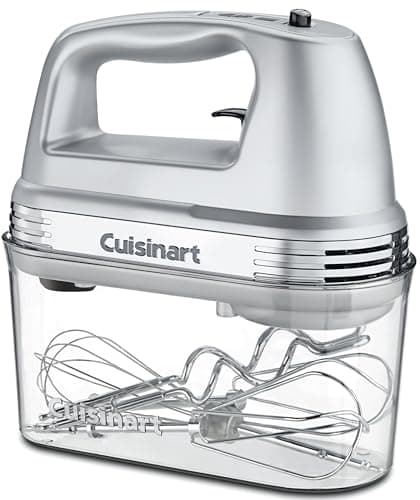
Cuisinart Power Advantage Plus — the value pick with the control cakes want. The Cuisinart is the one to buy for most cake baking. Its nine speeds are genuinely well spaced, so you get a slow, controlled first speed to add flour without a mess and a smooth climb to the medium speeds where you cream butter and sugar and beat a batter. A 220-watt-rated motor has real headroom for the money, and it arrives with a whisk and dough hooks plus a snap-in storage case — rare at the price. For cakes, that spread of gentle, even speeds is exactly the right toolset. The honest cons are small: speed 1 is a touch fast for the very gentlest folding (though still the best of this group), and the storage case is bulky in a shallow drawer. Most cake bakers will never out-grow it. Read the Cuisinart Power Advantage review for the full picture.
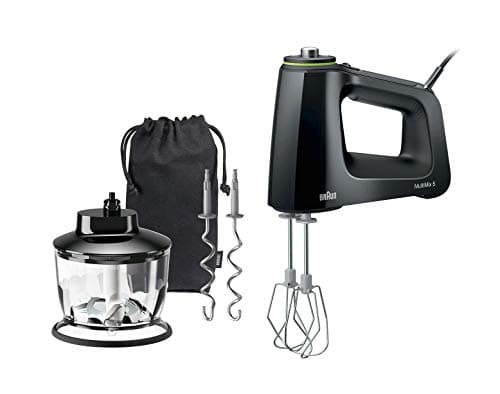
Braun MultiMix 5 — the most power, with a smooth ramp.If your baking runs beyond light cakes into heavier batters, thick pound cakes or the occasional cookie dough, the Braun is the pick. It has the highest rated wattage in this group at 350 watts, so it muscles through a dense batter without laboring, and — crucially for cakes — its SmartMix ramp eases up to speed smoothly rather than jolting, which keeps flour in the bowl and mixing even. It comes with a chopper attachment and a whisk, making it the most flexible of the three. The honest cons: its European-styling controls take a moment to learn, and its beaters are single-piece, which some bakers find less familiar than twin-wire beaters. For a baker who wants power in reserve and a smooth start, it's the upgrade. See the full Braun MultiMix 5 review.
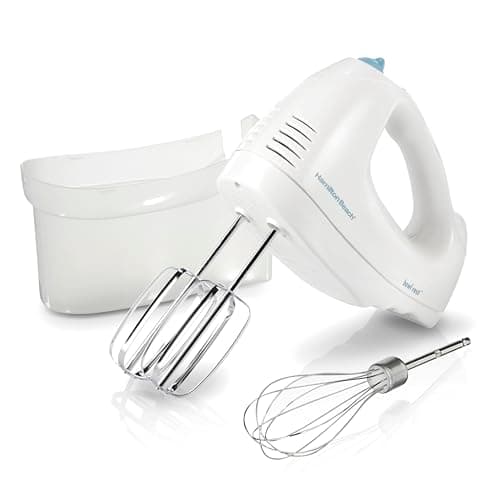
Hamilton Beach 6-speed — the cheapest capable option.If you bake cakes a few times a month and don't want to spend, the Hamilton Beach does the job for the least money. Six speeds, a 250-watt-rated motor, a QuickBurst button for a quick boost, and a bowl-rest feature that parks it mid-recipe — it's a light, honest tool that whips cream and mixes a cake batter without complaint. The honest cons keep it at number three for serious cake work: six speeds give less fine control than the nine-speed rivals, so the gentlest folding is a little harder to dial in, and there are no dough hooks if you ever want to knead. For occasional cakes on a budget, though, it's all most kitchens need. The Hamilton Beach 6-speed review has the detail.
How to choose a hand mixer for cakes
Choosing a hand mixer for cakes is mostly about prioritizing the right things, and for cake baking the priorities are different from bread or general mixing. Here is what actually matters, in order, so you buy the machine that makes a lighter, more even cake rather than the one with the biggest number on the box.
Gentle speed control comes first
The most important quality in a cake mixer is a smooth, slow low speedand a well-spaced range above it. Cake batter is mixed in stages — creaming butter and sugar to trap air, beating in eggs, then adding flour and liquid gently so you don't over-develop the gluten — and each stage wants a different, controllable speed. A mixer that jerks straight to a fast speed throws flour out of the bowl and tempts you to over-mix; one with a genuine slow start and even steps lets you fold flour in barely-moving and stop the moment the batter comes together. This is why the nine-speed Cuisinart and the smooth-ramp Braun rank ahead of a coarser mixer for cakes. Our guide to making cake batter with a hand mixer walks through those stages.
Enough power, but not for its own sake
Power matters less for cakes than for bread, but it's not irrelevant. A thin sponge batter asks almost nothing of a motor, but a dense pound cake or a batter loaded with fruit needs enough torque to keep moving without bogging down and overheating. All three picks have enough for normal cakes; the Braun's extra wattage is the pick if you regularly make heavy batters. What you don't want is to over-value power at the expense of control — a powerful mixer with only a couple of usable speeds is worse for cakes than a gentler one with a fine range. For the technical side of motor ratings, see how many watts a hand mixer needs.
Comfort for the long creaming stage
Cakes involve some of the longest continuous mixing a hand mixer does — creaming butter and sugar properly can take several minutes of holding the machine — so weight and grip matter more than for a quick job. A mixer that's comfortable to hold and not too heavy makes that creaming stage far less of a chore, especially if you bake often. All three here are manageable; if you have hand or wrist issues, favor the lightest one you can and rest the mixer on the bowl rim between bursts. A comfortable mixer is one you'll cream properly rather than cutting short, and proper creaming is where a lot of a cake's lightness comes from.
The whisk attachment for lighter cakes
Many cakes benefit from whipped egg whites or whipped cream — a genoise, an angel food cake, a chiffon, or simply a whipped-cream filling — and for those a whisk (balloon-beater) attachmentmakes a real difference over standard beaters, whipping more air in faster. The Cuisinart and Braun both include a whisk; it's worth having if lighter, airier cakes are your thing. If a recipe has you whip whites separately and fold them in, that folding is usually done by hand with a spatula, not the mixer, to keep the air in — the mixer's job is the whipping, not the folding.
Matching the three picks to your cake baking
Line them up against how you bake. The Cuisinart is the default for most cake bakers: the control and range that cakes reward, a whisk and dough hooks in the box, at a sensible price. The Braun is the step up for someone who also makes heavy batters and wants the most power with a smooth start. The Hamilton Beachis the budget route for occasional cakes, giving up some fine control and the dough hooks for the lowest price. Buy for how often and how seriously you bake cakes, and you won't over- or under-spend. And remember that for a big or frequent cake habit, a stand mixer's hands-free creaming is a genuine upgrade — our hand versus stand mixer comparison (the logic carries straight over to cakes) is worth a read before you decide.
One habit that improves every cake
Whatever mixer you choose, the single biggest thing you can do for a lighter, more even cake is to not over-mix once the flour goes in. Cream the butter and sugar well, beat the eggs in fully, but then add the flour on the lowest speed and stop as soon as it's just combined with no dry streaks left. Every extra second of mixing after that develops more gluten and trades tenderness for toughness. A good mixer makes stopping at the right moment easy because you can actually control the speed; that's the whole reason gentle control tops this ranking. Read the individual reviews above before you buy, since each is honest about the cons a roundup can only summarize.