Skip to content
Plug & Prep

Hub 05 · Guides · Guides & Comparisons

8-inch vs 9-inch cake pan

A 9-inch round holds roughly a quarter more batter than an 8-inch at the same depth. Swap one for the other without adjusting and you get a thin, over-baked layer or a pan that overflows.

By Stephen V.Updated How we pick
#ad

We earn a commission when you buy through our Amazon links, at no extra cost to you. It never changes our rankings, and we say so when the cheaper product is the better buy. How this works.

A 9-inch round cake pan holds about 27 percent more batter than an 8-inch pan of the same depth, and if you own only one size it should be the 9-inch — it is the size most American layer-cake recipes are written for. The arithmetic is simple and it is the whole page: area is πr², so an 8-inch pan gives you about 50 square inches of base and a 9-inch pan about 64. Pour a batter meant for two 8-inch pans into two 9-inch pans and each layer bakes thinner and faster — start checking 5 to 10 minutes early. Go the other way and you must hold back roughly a fifth of the batter, or it crests the rim.

The conversion, in numbers you can use

PanBase areaTypical batter volumeVersus an 8 in round
8 in round, 2 in deep~50 sq in~4 cups—
9 in round, 2 in deep~64 sq in~5 cups~27% more
8 in round, 3 in deep~50 sq in~5 cups (Fat Daddio's publishes 5)Same area, more depth
9 in square81 sq in~8 cups~62% more
8 in square64 sq in~6 cups~27% more

The areas are geometry, not a claim. The batter volumes are the standard published capacities for pans of those dimensions — useful as a planning figure, with the one hard rule being that you fill a cake pan no more than two-thirds full whatever the number says, because the batter has to have somewhere to rise. Fat Daddio's publishes 5 cups for its 8 by 3-inch pan, which is why a deeper 8-inch pan takes the same batter as a shallower 9-inch one.

What changes when you swap sizes

Layer height. The same batter in a 9-inch pan spreads over 27 percent more base, so the layer comes out roughly a quarter shorter. A two-layer 8-inch cake looks tall and formal; the same cake in 9-inch pans looks like a sheet cake that lost its nerve.

Bake time. A thinner layer sets faster. Dropping 5 to 10 minutes and testing early is the standard adjustment, and the test is the only thing that actually settles it: a skewer in the center should come out with a crumb or two and no wet batter. Going from 9-inch down to 8-inch adds time, because the layer is deeper.

Edges and doneness. A thinner layer has proportionally more edge for the same volume, and edges set first. That is the mechanism behind a dry, firm rim with an under-done middle, and it is worse in a dark or coated pan than in light aluminum. If you are deciding between pan materials as well as sizes, our best cake pans roundup covers how anodized, bare aluminum and coated pans each brown.

Frosting arithmetic.A 9-inch cake has more top and side area to cover, so a frosting recipe sized for an 8-inch cake will run short. Scale it up by about a quarter — the same factor as the pans.

How to scale a recipe between the two

The honest way is by area, not by diameter. To go from 8-inch to 9-inch, multiply the ingredient quantities by 1.27 (that is 64 divided by 50) and you will get a layer of the same height. To go the other way, multiply by 0.78. For a cake that is mostly a ratio exercise this works well; for something structural like a genoise, scaling the eggs is where it gets fiddly, and the simpler route is to bake the recipe as written and accept a shorter or taller layer.

The practical shortcut most bakers use: do not scale at all. Bake the 8-inch recipe in 9-inch pans, accept a slightly shorter layer, and pull the cakes 5 to 10 minutes early. Or bake the 9-inch recipe in 8-inch pans and pour the extra fifth into a few cupcakes. Weighing the batter rather than eyeballing it makes either approach repeatable — how to use a kitchen scale and how to measure flour by weight cover the habit that makes cake baking consistent.

Which size to actually own

If you are buying one pair of round pans, buy 9-inch. It is the default in American recipe books, which means no conversion math on most of what you will bake. Two pans, not one — a layer cake needs both layers to bake in the same oven pass at the same rate, and buying a second pan later usually means a slightly different pan.

Buy 8-inch as well, or instead, if you bake European recipes, want visibly taller layers, or are baking for fewer people. And if you want an 8-inch that behaves like a 9-inch on volume, buy an 8 by 3-inch pan: the extra depth takes a 9-inch recipe's batter and bakes one tall layer you can split in half horizontally, which is how a four-layer cake gets made from two pans.

The short answer

Quick picks

#ProductBest forScorePrice
01
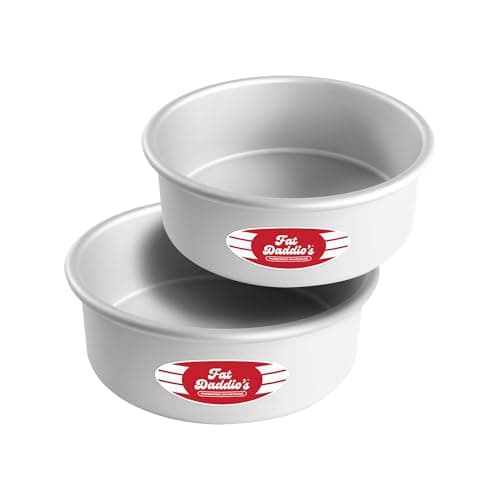
Fat Daddio's Fat Daddio's PRD-83SET Anodized Aluminum Round Cake Pans, 8 x 3 in, 2-Piece Set
Fat Daddio's PRD-83SET Anodized Aluminum Round Cake Pans, 8 x 3 in, 2-Piece Set

The pan serious cake bakers standardize on, in the two-pan set a layer cake needs: 16-gauge anodized aluminum, seamless straight sides, a published 550°F rating and nothing on the surface to peel or flake. Three inches deep means one pan bakes a layer tall enough to split in half.

Layer cakes, and anyone who wants pans that outlast them
8.6
$28.97Amazon
02
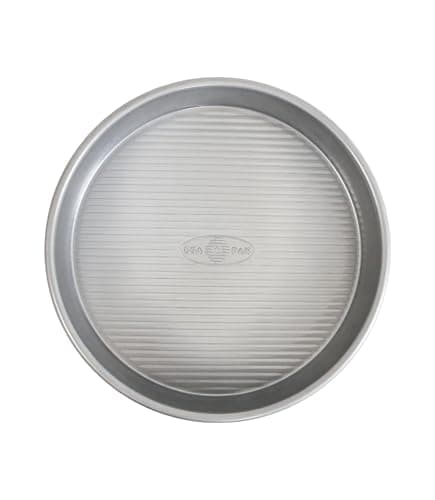
USA Pan USA Pan Nonstick Round Cake Pan, 9 in (1070LC)
USA Pan Nonstick Round Cake Pan, 9 in (1070LC)

The coated pick, and the easiest cake pan here to live with: aluminized steel, a silicone Americoat surface USA Pan states is made without PTFE, PFOA or BPA, a wire-reinforced rim and a lifetime warranty, made in Pennsylvania. A 9 x 2 in pan is the size most American layer-cake recipes are written for.

Standard 9-inch layer cakes with easy release
8.3
$22.95Amazon
03
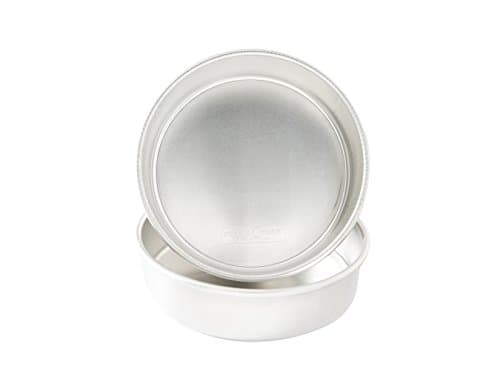
Nordic Ware Nordic Ware Naturals Round Cake Pan, 9 in, 2-Pack
Nordic Ware Naturals Round Cake Pan, 9 in, 2-Pack

Two pure-aluminum pans with an encapsulated steel rim, made in Minnesota, under a lifetime warranty — the value answer to a layer cake. Bare aluminum browns gently and evenly, which is what a sponge wants, and there is no coating to wear out.

A two-pan layer-cake set on a budget
8.2
$26.11Amazon
04
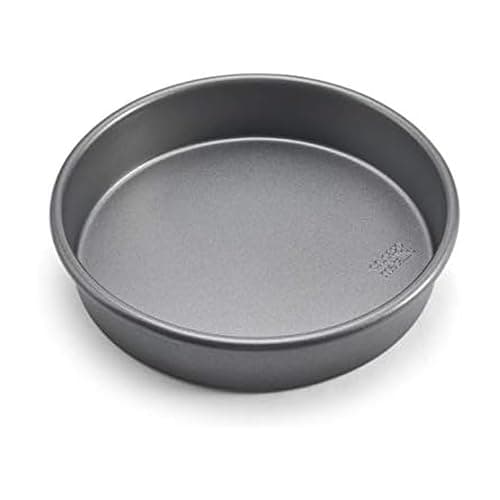
Chicago Metallic Chicago Metallic Commercial II Non-Stick Round Cake Pan, 9 in
Chicago Metallic Commercial II Non-Stick Round Cake Pan, 9 in

The cheap coated pan that does not feel cheap: heavy-gauge aluminized steel with a dual nonstick coating, a 450°F rating, a lifetime warranty and — unusually here — a dishwasher-safe rating. Buy two if this is your first cake pan and you want the lowest-friction start.

A low-cost coated pan you can put in the dishwasher
7.9
$14.99Amazon

#ad · Live prices from the Amazon Product API, as of October 17, 2026. Where we have no verified live price we show none — a gap beats a number that has rotted.

In detail

The picks, in full

01
Fat Daddio's Fat Daddio's PRD-83SET Anodized Aluminum Round Cake Pans, 8 x 3 in, 2-Piece Set

Layer cakes, and anyone who wants pans that outlast them

Fat Daddio's PRD-83SET Anodized Aluminum Round Cake Pans, 8 x 3 in, 2-Piece Set

8 x 3 in interior16-gauge anodized aluminum550°F rated5-cup capacityLifetime warranty
8.6/10

The pan serious cake bakers standardize on, in the two-pan set a layer cake needs: 16-gauge anodized aluminum, seamless straight sides, a published 550°F rating and nothing on the surface to peel or flake. Three inches deep means one pan bakes a layer tall enough to split in half.

Bake & browning
9.5
Release
7
Build quality
9.5
Depth & versatility
9
Value
8

Pros

  • Anodized aluminum is a surface, not a coating — Fat Daddio's states it will not peel, rust, flake or chip
  • Seamless one-piece construction with straight sides and sharp corners, so layers stack square
  • Two pans in the box, which is the minimum for a layer cake and usually sold singly elsewhere

Cons

  • Hand wash is recommended, so the coated pans here are easier to live with day to day
  • Bare anodized aluminum is not a release surface — you grease and line it every single time
  • The most expensive pick here per pan, and a 3 in depth needs more batter than an 8 x 2 recipe assumes

Don't buy this if…

…you bake a boxed cake twice a year — a coated pan releases with less fuss for half the money.

$28.97View on Amazon

Price as of October 17, 2026. Prices change — Amazon's at checkout is the one that counts.

#ad · we may earn a commission from this link to Fat Daddio's PRD-83SET Anodized Aluminum Round Cake Pans, 8 x 3 in, 2-Piece Set

02
USA Pan USA Pan Nonstick Round Cake Pan, 9 in (1070LC)

Standard 9-inch layer cakes with easy release

USA Pan Nonstick Round Cake Pan, 9 in (1070LC)

9 x 9 x 2 in surfaceAluminized steelAmericoat nonstick450°F maxMade in USA
8.3/10

The coated pick, and the easiest cake pan here to live with: aluminized steel, a silicone Americoat surface USA Pan states is made without PTFE, PFOA or BPA, a wire-reinforced rim and a lifetime warranty, made in Pennsylvania. A 9 x 2 in pan is the size most American layer-cake recipes are written for.

Bake & browning
8.5
Release
9.5
Build quality
8.5
Depth & versatility
7
Value
8

Pros

  • Releases a cake with minimal greasing, which is the whole argument for a coated pan
  • Steel-wire-reinforced rim resists the warping that makes a cheap pan rock on the oven rack
  • 9 x 2 in is the default size in American recipe books, so there is no batter math

Cons

  • The coating is a wear item and hand washing is preferred — a scoured pan is a finished pan
  • Rated to 450°F, below the 550°F anodized pans, so it is not a high-heat vessel
  • Only 2 in deep, so a tall single-layer batter will overflow it

Don't buy this if…

…you split your layers — a 3 in anodized pan bakes one tall layer you can torte, which this pan cannot.

$22.95View on Amazon

$26.9915% off

Price as of October 17, 2026. Prices change — Amazon's at checkout is the one that counts.

#ad · we may earn a commission from this link to USA Pan Nonstick Round Cake Pan, 9 in (1070LC)

03
Nordic Ware Nordic Ware Naturals Round Cake Pan, 9 in, 2-Pack

A two-pan layer-cake set on a budget

Nordic Ware Naturals Round Cake Pan, 9 in, 2-Pack

9 x 9 x 2.4 inUncoated aluminumEncapsulated steel rimMade in USALifetime warranty
8.2/10

Two pure-aluminum pans with an encapsulated steel rim, made in Minnesota, under a lifetime warranty — the value answer to a layer cake. Bare aluminum browns gently and evenly, which is what a sponge wants, and there is no coating to wear out.

Bake & browning
9
Release
6.5
Build quality
8.5
Depth & versatility
7.5
Value
9.5

Pros

  • Two matched pans, so both layers bake in the same oven pass at the same rate
  • Encapsulated steel rim is the detail that keeps a light aluminum pan from warping
  • No coating at all, so nothing degrades and the pans are effectively permanent

Cons

  • Uncoated aluminum needs greasing and a parchment round every bake
  • Nordic Ware states hand wash only; aluminum discolors in a dishwasher and never looks new again
  • Slightly deeper than a standard 2 in pan, so a thin batter can look lost in it

Don't buy this if…

…you will not line a pan — bare aluminum is unforgiving about that, and the coated USA Pan is the pick instead.

$26.11View on Amazon

Price as of October 17, 2026. Prices change — Amazon's at checkout is the one that counts.

#ad · we may earn a commission from this link to Nordic Ware Naturals Round Cake Pan, 9 in, 2-Pack

04
Chicago Metallic Chicago Metallic Commercial II Non-Stick Round Cake Pan, 9 in

A low-cost coated pan you can put in the dishwasher

Chicago Metallic Commercial II Non-Stick Round Cake Pan, 9 in

9 in x 2 in deepAluminized steelDual nonstick coating450°F maxDishwasher safe
7.9/10

The cheap coated pan that does not feel cheap: heavy-gauge aluminized steel with a dual nonstick coating, a 450°F rating, a lifetime warranty and — unusually here — a dishwasher-safe rating. Buy two if this is your first cake pan and you want the lowest-friction start.

Bake & browning
8
Release
8.5
Build quality
7
Depth & versatility
7
Value
9

Pros

  • Routinely the lowest price per pan here from a recognized commercial bakeware line
  • Rated dishwasher safe, the only pick on this page that is
  • Aluminized steel body conducts heat well enough to brown a cake edge properly

Cons

  • A dual nonstick coating is still a coating — the maker recommends hand washing to extend its life
  • Sold as a single pan, so a layer cake means buying two
  • No published figure for gauge or weight, so we cannot compare its thickness with the pans above

Don't buy this if…

…you want a pan for life — a coated pan is a consumable, and the anodized and bare-aluminum picks are not.

$14.99View on Amazon

$16.9912% off

Price as of October 17, 2026. Prices change — Amazon's at checkout is the one that counts.

#ad · we may earn a commission from this link to Chicago Metallic Commercial II Non-Stick Round Cake Pan, 9 in

The four pans worth owning, and who each is for

Fat Daddio's 8 x 3-inch anodized, 2-pack— for the baker who splits layers. Three inches of depth means one pan bakes a layer tall enough to torte in half, and Fat Daddio's publishes 5 cups of capacity and a 550°F rating. Anodized aluminum is a surface rather than a coating, so there is nothing to peel or flake, which is also why you grease and line it every single time.

USA Pan 9-inch nonstick (1070LC)— for the baker who wants a cake to simply come out. A 9 by 2-inch aluminized-steel pan with USA Pan's Americoat surface, which the company states is made without PTFE, PFOA or BPA, with a wire-reinforced rim and a lifetime warranty. Published ceiling is 450°F, so it is not a high-heat pan, and the coating is a wear item.

Nordic Ware Naturals 9-inch, 2-pack— for a layer-cake set on a budget. Two matched bare-aluminum pans with an encapsulated steel rim, made in the USA under a lifetime warranty. Bare aluminum browns gently, which is what a sponge wants; it also means greasing and a parchment round every bake, and Nordic Ware says hand wash only.

Chicago Metallic Commercial II 9-inch— for the lowest-friction start. Heavy aluminized steel, dual nonstick, a 450°F rating, a lifetime warranty and — unusually — a dishwasher-safe rating, though the maker still recommends hand washing to extend the coating's life. Sold singly, so a layer cake means buying two.

Depth is the spec people forget

Diameter gets all the attention and depth decides as much. A 2-inch pan is the American standard and what most recipes assume. A 3-inch pan takes noticeably more batter at the same diameter, bakes a layer you can split, and needs a longer, gentler bake because the center is further from the heat. A 1.5-inch pan — common in cheap sets — will overflow on a standard recipe.

Check the number before you buy, and check it against the recipes you actually bake. The two-thirds-full rule does the rest: if the batter comes past two-thirds up the wall, split it between more pans rather than hoping.

Three habits that matter more than the pan

  1. Line the base with parchment, always. Even in a coated pan. A greased-and-floured base works until the one time it does not, and a cake that sticks is unrecoverable. How to grease and line a pan covers the method.
  2. Weigh the batter between pans. Split by eye and one layer bakes faster than the other, which is the real reason layer cakes come out lopsided. A scale on the counter fixes it in ten seconds.
  3. Cool in the pan for ten minutes, then turn out onto a rack. Longer and the cake steams itself soggy against the hot metal. A cooling rack is the cheap tool that makes the difference.

If your cake pan question is really about material

Then the size question is settled and the next read is the best cake pans, which ranks anodized, bare-aluminum and coated pans against each other with live prices. If you are weighing coated against bare surfaces across your whole bakeware collection, the best bakeware without a nonstick coating is the page for that, and aluminum vs nonstick baking sheets makes the same comparison for sheet pans.
How we picked

We don't run a testing lab

We read the manuals, compiled the published specifications, did the wattage-to-dough math and weighed aggregated owner reviews, then scored each product against a published rubric. The scores are judgments from documented research — they are not measurements we took, because we do not have a lab and we're not going to pretend we do. Every spec is the manufacturer's published figure, cited in Sources.

Questions

Frequently asked

Can I use a 9-inch cake pan instead of an 8-inch?
Yes, with one adjustment. A 9-inch round has about 27% more base area, so the same batter bakes into a layer roughly a quarter shorter and sets faster - start checking 5 to 10 minutes before the recipe's stated time. The cake is not worse, just flatter, and you will want about a quarter more frosting to cover the larger surface.
Can I use an 8-inch pan for a 9-inch recipe?
Only if you hold batter back. Two 8-inch pans take roughly 78% of what two 9-inch pans do, so pouring a 9-inch recipe straight in will crest the rim and spill. Fill no more than two-thirds up the wall, bake the remainder as cupcakes, and add time - the deeper layer needs longer in the oven.
How much more batter does a 9-inch pan hold?
About 27% more at the same depth. The arithmetic is area: an 8-inch round is about 50 square inches of base, a 9-inch about 64. In cups, a 2-inch-deep 8-inch pan is usually planned at around 4 cups of batter and the 9-inch at around 5.
Does an 8 x 3-inch pan hold the same as a 9 x 2-inch?
Roughly, yes — Fat Daddio's publishes 5 cups for its 8 by 3-inch pan, which is about what a 9 by 2-inch pan takes. The difference is shape: the 8 by 3 gives you one tall layer you can split horizontally, which is how bakers get four thin layers out of two pans.
Which size should I buy if I only buy one pair?
9-inch. It is the size most American recipes are written for, so you avoid conversion math on nearly everything you bake. Buy two matched pans rather than one, so both layers bake in the same oven pass. Our cake pan roundup ranks the options.
Do I still need to grease a nonstick cake pan?
Yes, and line the base with parchment too. A coating reduces the risk of sticking; it does not eliminate it, and it wears with every bake and every wash. The ten seconds of greasing and a parchment round is cheap insurance against losing a cake you have spent an hour on.

Keep reading

More in this category

More guides & comparisons

All guides & comparisons →

Receipts

Sources

We don't run a testing lab, and we don't pretend to. Specs are the manufacturer's published figures, cited above; scores are our judgments from that research. Where we couldn't verify something, we say so on the page rather than quietly leaving it out. Read our full method.