Open a KitchenAid accessory catalog and it's easy to talk yourself into a pasta roller, a meat grinder and a spiralizer in the same order. Some of those attachments earn their spot in the drawer. Others sit there for a year and get sold used. The trick is telling the two apart before you buy, not after.
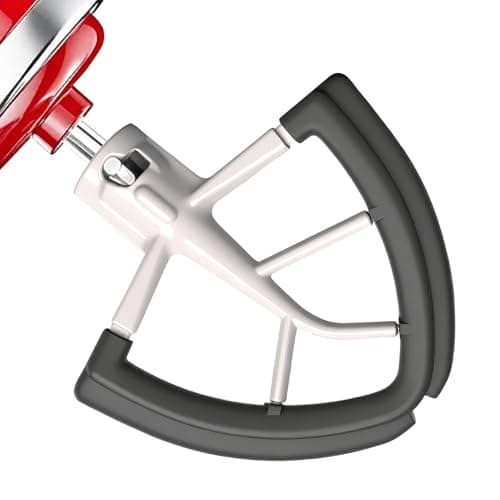
Start with the attachment that actually changes how you bake every single time: a flex-edge beater. The stock flat beater that ships with almost every tilt-head mixer does a fine job of mixing, but it leaves batter clinging to the sides of the bowl, which means stopping the mixer, scraping down and starting again — every time you cream butter and sugar or mix a cake batter. A flex-edge beater swaps in silicone-tipped wings that wipe the bowl wall as they turn, so the batter that used to sit untouched at the edges gets folded back in automatically. It's a small, cheap swap that removes a genuinely annoying step from nearly every mixing session.
The bigger attachments are a different calculation. KitchenAid's front PowerHub is the real advantage of owning a KitchenAid over most rivals — it's the port that a pasta roller, a food grinder, a spiralizer or an ice-cream maker all plug into, turning one motor into several appliances. That ecosystem is genuinely impressive, but it's only worth paying for if you'll use it. A pasta roller is wonderful for someone who makes fresh pasta regularly and a drawer-filler for someone who tried it twice. The honest test isn't "could I use this" — almost anything could get used once — it's whether it replaces a task you already do often enough that owning the tool beats renting the counter space it takes up.
How to sort attachments worth buying from ones that'll sit in a drawer
Every stand-mixer attachment claims to save you time or unlock a new recipe. The ones worth your money share a couple of traits, and the ones that don't share the opposite.
Buy the ones that fix something you fight every time you bake
A flex-edge beater is the clearest example: scraping the bowl by hand isn't hard, but it's a step you repeat every single time you cream, whip or mix. An attachment that removes a recurring annoyance pays for itself in a handful of uses. The same logic applies to a dough hook if you bake bread weekly, or a wire whip if you whip cream often — these aren't novelties, they're the tools the mixer is built around.
Be honest about the PowerHub attachments
Pasta rollers, grinders, spiralizers and the rest of KitchenAid's PowerHub lineup are real, capable tools — not gimmicks. But they're also the attachments most likely to be bought on enthusiasm and used twice. Before buying one, ask whether you already make that food often enough by hand that owning the machine version is an upgrade, not a substitute for a habit you don't actually have. If the answer is yes, they're a genuine extension of the mixer you already own.
Check fit before you buy
Third-party attachments like flex-edge beaters are usually sized for a specific bowl class — tilt-head 4.5–5-quart mixers, in most cases. A bowl-lift or a non-KitchenAid mixer often needs a different part entirely, so confirm your model and bowl size against the listing before ordering. For the mixer itself, our KitchenAid Artisan review and the stand-mixer worth-it guideare good starting points if you're still deciding what to buy before you accessorize it.