French bread is defined by its crust — thin, crackly and deeply colored, with a lean, chewy crumb underneath — and that crust is exactly the thing a bread machine finds hardest to reproduce. A machine can bake you a genuinely crusty, lean loaf that eats like French bread; what it cannot do is give you the long, thin shape of a real baguette, because it bakes in its own rectangular pan. So the honest way to shop for a French-bread machine is to judge it on the two things that actually decide crust quality: how evenly and deeply it browns the loaf, and how much control it hands you over the bake. The three machines here do that best, in that order.
Start with what a French loaf asks for, because it is different from a soft sandwich loaf. The dough is lean — flour, water, yeast and salt, with little or no fat, sugar or milk — which is what gives French bread its crisp crust and open, chewy interior instead of a tender, cakey crumb. Most machines carry a basic or French-style program, the kind that runs a longer, hotter bake to build a crisper, darker crust than the standard white cycle does. That program, plus a machine that browns evenly, is the whole recipe for a good machine "French" loaf. Everything else — fruit-and-nut dispensers, delay timers, express bakes — is beside the point when crust is your priority. Our best overall roundup ranks these machines across every job; this page is specifically about the crust.
Our pick for most people is the Zojirushi Virtuoso Plus, because its dual heaters give it a crust advantage no other home machine matches. Behind it, the Breville Custom Loaf is the machine for people who want to dial the crust shade and the loaf length themselves, and the Hamilton Beach 29882is the budget entry that lets you try a crusty loaf without a big outlay. And keep the honest limit in mind throughout: none of the three bakes a true baguette, because the pan shape is fixed. If a long, thin, hand-shaped crust is what you are after, you use the machine to mix and proof the dough and then bake it in your own oven — a route our guide to what you can make in a bread machine covers.
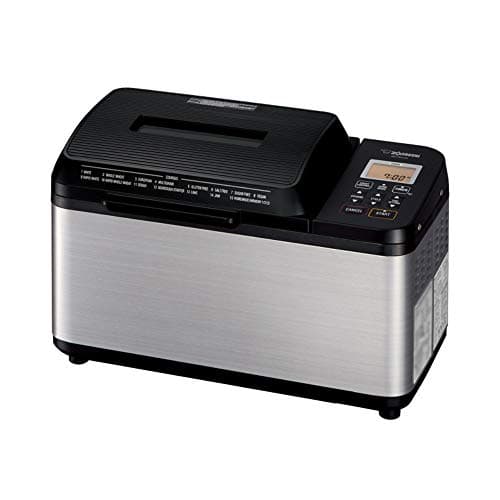
Zojirushi Virtuoso Plus — our pick. The reason it leads a French-bread ranking is the same reason it tops our overall list: its dual heaters, one on top and one on the bottom, brown the loaf from more than one direction and give the most even, deep crust color of any home machine. For a bread whose entire character is its crust, that is the feature that matters most, so a spec that is merely nice-to-have on a soft sandwich loaf becomes the headline here. Its horizontal pan bakes a standard, oblong loaf rather than a tall tower, and its three programmable custom courses let you extend a bake or tune the knead and rise for a crustier result you can save and repeat. The honest cons are straightforward and unchanged: it is the priciest machine on this list, and it has the largest footprint on the counter. If you bake crusty loaves often and want the best crust a machine can give, the premium earns itself. The full picture is in our Zojirushi Virtuoso Plus review.
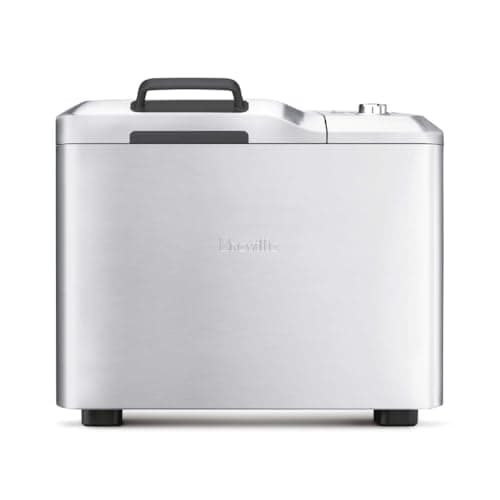
Breville Custom Loaf — the most control. If you want to shape the crust to your own taste, this is the one. Its deep settings range gives you room to adjust the bake and dial a crust darker or lighter, and its four loaf sizes, from one pound to two and a half, matter more for French bread than they do for a sandwich loaf: a longer, lower loaf in the biggest pan comes a little closer to the shape and crust-to-crumb ratio you want from French bread than a short, tall one does. Its collapsible paddlefolds down before the bake, so the finished loaf has a smaller hole in the base. The honest cons are the ones it carries everywhere: it sits at a premium price, close to the Zojirushi, and it has more settings than a casual baker will ever touch — depth that rewards a tinkerer and clutters the experience for everyone else. For how far that control goes, see our Breville Custom Loaf review, and our loaf sizes explained guide translates those pan sizes into practical loaves.
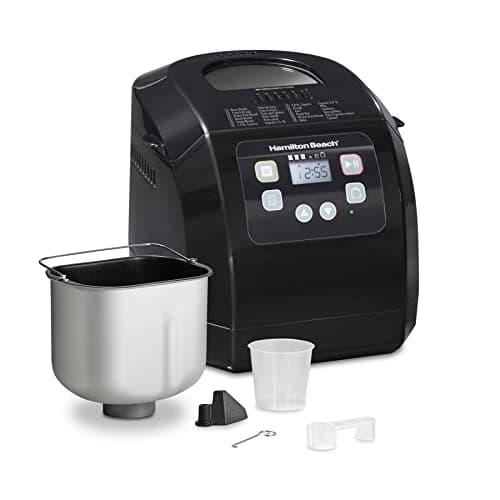
Hamilton Beach 29882 — the low-risk way in. You do not need to spend up to find out whether you like baking crusty bread, and this is the machine that proves it. A basic or French-style cycle is one of the most common programs on any bread maker, and its twelve-program set lets you run a lean, crusty loaf, while the express bake turns out a quick loaf when you are impatient. The honest cons matter more here than they do elsewhere, because crust is the whole point of this category: its thin pan and single paddlemean crust control is limited and browning is less even than a dual-heater machine, and it kneads louder than the pricier options. For a soft sandwich loaf those trade-offs barely register; for French bread they are real, and they are exactly why it ranks third rather than first. But as a way to try a crusty loaf cheaply — and step up later if you fall for it — it is an honest starter. The full write-up is in our Hamilton Beach bread maker review.
What actually makes a bread machine good at French bread
Buying a machine for French bread is a narrower question than buying one for everyday loaves, because almost everything about a French loaf comes down to the crust. Here is what to weigh, in the order it matters, plus the one thing no machine can do.
Even, deep browning is the whole game
A French loaf lives or dies on its crust, so the single most important thing a machine can offer is even, deep browning. This is where the dual-heater design pulls ahead: a machine that browns from the top and the bottom colors the loaf more evenly all around than one that relies on a single bottom element, which tends to leave the top pale and the crust uneven. If crust is the reason you are shopping this category at all, it is the feature to pay for — and it is the clearest reason the Zojirushi leads and a thin-panned budget machine trails. Judge a French-bread machine on how it browns first and everything else second.
Crust and bake control let you tune the result
After even browning, control is what separates a good French loaf from a great one. Crust-shade settings let you push the bake darker for a crisper, more caramelized crust; a dedicated French or basic cycle runs the longer, hotter bake that a lean dough wants; and programmable custom courses let you extend the bake or adjust the knead and rise and then save the version you like. The Zojirushi and the Breville both give you real room here — the Zojirushi through its custom courses, the Breville through its deep settings and crust control — while a simpler machine gives you the cycle as it comes. That is workable, you just adjust by recipe rather than by reprogramming.
Loaf shape and size: as close as a pan gets
No bread machine bakes a baguette, and it is worth saying plainly because it changes what you should expect. Every machine here bakes in a fixed pan, so "French bread" from a machine means a crusty, lean loaf in a rectangular shape — not a long, thin, hand-shaped crust. Within that limit, shape still varies: a horizontal pan like the Zojirushi's bakes a standard oblong loaf, and a larger loaf size, like the Breville's biggest, gives you a longer, lower loaf that eats more like French bread than a tall, square one. A tall single-paddle machine bakes the least French-looking loaf of the group. Our loaf sizes explained guide covers how pan size and shape translate into the loaf you actually get.
The lean-dough basics you control yourself
Whichever machine you choose, the recipe does a lot of the work. French bread is a lean dough, so keep the fat and sugar low or leave them out — they tenderize the crumb and soften the crust, which is the opposite of what you want. A little steam or a light water-and-egg wash brushed on before the final bake helps some machines crisp the crust, though you are limited by not being able to open the lid freely mid-bake. And baking the loaf a shade darker than you would a sandwich loaf pushes it toward that crackly, deep-colored French crust. The machine gives you an even bake; these choices tilt it toward French bread.
When to skip the machine and use the oven
If what you really want is a true baguette or a free-form crusty loaf, the honest answer is that the machine is the wrong tool for the bake — but the right tool for the dough. Run the dough cycle to mix and first-proof a lean French dough hands-free, then take the risen dough out, shape it into baguettes or a boule by hand, and bake it in your own oven, ideally with steam. You get the machine's convenience for the tedious part and the oven's crust for the part that matters. Our guide to what you can make in a bread machine walks through where the dough cycle beats the bake cycle, and this is a textbook case.
The bottom line for French bread
Buy the Zojirushi if you want the most even, deepest crust a machine can bake and you make crusty loaves often; buy the Breville if you want to dial the crust shade and bake a longer loaf, and you like to tinker; buy the Hamilton Beach if you want to try a crusty loaf cheaply and are happy with a less even crust while you learn. And remember the ceiling that applies to all three: for a real baguette, the machine mixes and proofs, and your oven bakes.