Your first bread machine doesn't need to be the best one on the market — it needs to be cheap enough that trying bread baking isn't a real gamble, and simple enough that the manual stays in the drawer. Plenty of beginners buy a feature-loaded machine, use two settings out of twenty, and never find out whether they'd have been just as happy with something far cheaper. These three keep the barrier to entry low without leaving you with a toy.
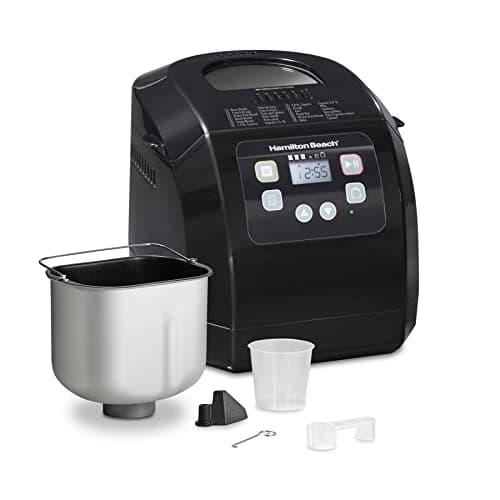
The Hamilton Beach Bread Makeris the obvious place to start. Twelve programs cover the basics — including a gluten-free cycle, an express bake and two loaf sizes — at one of the lowest prices in the category. The button set is simple: pick a size, pick a cycle, walk away. The trade is a thin pan and a single paddle, so crust control is limited and the kneading runs louder than on pricier machines. For someone who just wants to find out whether they'll actually use a bread machine, that's an honest trade.
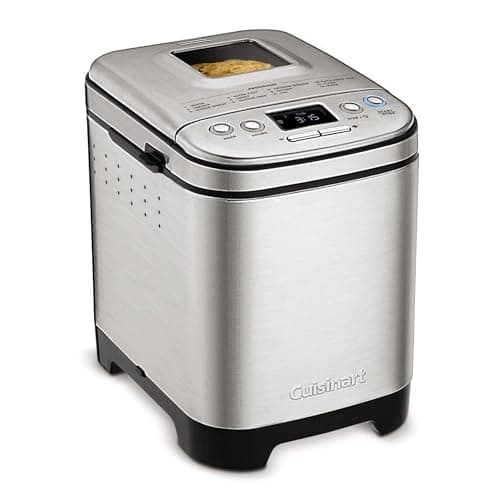
The Cuisinart Automatic Bread Maker costs a little more and gives a little more back: the same 12 programs, plus three crust shades and a compact vertical footprint that tucks under most cabinets. A 13-hour delay timer means you can load it before bed and wake up to a fresh loaf — a small feature that does a lot to build the habit of actually using the machine.
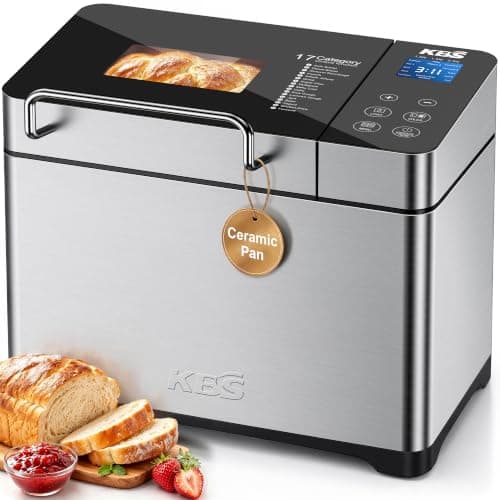
The KBS Bread Machineis worth a look if you already suspect you'll want to keep going past a basic loaf. Seventeen programs and an automatic fruit-and-nut dispenser give a beginner some early room to experiment, at a mid-range price. It's a newer brand than Hamilton Beach or Cuisinart, so weigh the extra features against a shorter track record.
What actually matters for a first bread machine
Skip the spec-sheet arms race for now. The features that matter most to a beginner are the ones that make it easy to succeed on the first few loaves — not the ones that show up well on a comparison chart.
A few solid programs beat a wall of settings
Every machine here ships with a basic white cycle, a whole-wheat cycle and a gluten-free cycle, which covers the bread most beginners actually bake. Extra programs for jam, yogurt or cake are nice to have later, but they're not why you're buying your first machine — don't pay a premium for a program count you won't touch in year one.
Loaf size and crust control
All three machines here bake up to a 2-pound loaf, the standard size for a home kitchen and the easiest to find recipes for. Crust shade control is a genuinely useful beginner feature where it's offered — the Cuisinart's three shades let you fix a loaf that came out pale or over-browned without touching the recipe. A delay-start timer, like the Cuisinart's, is worth having too: it's the difference between fresh bread when you wake up and remembering to start the machine at 6 a.m.
Buy for forgiveness, not for ceiling
More capable machines bake a more even loaf and hand you more control, but that control is wasted on a first attempt — you don't yet know what you'd tune. Start with one of these three, bake five or six loaves, and you'll know exactly what you wish it did differently. That's the point where upgrading actually pays off. If gluten-free bread is specifically what brought you here, see our guide to gluten-free bread machines instead. And if you're still weighing a machine against kneading by hand or mixer, our bread machine vs. stand mixer guide works through that choice.