Here's the honest truth about making pasta on a stand mixer: the mixer itself is only half of it. What actually turns a bag of flour into fresh tagliatelle is the attachment ecosystem— the roller and cutter attachments that fit the front hub and sheet, thin and slice the dough — plus a bowl big enough to knead a firm egg-pasta dough in the first place. That combination is why all three of our picks are KitchenAids. It isn't brand loyalty; it's that KitchenAid's front PowerHub is the one home-mixer platform with a mature, widely available range of pasta rollers and cutters behind it. Buy into that hub and pasta is a natural extension of the mixer; buy a machine without it and you're back to a hand-crank roller clamped to the table.
A quick, important note on those pasta attachments. The roller and cutter set — the flat sheeter and the fettuccine and spaghetti cutters that clip onto the front hub — are sold separately from the mixer, and they aren't in our product registry, so we won't quote a price or a model number we can't verify. We'll describe them qualitatively: they run off the same front PowerHub port that every KitchenAid in this roundup shares, they're powered by the mixer's motor rather than a hand crank, and the same set fits across the tilt-head and bowl-lift line. What the three mixers below decide is the foundation that hub sits on — how well the machine kneads a stiff egg dough, and how much of it you can make at once.
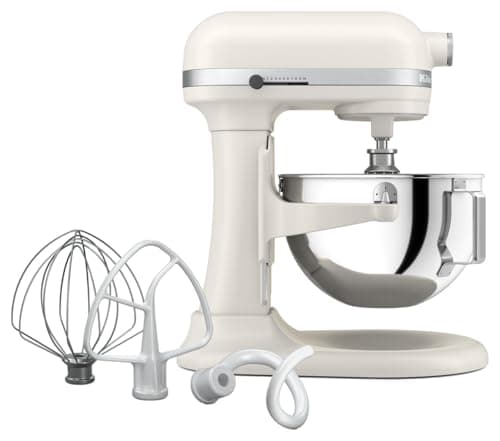
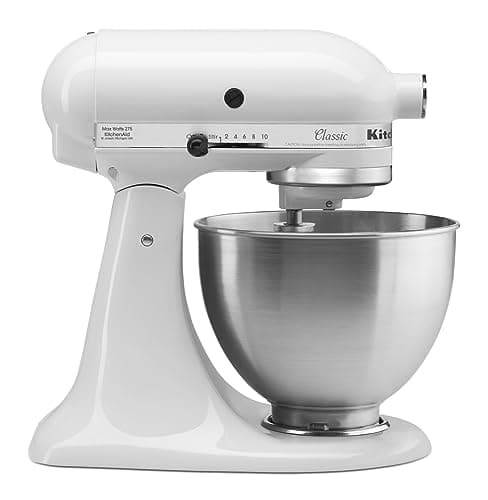
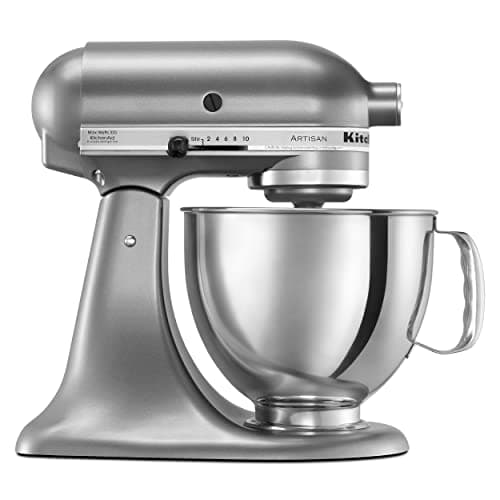
Our default pick is the KitchenAid Artisan: a 5-quart tilt-head with the full PowerHub, enough motor for a normal egg-pasta dough, and the deepest attachment range in the category, so it's the easiest machine to grow into pasta on. For bigger batches or a firmer, more traditional dough, the KitchenAid 5.5-quart bowl-lift plants its head over a larger bowl and stays steadier on stiff dough. And the KitchenAid Classicis the cheapest way onto the exact same attachment hub — the same rollers and cutters fit it, so it's the budget route into mixer-made pasta.
KitchenAid Artisan — the default.A 5-quart tilt-head with 10 planetary speeds and the front PowerHub port, it kneads a standard egg-pasta dough comfortably and, more to the point, it's the platform with the deepest accessory range — pasta rollers and cutters, plus grinders and more — so it's the machine most likely to still be useful as your pasta ambitions grow. It also holds resale value and parts availability better than any rival brand. The honest cons for pasta use: the tilt-head can flex on a very stiff, low-hydration dough, and the rated 325-watt motor is only mid-pack, so a big, dry dough asks more of it than a bowl-lift would give. Don't buy the Artisan if you knead stiff dough every single day — a bowl-lift or a Bosch has motor headroom you'll keep asking for — but for most home pasta makers it's exactly enough.
KitchenAid 5.5-quart bowl-lift — more capacity and a steadier knead.The step up for a pasta maker who wants to knead a firmer, more traditional dough or make more at once. Its bowl-lift design plants the head over a bigger 5.5-quart bowl, so it stays steadier on stiff dough than a tilt-head, and it takes the same front-hub pasta attachments as every other KitchenAid. The honest cons: it costs more than the tilt-head Artisan for most bakers' needs, the bowl-lift is a little less convenient for quick bowl and beater swaps, and it's heavier and taller, so check your under-cabinet clearance. Don't buy it if you only make pasta occasionally — the Artisan's tilt-head is friendlier day to day and has all the capacity a normal batch needs.
KitchenAid Classic — the cheapest way onto the hub.The lowest-priced genuine KitchenAid keeps the same 10-speed planetary action and, crucially, the same front attachment hub, so the identical pasta rollers and cutters clip straight on. For a single batch of fresh pasta it does the same job as the Artisan. The honest cons are the ones you'd expect from the entry model: its rated 275-watt motor is the weakest in the line, the 4.5-quart bowl gets tight on a full double batch of dough, and it comes in fewer colors and bowl options. Don't buy the Classic if you routinely make big or firm doughs — the extra half-quart and motor of the Artisan is worth the step up — but as a low-risk way onto the pasta hub, it's the smart buy.
What actually makes a stand mixer good for pasta
Pasta is a two-part problem: knead a firm dough, then roll and cut it. A stand mixer only solves the first part on its own — the second is the attachment ecosystem. Buy for both, and be honest about which platform actually has the accessories.
The attachment ecosystem is the whole point
You can knead pasta dough in almost any decent mixer, but you can only roll and cutit on a machine whose front hub takes a sheeter and cutters. That is the reason this roundup is all-KitchenAid: the front PowerHub is the one home-mixer platform with a mature, widely available range of pasta rollers and cutters behind it. The attachments are sold separately, they clip onto the same hub on every KitchenAid here, and they're driven by the mixer's motor instead of a hand crank — which is exactly what makes mixer pasta feel effortless next to a table-clamped roller. We're describing them qualitatively on purpose: they're not in our product registry, so we won't invent a model or a price we can't verify.
The bowl and the knead come first
Before any attachment touches the dough, the mixer has to make the dough. Classic egg pasta is a firm, relatively dry dough — stiffer than a bread dough at the same weight of flour — and kneading it develops the gluten that gives fresh pasta its bite. That's why capacity and a steady knead matter: the Artisan's 5-quart and the bowl-lift's 5.5-quart handle a family-sized batch, while the Classic's 4.5-quart is fine for a single batch but gets tight on a double. If bread and stiff dough are also on your menu, our kneading guide and the best-for-bread-dough roundup cover the machines that knead firmest.
Tilt-head or bowl-lift for pasta dough?
Both work, and both take the same pasta attachments, so this is a question of how firm and how big your dough is. A tilt-head Artisan or Classic is friendlier day to day — easier to lift the head, swap the bowl and check the dough — and it's all most home pasta makers need. A bowl-lift plants the head over the bowl and stays steadier when the dough is stiff and dry, which is why the 5.5-quart is the pick for a firmer, more traditional dough or a bigger batch. Our tilt-head vs bowl-lift guide lays the difference out, and the what-size guide helps you match the bowl to your batch.
Motor headroom: how much you really need
Egg pasta is firm, but a normal batch isn't the marathon that a big stiff bread dough is, so you don't need a bottom-drive workhorse to make it. The Artisan's mid-range motor handles a standard dough with room to spare; the bowl-lift adds headroom for firmer or bigger doughs; the Classic's weaker motor is fine for a single batch but is the first to feel a big, dry dough. The rule of thumb: match the motor to the biggest, firmest dough you'll make regularly, not the average one. If you also bake bread in volume, weigh a bowl-lift or read our wattage guide before deciding.
New to the machine? Learn it before the pasta attachment
If this is your first stand mixer, get comfortable with the mixer itself before you add a pasta roller to the front. Knowing how to lock the head, when to use the dough hook, and how the speed dial behaves makes the whole pasta process smoother — a roller attachment on the front is a lot to manage if the base machine still feels unfamiliar. Our how-to-use-a-stand-mixer guide is the beginner walkthrough, and the speeds guide maps the dial to the job.
Why not a non-KitchenAid mixer for pasta?
It's a fair question, and the honest answer is capability, not snobbery. Plenty of rival mixers knead pasta dough just fine — a Cuisinart or a Bosch will make the dough happily. What they lack is the deep, mature front-hub attachment range that turns the mixer into a pasta machine. If rolling and cutting with the mixer's own motor is the dream, that pushes you firmly toward KitchenAid; if you're content to knead in the mixer and roll on a separate hand-crank machine, then any capable dough mixer — including the ones in our best-for-home-bakers roundup— will do the kneading half of the job.
Sizing the three: which KitchenAid for which pasta habit
Line the three picks up against how you actually cook. The Classic is the low-risk entry — the same hub, a smaller bowl and motor, ideal for occasional single batches and for finding out whether mixer pasta is your thing. The Artisan is the do-everything default: enough bowl and motor for regular family pasta, plus the widest accessory range to grow into. The 5.5-quart bowl-lift is for the cook who's serious about pasta — bigger, firmer doughs and more of them, on a frame that stays planted. Pick the one that matches your ambition, and remember that all three share the exact same pasta attachments, so you're never choosing a different pasta capability, only a different foundation for it.
Mix the dough right: paddle first, then hook
There's a small technique that makes mixer pasta far easier, and it costs nothing. Start the dough with the flat beater on a low speed to bring the flour and eggs into a shaggy, crumbly mass, then switch to the dough hookto knead it smooth and elastic. Trying to start a stiff, dry egg dough on the hook alone often leaves flour flying and the dough clumping on one side; the paddle brings it together first. Fresh pasta dough is deliberately firm — drier than bread dough — so knead it only until it's smooth and springy, then let it rest, covered, for 30 minutes before you roll it. Resting relaxes the gluten so the dough sheets out thin without snapping back or tearing, which matters far more to the finished pasta than any spec on the mixer. All three picks here handle this method identically; the only difference is how big a batch you can bring together at once.
Read each pick in full before you buy
As always, treat this roundup as a shortlist and read the individual reviews before you spend: the KitchenAid Artisan review for the default, the 5.5-quart bowl-lift review for the capacity step up, and the KitchenAid Classic review for the budget route onto the hub. Each covers the cons in more depth than a roundup can.