Sourdough is a different job from a quick sandwich loaf, and it asks different things of a mixer. The dough is usually wetter, the fermentation is long, and serious sourdough bakers tend to make more than one loaf at a time. Speed barely matters; what matters is whether a machine can develop gluten in a slack, sticky dough and keep working a full batch without straining.
Start with an honest caveat, because we'd rather tell you the truth than sell you a mixer: a huge amount of sourdough is made with no mixer at all. High-hydration doughs develop beautifully with a rest (an autolyse) and a few sets of stretch-and-folds by hand. If you bake one loaf at a time, a mixer is a convenience, not a requirement — a basket, a lame and a dough whisk will take you further than a motor will.
Where a mixer earns its place is volume and consistency. If you bake two, three or four loaves at once, or you make stiffer, enriched sourdoughs, a machine that kneads a big batch without heating up saves real effort. That's why the bottom-drive Bosch Universal Plusleads here: its open 6.5-quart bowl and under-the-bowl motor swallow a multi-loaf batch of slack dough that would climb the hook and bog a tilt-head. Behind it, a bowl-lift or tilt-head KitchenAid handles a single big loaf's worth comfortably. The ranking is about batch size and endurance, not a "best sourdough" badge.
The short answer
Quick picks
| # | Product | Best for | Score | Price |
|---|
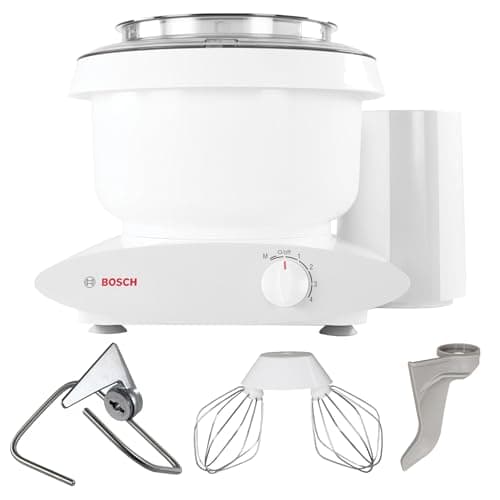
| 01 | Bosch Universal Plus Stand MixerThe bread baker's mixer. A belt-driven motor at the base and a big open bowl let it knead far more dough than a KitchenAid without straining. Less elegant, less versatile for whipping small amounts — but for loaves it's the one. | High-volume bread dough | | $499.00·Amazon |
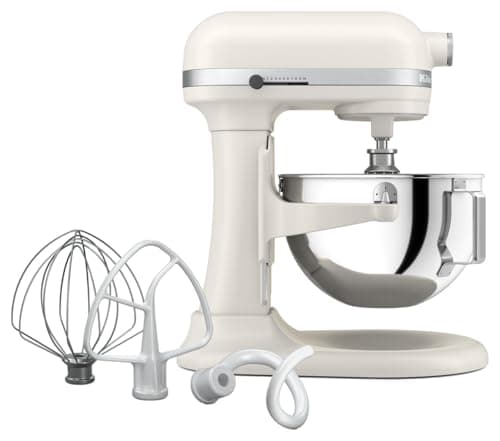
| 02 | KitchenAid 5.5-Qt Bowl-Lift (KSM55)The step up for a baker who has out-grown a 5-quart tilt-head but wants to stay in the KitchenAid world. The bowl-lift design plants the head over a bigger 5.5-quart bowl, so it stays steadier on stiff dough than a tilt-head — at a premium price. | Frequent, heavier baking | | $499.99·Amazon |
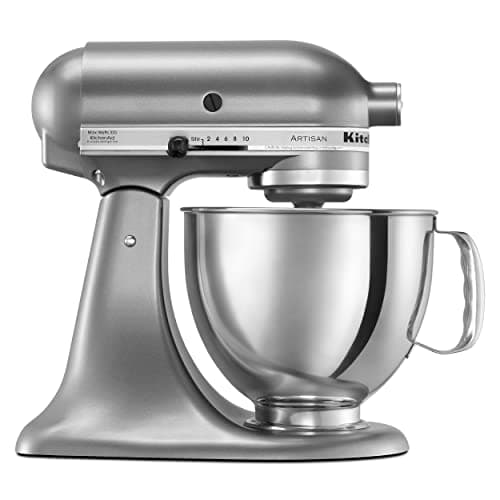
| 03 | KitchenAid Artisan 5-Qt Tilt-Head (KSM150)The default for a reason: 5-qt tilt-head, a mature attachment ecosystem, and enough motor for a couple of loaves a week. Not the mixer for daily heavy dough — but that's a small slice of home bakers. | Most home bakers | | $449.00·Amazon |
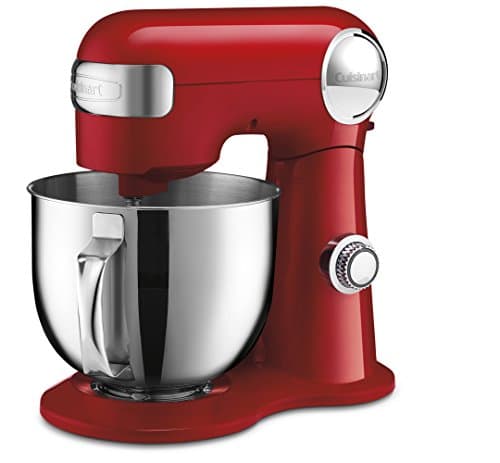
| 04 | Cuisinart Precision Master 5.5-Qt (SM-50)The value tilt-head. A larger 5.5-qt bowl and a stronger rated motor than the Artisan, usually for less money. The trade is a thinner accessory ecosystem and slightly rougher fit and finish. | Best value tilt-head | | $216.65·Amazon |
#ad · Live prices from the Amazon Product API, as of Sep 19, 2026. Where we have no verified live price we show none — a gap beats a number that has rotted.
In detail
The picks, in full
High-volume bread dough
Bosch Universal Plus Stand Mixer
500 W rated6.5-qt bowlBottom-drive~5–6 lb doughDough hook + whisks
The bread baker's mixer. A belt-driven motor at the base and a big open bowl let it knead far more dough than a KitchenAid without straining. Less elegant, less versatile for whipping small amounts — but for loaves it's the one.
- Motor / dough
- 9.5
- Capacity
- 9.5
- Build & durability
- 8
- Ease of use
- 7.5
- Value
- 8
Pros
- +Bottom-drive motor kneads large, stiff dough batches most tilt-heads can't finish
- +6.5-qt bowl swallows 3–4 loaves' worth of dough at once
- +Lightweight for its capacity and easy to store
Cons
- −Not ideal for very small jobs — whipping one egg white gets lost in the big bowl
- −Plastic-forward build feels less premium than a cast KitchenAid
- −Smaller accessory ecosystem in the US
Don't buy this if…
…you mostly whip cream, beat butter and do single-batch baking — a tilt-head KitchenAid is friendlier for that work.
Frequent, heavier baking
KitchenAid 5.5-Qt Bowl-Lift (KSM55)
5.5-qt bowlBowl-lift designCast metal buildPowerHub portDishwasher-safe bowl
The step up for a baker who has out-grown a 5-quart tilt-head but wants to stay in the KitchenAid world. The bowl-lift design plants the head over a bigger 5.5-quart bowl, so it stays steadier on stiff dough than a tilt-head — at a premium price.
- Motor / dough
- 8.5
- Capacity
- 9
- Build & durability
- 8.5
- Ease of use
- 8
- Value
- 7.5
Pros
- +Bowl-lift head stays planted on stiff dough where a tilt-head can flex
- +5.5-qt bowl handles a bigger batch than the 5-qt Artisan
- +Takes the same front-hub attachments as every other KitchenAid
Cons
- −Costs more than the tilt-head Artisan for most bakers' needs
- −Bowl-lift is a little less convenient for quick bowl and beater swaps
- −Heavier and taller — check your under-cabinet clearance
Don't buy this if…
…you only bake a loaf or two a week — a 5-qt tilt-head Artisan is cheaper, friendlier day to day, and has all the capacity you'll use.
Most home bakers
KitchenAid Artisan 5-Qt Tilt-Head (KSM150)
325 W rated5-qt bowl10 speedsTilt-headPowerHub port
The default for a reason: 5-qt tilt-head, a mature attachment ecosystem, and enough motor for a couple of loaves a week. Not the mixer for daily heavy dough — but that's a small slice of home bakers.
- Motor / dough
- 8
- Capacity
- 8
- Build & durability
- 8.5
- Ease of use
- 9
- Value
- 8.5
Pros
- +Huge attachment ecosystem (grinder, pasta, ice cream) via the front PowerHub
- +5-qt bowl handles roughly a double batch of cookie dough or 2 loaves of bread dough
- +Holds resale value and parts availability better than any rival brand
Cons
- −Tilt-head flex shows on very stiff, low-hydration dough
- −325 W rated motor is mid-pack — it will bog if you knead dense dough daily
Don't buy this if…
…you knead stiff bagel or heavy rye dough every day — a bowl-lift or a Bosch has the motor headroom you'll keep asking for.
Best value tilt-head
Cuisinart Precision Master 5.5-Qt (SM-50)
500 W rated5.5-qt bowl12 speedsTilt-headSplash guard
The value tilt-head. A larger 5.5-qt bowl and a stronger rated motor than the Artisan, usually for less money. The trade is a thinner accessory ecosystem and slightly rougher fit and finish.
- Motor / dough
- 8
- Capacity
- 8.5
- Build & durability
- 7.5
- Ease of use
- 8.5
- Value
- 9
Pros
- +Bigger bowl and higher rated wattage than the same-price KitchenAid
- +12 speeds with a genuinely useful low start speed
- +Comes with dough hook, flat beater and whisk in the box
Cons
- −Far fewer first-party attachments than KitchenAid
- −Resale value and long-term parts support trail KitchenAid
- −Head latch feels less refined
Don't buy this if…
…you want to grow into pasta rollers, grinders and the wider attachment world — that's KitchenAid's home turf.
What a mixer actually does for sourdough
A mixer replaces the kneading and some of the early gluten development. It does not proof, shape, score or bake — those are still on you, and they're where most of the sourdough craft lives. Size the machine to the mixing job, not to a fantasy of what it replaces.
Capacity beats power for wet dough
High-hydration sourdough isn't hard because it's heavy — it's awkward because it's slack and climbs the hook. A bigger, more open bowl gives the dough somewhere to move, which is exactly the Bosch's advantage over a tall, narrow tilt-head bowl. If you batch-bake, weight the decision toward capacity and a bottom-drive or bowl-lift design before you worry about wattage.
Use an autolyse and let the flour do the work
The single biggest thing that makes any mixer's job easier on sourdough is resting the flour and water for 30–60 minutes before you add starter and salt. That autolyse builds gluten passively, so the mixer only has to finish the job — which means even a modest tilt-head like the Artisan can handle a single big loaf without laboring.
Don't over-mix — sourdough finishes on the counter
Unlike a bread-machine loaf, sourdough gets most of its strength from time and folds, not from mixing it to a full window in the bowl. Mix until the dough just comes together and smooths out, then move to bulk fermentation. Chasing full development in the mixer heats the dough and wastes the machine's advantage. If you're still deciding whether you even need a stand mixer for this, our is-a-stand-mixer-worth-it guide works through it, and the best-for-bread-dough roundup covers stiffer doughs like bagels and rye.
How we picked
We don't run a testing lab
We read the manuals, compiled the published specifications, did the wattage-to-dough math and weighed aggregated owner reviews, then scored each product against a published rubric. The scores are judgments from documented research — they are not measurements we took, because we do not have a lab and we're not going to pretend we do. Every spec is the manufacturer's published figure, cited in Sources.
Questions
Frequently asked
Do I need a stand mixer to make sourdough?+
No. A great deal of sourdough is made entirely by hand with an autolyse and stretch-and-folds. A mixer is a convenience for larger batches or stiffer, enriched doughs — not a requirement for a single high-hydration loaf.
Which stand mixer is best for batch sourdough?+
The bottom-drive Bosch Universal Plus, because its open 6.5-quart bowl and under-the-bowl motor knead a multi-loaf batch of slack dough without it climbing the hook or bogging the motor the way a tall tilt-head bowl can.
Can a KitchenAid Artisan handle sourdough?+
Yes, for a single loaf. Rest the flour and water first (an autolyse), then mix only until the dough comes together — you don't need full development in the bowl. For multiple loaves at once, step up to a bowl-lift or the
Bosch.
Receipts
Sources
We don't run a testing lab, and we don't pretend to. Specs are the manufacturer's published figures, cited above; scores are our judgments from that research. Where we couldn't verify something, we say so on the page rather than quietly leaving it out. Read our full method.