The best stand mixer for a small kitchen is not the most powerful one — it is the most powerful one you will actually leave out and use. A big bowl-lift that lives in a cupboard because it does not fit the counter is a worse mixer, in practice, than a compact machine that is always to hand. This roundup balances real baking ability against footprint, weight and how easily each machine tucks away, for kitchens where space is the binding constraint.
Three things decide whether a mixer suits a small kitchen. The first is the footprint and height, including clearance under wall cabinets with the head tilted up. The second is weight: a machine you can lift on and off a shelf gives you back counter space, while a thirty-pound bowl-lift effectively claims a permanent spot. The third — easy to forget — is bowl size, because a smaller bowl is not just easier to store, it is also right-sized for the single batches most small households actually bake. If you routinely double recipes, a small kitchen is going to fight you, and our large-batch roundup is the honest place to look instead.
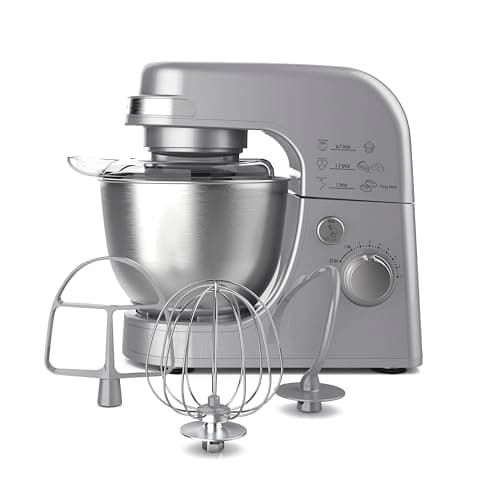
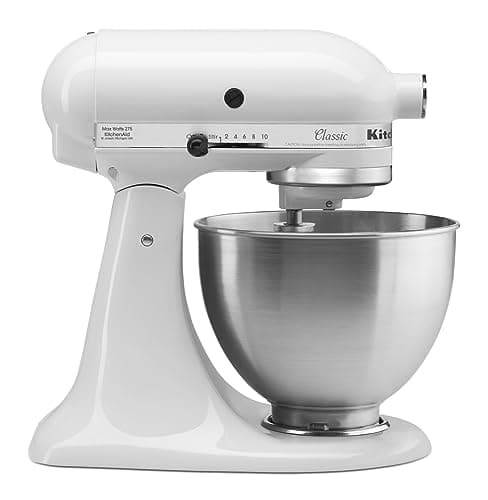
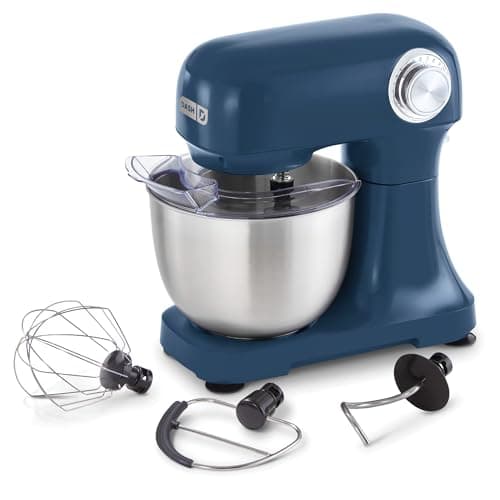
The picks step up in size and capability as space allows. The Dash 3.5-quart is the true mini — light, cheap and genuinely small, for the tightest kitchens and smallest budgets. The Hamilton Beach 4-quart is the cheapest full-size-ish tilt-head, a modest step up in bowl and motor that still stores easily. The KitchenAid Classic 4.5-quart is the pick when you want a mixer that will last and grow with you — its footprint is friendlier than the bigger Artisan and 7-quart machines, while keeping the full KitchenAid attachment ecosystem. Every price below is live from Amazon and date-stamped.
A note on the trade you are making: none of these is a bread-dough workhorse. Small-kitchen mixers earn their place by fitting and by handling everyday baking — cakes, cookies, frostings, whipped cream and the occasional light dough — not by kneading heavy loaves day after day. That is the right trade for most people in tight spaces, and being clear about it is how you avoid buying a machine that disappoints. See how we pick for the rubric behind these calls.
The short answer
Quick picks
| # | Product | Best for | Score | Price |
|---|
| 01 | Dash 3.5-Qt Tilt-Head Stand MixerThe mini stand mixer for a tiny kitchen or a first-timer. A 3.5-quart tilt-head with a paddle, dough hook, whisk and splash guard in the box, for well under a hundred dollars. It's light-duty and plastic-bodied — it won't knead heavy dough or last a decade — but for small-batch baking in a small space it's a lot of mixer for the money. | Small kitchens / occasional small batches | | $79.99·Amazon |
| 02 | Hamilton Beach 4-Qt Electric Stand MixerThe cheapest way to get a real stand mixer on the counter. A 4-quart tilt-head with a dough hook, flat beater and whisk in the box for a fraction of a KitchenAid's price. It won't match the build or the motor, but for occasional baking it's a lot of mixer for the money. | Cheapest tilt-head stand mixer | | $109.19·Amazon |
| 03 | KitchenAid Classic 4.5-Qt Tilt-Head (K45SS)The cheapest way into the KitchenAid ecosystem. Slightly smaller bowl and a hair less power than the Artisan, but the same attachment hub and the same 10-speed planetary action. For occasional bakers this is the smart buy. | Budget / occasional bakers | | $399.00·Amazon |
#ad · Live prices from the Amazon Product API, as of Sep 20, 2026. Where we have no verified live price we show none — a gap beats a number that has rotted.
In detail
The picks, in full
Small kitchens / occasional small batches
Dash 3.5-Qt Tilt-Head Stand Mixer
350 W rated3.5-qt bowl12 speedsTilt-headHook + whisk incl.
The mini stand mixer for a tiny kitchen or a first-timer. A 3.5-quart tilt-head with a paddle, dough hook, whisk and splash guard in the box, for well under a hundred dollars. It's light-duty and plastic-bodied — it won't knead heavy dough or last a decade — but for small-batch baking in a small space it's a lot of mixer for the money.
- Motor / dough
- 5.5
- Capacity
- 5.5
- Build & durability
- 6
- Ease of use
- 8
- Value
- 8.5
Pros
- +Compact and light (~6 lb) — easy to store in a small kitchen or dorm
- +Ships with a dough hook, paddle, whisk and splash guard, all dishwasher-safe
- +Costs a fraction of a full-size stand mixer
Cons
- −3.5-qt bowl and light-duty motor are for small batches, not heavy or high-volume dough
- −Plastic-forward build feels budget and isn't made to last like a cast machine
- −Short 1-year warranty (2 years only if you register)
Don't buy this if…
…you bake bread or double batches — even a budget full-size mixer like the Hamilton Beach 4-qt has the bowl and motor you'll want.
Cheapest tilt-head stand mixer
Hamilton Beach 4-Qt Electric Stand Mixer
4-qt bowl7 speedsDough hook + whisk incl.Tilt-headSplash guard
The cheapest way to get a real stand mixer on the counter. A 4-quart tilt-head with a dough hook, flat beater and whisk in the box for a fraction of a KitchenAid's price. It won't match the build or the motor, but for occasional baking it's a lot of mixer for the money.
- Motor / dough
- 6.5
- Capacity
- 7
- Build & durability
- 6.5
- Ease of use
- 8
- Value
- 9
Pros
- +One of the lowest prices for a genuine stand mixer, not a hand mixer
- +Ships with a dough hook, flat beater, whisk and splash guard
- +Light and easy to move on and off the counter
Cons
- −Plastic-forward build feels a long way from a cast KitchenAid
- −Smaller 4-qt bowl and a motor happier with batter than heavy dough
- −No attachment ecosystem to grow into
Don't buy this if…
…you bake bread often or want a machine that lasts a decade — a KitchenAid Classic or Cuisinart Precision Master is the sturdier buy.
Budget / occasional bakers
KitchenAid Classic 4.5-Qt Tilt-Head (K45SS)
275 W rated4.5-qt bowl10 speedsTilt-headPowerHub port
The cheapest way into the KitchenAid ecosystem. Slightly smaller bowl and a hair less power than the Artisan, but the same attachment hub and the same 10-speed planetary action. For occasional bakers this is the smart buy.
- Motor / dough
- 7
- Capacity
- 7
- Build & durability
- 8
- Ease of use
- 9
- Value
- 9
Pros
- +Usually the lowest price for a genuine KitchenAid planetary mixer
- +Takes the same front-hub attachments as the pricier models
- +4.5-qt bowl is plenty for single batches
Cons
- −275 W rated motor is the weakest in the line
- −4.5-qt bowl gets tight on a full double batch
- −Fewer bowl/color options than the Artisan
Don't buy this if…
…you routinely bake double batches or bread — the extra half-quart and motor of the Artisan is worth the step up.
How to choose a stand mixer when space is tight
In a small kitchen, the specs that matter most are the physical ones. Here is what to check before you buy.
Measure height and cabinet clearance first
The number that catches people out is height with the head raised. Tilt-head mixers need clearance above them to open, and a bowl-lift needs room to crank the bowl up. Measure from your counter to the underside of your wall cabinets and check it against the mixer's tilted height before ordering — this single measurement rules out more machines in small kitchens than any other.
Decide between store-it and leave-it-out
A lighter mixer like the Dash or the Hamilton Beach can be lifted into a cupboard between bakes, giving your counter back. A heavier machine effectively becomes a permanent counter resident. Neither is wrong — but be honest about which you want, because a mixer you dread hauling out is a mixer you will not use.
Right-size the bowl to your baking
A smaller bowl is a feature, not just a compromise, if you bake single batches: it stores more easily and mixes small quantities better than a large bowl that leaves a whisk spinning above the ingredients. Save the big bowls for households that genuinely bake big. If you are unsure, our what size do I need guide walks through matching bowl capacity to how you actually bake.
Think about the long game
If you expect your baking to grow, a compact-but-serious machine like the KitchenAid Classickeeps you in an ecosystem you can build on, so a small kitchen today does not force a full replacement later. If you are simply testing whether you will bake much at all, the Dash's low price makes it a low-risk starting point.
How we picked
We don't run a testing lab
We read the manuals, compiled the published specifications, did the wattage-to-dough math and weighed aggregated owner reviews, then scored each product against a published rubric. The scores are judgments from documented research — they are not measurements we took, because we do not have a lab and we're not going to pretend we do. Every spec is the manufacturer's published figure, cited in Sources.
Questions
Frequently asked
What's the best small stand mixer for a tiny kitchen?+
It depends on how much you bake. The Dash 3.5-quart is the smallest and cheapest for very tight spaces and single batches; the Hamilton Beach 4-quart adds a little capacity while still storing easily; and the KitchenAid Classic 4.5-quart is the compact pick if you want a mixer that lasts and takes attachments.
Will a stand mixer fit under my kitchen cabinets?+
Measure the clearance from your counter to the underside of your wall cabinets and compare it with the mixer's height when the head is tilted up or the bowl is raised. Tilt-head mixers in particular need room above them to open, and this is the measurement that rules out the most machines in small kitchens.
Can a compact stand mixer still make bread?+
It can handle small, soft doughs, but compact and mini mixers aren't built to knead large or stiff bread dough regularly. If bread is a routine part of your baking, a machine sized for dough is the better choice even if it takes more space.
Receipts
Sources
We don't run a testing lab, and we don't pretend to. Specs are the manufacturer's published figures, cited above; scores are our judgments from that research. Where we couldn't verify something, we say so on the page rather than quietly leaving it out. Read our full method.