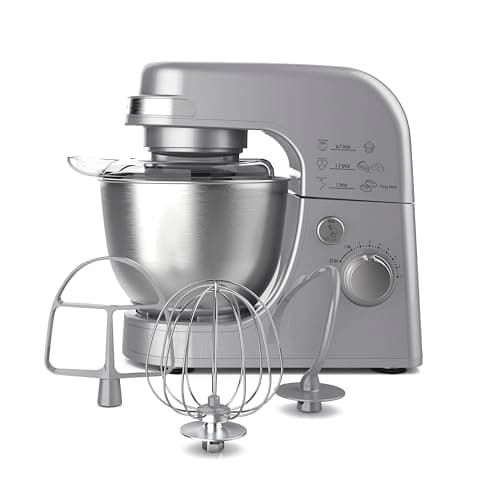
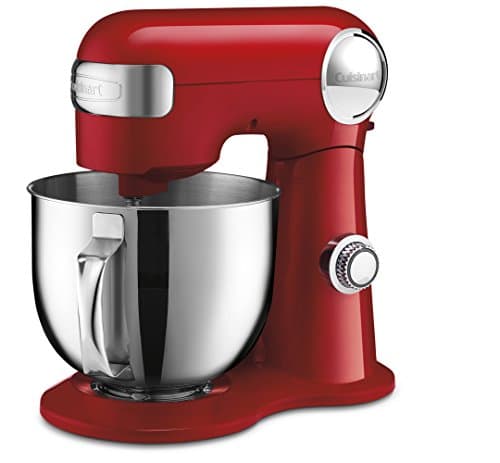
If you want a genuine stand mixer without paying KitchenAid money, two names keep surfacing: the Cuisinart Precision Master and the Hamilton Beach 4-quart. Both are tilt-heads, both arrive with the dough hook, flat beater and whisk you need to start baking, and both cost a fraction of the mixer that dominates the wedding registry. They are not, however, the same class of machine, and the right choice comes down almost entirely to how often and how hard you plan to bake.
The short version: the Cuisinart is the better mixer and the Hamilton Beach is the cheaper one. The Precision Master brings a bigger bowl, a stronger rated motor and more speed steps, and it feels built to sit on a counter for years. The Hamilton Beach is lighter, plainer and priced at rock bottom, which makes it a sensible first mixer for someone who bakes a few times a month and does not want to commit real money. Neither is pretending to be a bowl-lift or a Bosch, so if you knead stiff dough every week it is worth deciding whether you even want a mixer this size — our is a stand mixer worth it guide is the place to settle that first.
Start with the two numbers that decide what any mixer can do: bowl size and motor. The Cuisinart's larger bowl takes a bigger batch of cookie dough or cake batter in one pass, so you are not splitting a double batch or fighting a crowded bowl, and its stronger rated motor keeps more headroom in reserve before it starts to labor on a stiff dough. The Hamilton Beach's smaller bowl and lighter-duty motor are at their happiest with batters — cake, cookies, whipped cream, frosting — and get visibly more stressed by a full load of bread dough. In owner reports that gap is the single clearest reason to step up if bread or big batches are anywhere in your plans. Our Cuisinart Precision Master review covers how it copes with dough in more detail.
The distance widens in the details. The Cuisinart offers more speed steps with a genuinely gentle start, so flour and sugar do not erupt out of the bowl the instant you switch on, and the extra increments help with everything from folding delicate mixtures to whipping cream to full stiffness. Owners note that its head latch and general fit and finish feel a step more solid than the Hamilton Beach, which leans harder on plastic to reach its price. The Hamilton Beach answers with sheer portability — it is light enough to lift on and off a shelf one-handed, which matters in a small kitchen where the mixer lives in a cupboard rather than on the counter.
Be honest about the trade-offs on the winning side, too. The Cuisinart's accessory ecosystem is thin next to KitchenAid's deep world of grinders, pasta rollers and the like, and its resale value and long-term parts support trail the bigger brand, so it is a mixer you buy to use rather than to hand down or flip years later. The Hamilton Beach's honest limits are its smaller bowl, its light-duty motor and the total absence of any attachment ecosystem to grow into. The practical rule is simple: if you can already tell you will bake bread regularly, spending a little more up front is cheaper than replacing a strained budget mixer in a year, which is exactly the logic behind our best budget stand mixers shortlist.
It is worth being clear about what you actually get in the box, because both machines score well there for the money. Each ships with the three attachments that cover normal baking — a dough hook, a flat beater and a whisk — plus a splash guard, so neither asks you to buy essentials separately just to start. The difference is what happens next: the Cuisinart's accessories are a little more robust and its bowl is larger and easier to work in, while the Hamilton Beach's are lighter and its bowl smaller. Both run louder than a premium mixer under load, and both are compact enough to store, though the Hamilton Beach's lower weight makes it the easier of the two to lift out and put away between bakes.
One more thing worth saying plainly: for occasional baking, the Hamilton Beach is not a compromise you will regret. Plenty of home bakers make cakes, cookies and the odd batch of dough on a budget mixer for years and never feel the ceiling. The moment you notice it is when the machine starts to walk across the counter or bog down on a double batch of bread dough — and that is precisely the point where the Cuisinart's extra bowl and motor stop being nice-to-have and start being the reason to own it.
Cuisinart vs Hamilton Beach: how to choose
Capacity and motor: what each can handle
This is where the two mixers genuinely diverge. The Cuisinart's bigger bowl and stronger rated motor give it real headroom: a full double batch of cookie dough, a stiff bread dough, a big batch of frosting — all jobs it takes without complaint. The Hamilton Beach's smaller bowl and lighter motor are sized for single batches and softer mixtures. It will whip cream and beat a cake batter all day, and it can knead a modest dough in a pinch, but push it with a heavy, low-hydration dough and you will hear the motor work. If your baking runs to bread and big batches, the Cuisinart's extra capacity is the feature you will actually use; if it runs to the occasional cake, the Hamilton Beach has enough. For the wider field of affordable machines that clear this bar, see our best budget stand mixers.
Build and longevity
Both mixers use plastic in places, but the Cuisinart feels the more substantial of the two, and owners tend to report it holding up better under regular use. Its head latch is firmer, its body flexes less, and the stronger motor is not being asked to work at its limit as often, which generally means a longer life. The Hamilton Beach is lighter and more plastic-forward by design — that is how it hits its price — and while many owners get years of light service out of one, it is not built to be a decade-long heirloom the way a cast KitchenAid is. Neither brand matches KitchenAid for resale value or parts availability, so treat both as tools to use rather than investments to pass on. Our Hamilton Beach stand mixer review goes deeper on where its budget build shows.
Who the Cuisinart Precision Master is for
Buy the Cuisinart Precision Master if you bake with any regularity, if bread or double batches are on the menu, or if you simply want the more capable, more refined machine and can stretch a little past rock-bottom price. Its bigger bowl, stronger motor and extra speeds make it the better everyday tool, and it is the one most bakers will be happier with a year in. The main thing you give up versus KitchenAid is the attachment ecosystem, so if you dream of pasta rollers and meat grinders, weigh that first — our KitchenAid vs Cuisinart comparison lays out that specific trade.
Who the Hamilton Beach 4-quart is for
Buy the Hamilton Beach 4-quart if price is the deciding factor, if you bake only occasionally, or if you want the lightest mixer to move on and off a shelf in a small kitchen. It is the cheapest way to get a real stand mixer — not a hand mixer — onto the counter, and for cakes, cookies, whipped cream and the odd batch of dough it does the job. Just go in knowing its ceiling: a smaller bowl, a light-duty motor and no attachments to grow into. If you are a true beginner unsure how much you will bake, it is a low-risk starting point; our best stand mixers for beginners covers the wider first-mixer field.
What neither one is built for
Set expectations at the top end. Neither of these mixers is a heavy-dough workhorse. If you bake several loaves a week, knead stiff bagel or rye dough, or run a small home baking side project, both will feel stretched and you should be looking at a bowl-lift or a bottom-drive machine instead. Our tilt-head vs bowl-lift guideexplains where that line falls and why the frame design matters more than the wattage sticker. For everyone else — the vast majority of home bakers — the real decision is exactly the one on this page: the more capable Cuisinart or the cheaper Hamilton Beach.
The bottom line
If you can afford the modest step up and you bake more than a few times a month, the Cuisinart Precision Master is the smarter buy: more bowl, more motor, more speeds and a more solid feel, all for still-reasonable money. If the budget is fixed at the floor or your baking is genuinely occasional, the Hamilton Beach gets you mixing for the least outlay and rarely disappoints at what it is built for. Match the mixer to your real baking habits rather than your aspirations, and either one earns its place.