Hub 02 · Hand Mixers
The best hand mixers for baking
For whipping, creaming and the occasional batch of cookie dough — ranked on power, control and what comes in the box.
A hand mixer is the appliance most kitchens actually reach for. It costs a fraction of a stand mixer, stores in a drawer, and does 90% of everyday baking jobs — whipping cream, beating egg whites, creaming butter and sugar, mixing cake and muffin batter — without hauling a ten-pound machine onto the counter. For a lot of bakers it's not the budget option; it's the right tool.
The two specs that separate a good hand mixer from a frustrating one are a genuine soft start (so the beaters ramp up instead of firing flour across the kitchen) and enough low-end controlthat the slowest speed is actually slow. More speeds help, but only if they're well spaced. Raw wattage matters for one job — stiff cookie dough — and there a 300-watt-plus motor earns its keep. Everything else is comfort, attachments and price.
One honest limit up front: hand mixers are not bread machines. The dough hooks that ship with some models will knead a small, soft dough in a pinch, but they are a stopgap. If you bake bread weekly, read our stand mixer vs hand mixer comparison — the stand mixer will pay for itself. If the cord is your actual complaint, our best cordless hand mixers roundup ranks the small field of rechargeable models and is honest about who should still buy corded. For everything short of that, here are the hand mixers worth owning, ranked with live prices.
#adWe earn a commission when you buy through our Amazon links, at no extra cost to you. It never changes our rankings, and we say so when the cheaper product is the better buy. How this works.
How to choose a hand mixer
Soft start is the feature that matters most
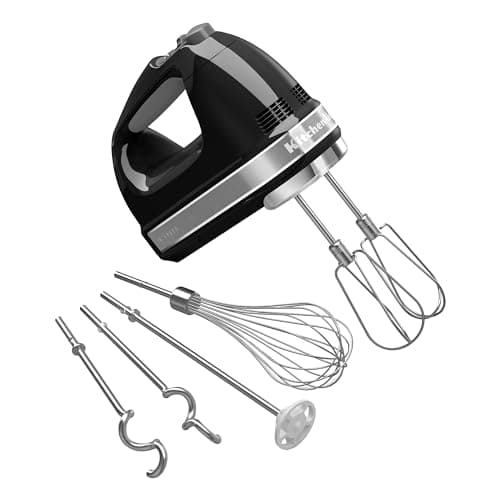
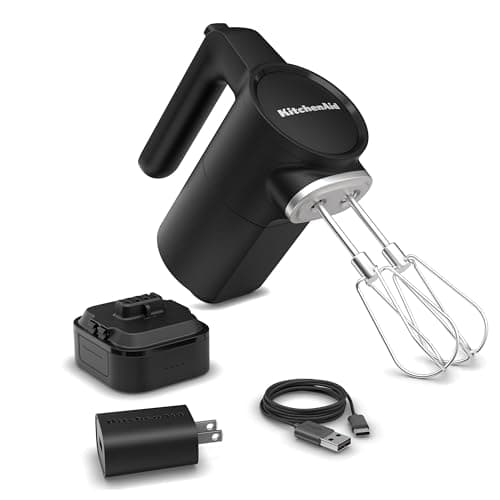
The single biggest quality-of-life difference between hand mixers is whether speed 1 eases in or lurches. A real soft start (the KitchenAid's is the benchmark) lets you start in a bowl of flour and powdered sugar without a cloud. If a model doesn't mention soft start or a low starting speed, assume it lurches.
Speeds: nine beats six, if they're spaced well
Six speeds are enough for most jobs, but nine give you finer control at the low end — folding delicate batters, starting whipped cream slowly. The number matters less than the spacing; a well-tuned six can beat a poorly-tuned nine. Read owner reports for "speed 1 is too fast."
Wattage only matters for dough
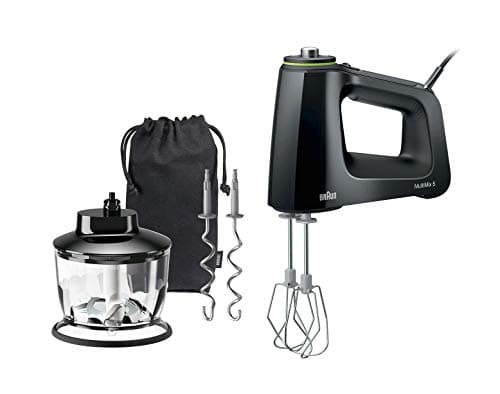
For cream, egg whites and cake batter, any capable hand mixer has enough power. Wattage only becomes the deciding spec for stiff cookie dough, where a 300-watt-plus motor (the Braun here) muscles through without bogging. If you never make stiff dough, don't pay for the biggest motor.
Check what's in the box
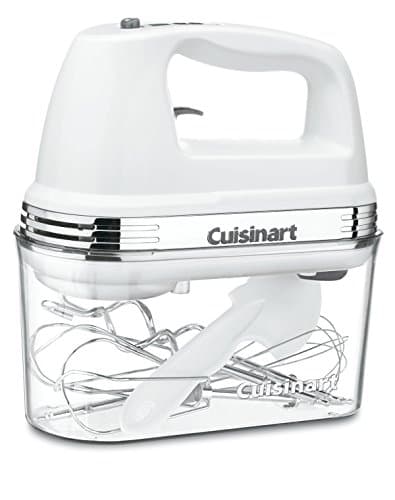
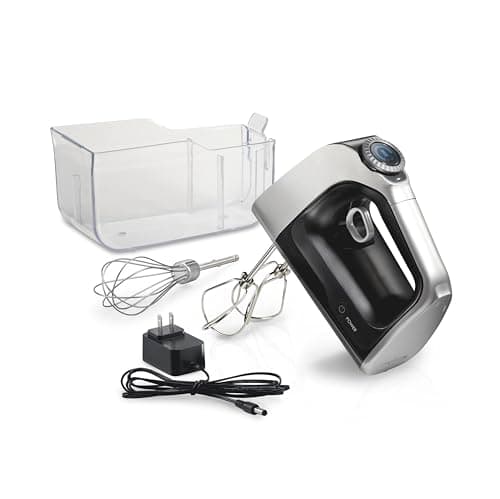
Beaters are a given; a whisk, dough hooks and a storage case are not. The Cuisinart bundles all three at a value price, which is a real cost saving over buying accessories separately. A storage case also keeps the attachments from scattering across a drawer.