Let's be honest up front: there is no such thing as a silent stand mixer. Every one of them has a motor turning a train of gears that swings a heavy beater around a metal bowl, and that mechanism makes noise whenever it runs. So "quiet" here is relative — it means a mixer that hums rather than roars, that doesn't clatter or whine, and that won't drown out a conversation or a television in an open-plan kitchen. If you live in an apartment, bake early or late while other people sleep, or simply can't stand a machine that fills the room, the difference between a calm mixer and a harsh one is worth choosing for. This ranking weighs how settled a machine sounds under normal baking loads, alongside the capacity, control and build you still need from any mixer, because a quiet machine that can't bake is no bargain.
A quick word on where the numbers come from, because we don't pretend to run a sound lab. There is no single published decibel figure that decides this, and manufacturers rarely quote one, so these picks lean on the design factors that reliably make a mixer calmer — a planetary tilt-head rather than a raw bottom-drive, a smooth gentle start rather than a jerk to speed, and a heavier, better-damped body — together with the pattern of what owners consistently report. Three machines cover the sensible ways to buy a quieter mixer, and a different one suits each budget. The KitchenAid Artisan is the moderate-noise default most bakers should buy; the Cuisinart Precision Master is the value route with a genuinely soft low start; and the SMEG 50s-style mixeris the premium pick owners describe as running relatively quietly, if you're paying for the look anyway.
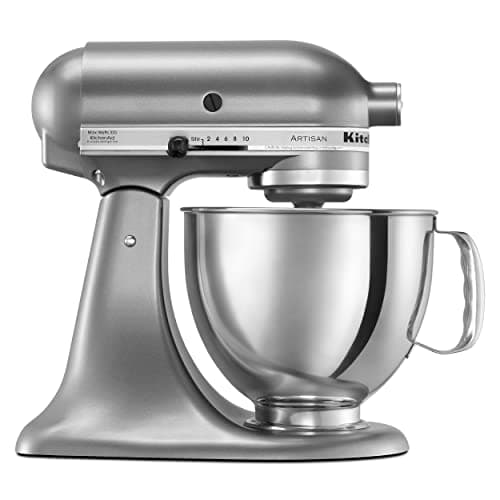
KitchenAid Artisan — the sensible, moderate-noise default.The Artisan isn't the quietest machine ever made, but it's the one most people should buy, and its noise is the steady, predictable hum of a well-built planetary tilt-head rather than anything harsh or alarming. Its 5-quart bowl handles roughly a double batch of cookie dough, its ten well-spaced speeds let you start gently and climb, and its front PowerHub opens the deepest attachment ecosystem in the category. Because it's a cast, substantial machine, it doesn't drum or rattle on the counter the way lighter, plastic-forward budget mixers can — a big part of what people actually hear. The honest cons are the ones we always name: the rated 325-watt motor is mid-pack, so it will bog (and get louder) if you push stiff dough hard, and the tilt-head can flex on very low-hydration dough. For a baker in an open kitchen who wants a calm, capable default, it's the right answer. See the full KitchenAid Artisan review, and if a sudden new noise appears, our guide to why a stand mixer gets loud.
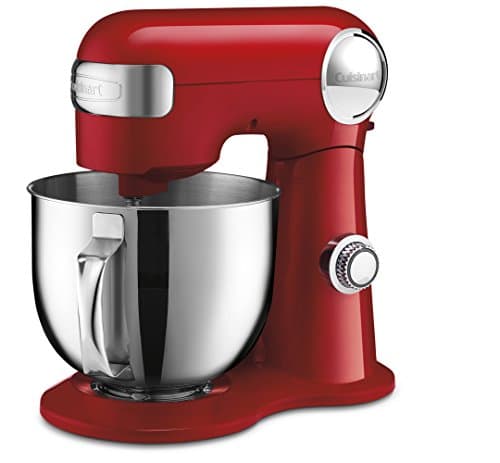
Cuisinart Precision Master — the value pick with a soft start.The Cuisinart is the most machine for the money here, and part of what you get for that money is a genuinely gentle low speed. Its twelve-speed range includes a slow start that eases the beater into the bowl instead of jolting it to speed — the jolt is what sends flour flying and makes a machine sound frantic at the start of a mix. A bigger 5.5-quart bowl and a stronger rated motor than the same-price KitchenAid mean it isn't straining as often, and a straining motor is a loud motor. It arrives with the flat beater, dough hook and whisk in the box, plus a splash guard. The honest cons are the ownership ones: far fewer first-party attachments than KitchenAid, resale value and long-term parts support that trail the bigger brand, and a head latch that feels a touch less refined. For a calmer, roomier mixer without spending at the top, it's the value route. Read the Cuisinart Precision Master review for the full trade-off.
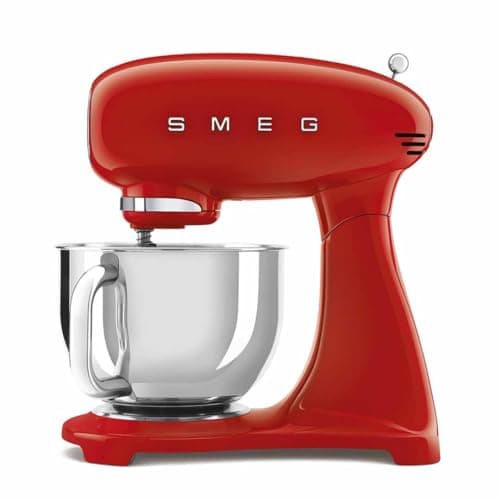
SMEG 50s-style mixer — the premium quiet-feeling pick.If you're buying a SMEG you're buying the look, but it earns a place here on its own merits: its heavy die-cast body damps vibration well, and owners consistently describe it as running relatively quietly for a full-size mixer. A dense, well-built machine simply transmits less buzz into the counter than a light one. It comes with four attachments, including a flex-edge beater, and a dishwasher-safe stainless bowl. The honest cons keep it at number three rather than number one on value: reviewers report its 800-watt motor can struggle on stiff, enriched dough and big meringues (and a struggling motor gets louder), it's heavy and priced well above better-performing mixers, and owners note frequent bowl-scraping. Buy it if a calm, beautiful machine on the counter is worth a premium; skip it if you're buying kneading power per dollar. The SMEG SMF03 review has the detail.
How to choose a quieter stand mixer
Because there's no reliable single loudness number to shop by, choosing a quieter mixer is really about understanding what makes one machine calmer than another and matching that to how and where you bake. A few design and usage factors do most of the work, and none of them require a decibel meter to judge. Here is what actually moves the needle, roughly in order of how much difference it makes.
Design: planetary tilt-head versus bottom-drive
The single biggest structural factor is the drive design. A planetary tilt-head — the Artisan, the Cuisinart and the SMEG all use this layout — runs its gears in an enclosed head and tends to produce a steady, contained hum. A raw bottom-drive machine like a Bosch, where a belt turns the bowl from below, is a superb bread kneader but is generally the louder design under a heavy load. Neither is "bad," but if quiet is a priority and you're not kneading big stiff doughs daily, a planetary tilt-head is the calmer starting point. Our planetary vs bottom-drive guide explains the mechanics of each and why they sound different.
Build and weight: heavy machines are calmer machines
It sounds backwards, but a heavier mixer is usually the quieter one. Much of the noise you actually hear from a cheap machine isn't the motor itself — it's the whole appliance vibrating and drumming against the counter, amplified by a light, hollow, plastic-forward body. A dense, cast or die-cast machine like the Artisan or the SMEG damps that vibration and stays planted, so the sound stays a contained hum rather than a rattle. This is also why a mixer that has started buzzing or vibrating more than it used to is worth checking — our guide to why a stand mixer vibrates covers the loose feet, uneven counter and unbalanced-load causes that turn a calm machine noisy.
Motor headroom: a straining motor is a loud motor
A mixer is at its quietest when it's working well within its limits, and at its loudest when it's straining. Ask a mid-pack motor to knead a dough that's too big or too stiff and the pitch drops, the machine labors, and it gets markedly louder as it fights the resistance. So matching the mixer to your heaviest jobis itself a noise strategy: a machine with headroom to spare for your typical dough runs calmer than one running flat out. If you bake bread often, that argues for more motor rather than less, even though the biggest-motor machines aren't always the quietest at idle. Our take on what wattage you need for breadhelps you size it so the motor isn't forever at its ceiling.
A gentle start: the difference between a hum and a jolt
A lot of the "noise" people dislike is the harsh jolt at the very start of a mix, when a machine snaps straight to a set speed and flings flour and batter around. A mixer with a genuinely soft, low first speed— the Cuisinart's slow start is a good example — eases the beater in, which is quieter, cleaner and gentler on the motor. If your machine has a jerky low speed, you can fake a soft start by beginning with the beater held clear and lowering it into the bowl once it's moving, or simply by building up through the speeds rather than jumping to a number. It's a small habit that makes any mixer feel calmer.
Where you put it, and what's under it
The counter matters as much as the mixer. A machine on a hard, hollow surface or a loose section of countertop will drum and echo, while the same machine on a solid, well-supported counter runs noticeably calmer. A cheap fix that helps almost any mixer is a thin silicone or rubber matunder the feet, which soaks up vibration and stops the machine sliding — the same trick that steadies a mixer that walks. Keep the machine away from a wall it can buzz against, make sure all four feet are on the surface, and you'll take the edge off the sound before you've changed anything about the machine itself.
Matching the three picks to your kitchen
Line the three up against how you bake and where. The Artisan is the default: a calm, moderate hum from a substantial machine, with the capacity, control and attachment range that make it the right mixer for most kitchens regardless of noise. The Cuisinart is the value route to a quieter start and a bigger bowl, giving up the deep ecosystem and some resale value for a lower price and a soft low speed. The SMEG is the premium pick for someone who wants a beautiful, well-damped machine and will pay for it, accepting that its real strength is looks and calm rather than raw dough power. Buy for the way you actually bake and the room you bake in, and the noise takes care of itself.
What no mixer will do
Set expectations honestly: none of these will be quiet the way a good dishwasher is quiet. Under a real load — whipping at high speed, kneading a dough — every full-size stand mixer makes itself heard, and that's normal. If you need near-silence for a tiny job, a hand tool or a good hand mixerused briefly can be the calmer choice for a single bowl of cream or a small batter. But for the baking that actually justifies a stand mixer, the three above are about as settled as the category gets, and each is honest about the cons a roundup can only summarize — read the individual reviews before you commit.