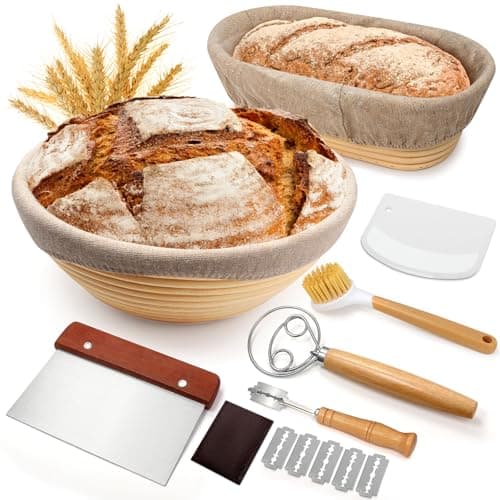
If you've been baking sourdough as flat rounds on a sheet pan and want the tall, open boule you see online, this set is the cheapest honest way to get there. The Sourdough Proofing Basket Set isn't heirloom gear and doesn't pretend to be — it's a mass-market kit — but it bundles everything a beginner needs to start shaping loaves properly in one box: two rattan proofing baskets, a bread lame to score, dough and bowl scrapers to handle sticky dough, and linen liners. For someone making the jump from pan loaf to hearth loaf, that all-in-one convenience is exactly right.
A proofing basket — a banneton — does one job, and it does it better than anything you'd improvise. During the long final proof, a wet, high-hydration sourdough wants to relax and spread into a puddle. The basket cradles it, so it holds a tall, round shape instead of flattening out, and the rattan wicks a little moisture from the surface, which helps you get a crisp, well-developed crust and the flour-dusted spiral pattern on top that a banneton is known for. You turn the proofed dough out onto your baking surface, score it, and bake — and the loaf goes into the oven as a proper shape rather than a disc.
The set gives you both classic shapes, which is more useful than it first sounds. The round basket, roughly 9 inches, proofs a boule — the tall round loaf most people picture when they think of sourdough. The oval basket, around 10 inches, proofs a batard — the longer, torpedo-shaped loaf that's easier to slice into even sandwich-sized pieces and fits a home oven's baking vessel a little more naturally. Beginners usually start with the round because a boule is the most forgiving shape to handle, then reach for the oval once shaping feels comfortable. Having both from day one means you don't buy the kit twice.
The supporting tools matter as much as the baskets. The included bread lame — a handle that holds a razor blade — is what lets you score the top of the loaf so it opens where you choose in the oven, instead of bursting at a random weak seam. The dough and bowl scrapers handle the genuinely sticky part of sourdough: getting a wet dough out of the mixing bowl and off the counter without tearing it or leaving half of it behind. And the linen liners drop into the baskets to give an even smoother release and a softer surface finish when you want it, and they wash more easily than a bare basket. None of this is exotic, but buying it piecemeal is fiddlier and usually costs more than the set.
Now the honest part, because a banneton has one failure mode that catches every beginner: dough sticking. A new rattan basket has to be seasoned — misted lightly and dusted generously with flour (rice flour works especially well) for the first several bakes — or a wet dough will weld itself to the rattan and tear when you turn it out. After each bake, knock out the loose flour, let the basket air-dry completely before you put it away, and don't scrub it or store it damp, or it'll go musty. Do that and it releases cleanly for years. The other honest caveats: this is mass-market rattan, not a heirloom-grade European banneton, so the weave and finish are ordinary; and the included lame is basic — perfectly usable, but a keen baker may upgrade the handle later. For getting started, none of that holds you back.
Who should buy the banneton set — and how to make it work
A proofing basket set is the purchase that changes the loaf you can make, not just how you make it. Here's who it's for, how the two baskets differ in practice, and the care routine that keeps dough from sticking.
Buy it if you're moving from pan loaves to shaped sourdough
This is the kit for the baker who already makes a sourdough — even a rough one — and wants it to stand up tall with an open, structured shape instead of spreading flat. It bundles the shape (baskets), the score (lame) and the handling tools (scrapers) in one purchase, which is the fastest way into shaped bread without assembling a kit piece by piece. If you're still building the wider toolkit, our sourdough tools guide covers the whole short list — a scale and a thermometer alongside the basket and lame — and what you can safely skip.
Round or oval: which basket to reach for
Use the round basket for a boule — the classic tall, round loaf, and the easiest shape for a beginner to handle and turn out cleanly. Use the oval for a batard when you want longer, even slices for sandwiches, or when your baking vessel is oval rather than round. Neither is better; they're different loaves, and the reason a set beats a single basket is that you get to make both as your shaping improves. Most people bake nothing but boules for the first month, then discover the batard and never fully go back.
Season it, or the dough will stick
This is the single thing that determines whether you love or hate a new banneton. Straight out of the packaging, rattan is thirsty and grabby, and a wet dough will stick to it and tear. Season it first: mist it lightly, dust it heavily with flour — rice flour resists sticking better than wheat — and for the first few bakes err on the side of too much flour, not too little. Turn the dough out gently rather than yanking it. Within a handful of bakes the basket builds up a seasoned surface and releases almost on its own. Skip this and you'll blame the basket for a problem that's really just prep.
Care so it lasts
After baking, tap out the loose flour and let the basket dry completely, uncovered, before storing — putting a damp basket in a cupboard is how they turn musty. Don't wash it with soap or scrub the rattan; a dry brush and the occasional deep dry-out are all it needs. The linen liners are the washable part, so if you want a fully clean surface, use those and launder them. Treated this way, the set outlasts the enthusiasm phase and becomes the basket you reach for every weekend.
Where it fits in the bigger sourdough picture
A basket shapes the dough, but it doesn't mix or knead it. If you're building batches big enough that hand-mixing gets tiring, a machine can take over the heavy work — our best stand mixer for sourdoughguide covers the mixers built for high-hydration dough, and if you'd rather the machine handle the whole cycle, the best bread machines for sourdough walk through that route. The banneton earns its place either way — even a bread machine baker who wants a proper hand-shaped, oven-baked boule uses one for the final proof.
The bottom line
The Sourdough Proofing Basket Set is the best all-in-one way into shaped sourdough: two baskets, a lame, scrapers and liners for the price of piecing it together, and everything a beginner needs to turn a flat loaf into a tall one. Accept that it's mass-market rattan with a basic lame, season it properly, and it's the cheap kit that unlocks real bread.