01
High-volume bread dough
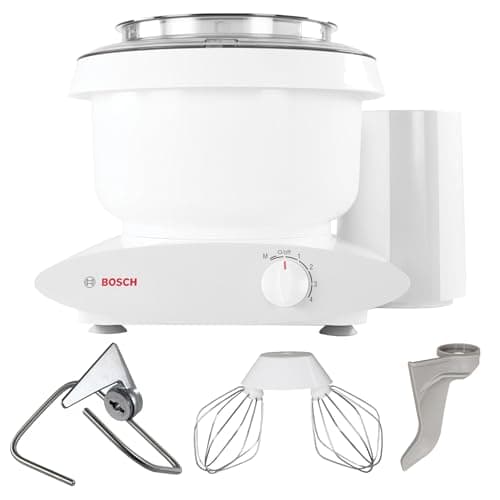
Bosch Universal Plus Stand Mixer
500 W rated6.5-qt bowlBottom-drive~5–6 lb doughDough hook + whisks
8.5/10
The bread baker's mixer. A belt-driven motor at the base and a big open bowl let it knead far more dough than a KitchenAid without straining. Less elegant, less versatile for whipping small amounts — but for loaves it's the one.
- Motor / dough
- 9.5
- Capacity
- 9.5
- Build & durability
- 8
- Ease of use
- 7.5
- Value
- 8
Pros
- Bottom-drive motor kneads large, stiff dough batches most tilt-heads can't finish
- 6.5-qt bowl swallows 3–4 loaves' worth of dough at once
- Lightweight for its capacity and easy to store
Cons
- Not ideal for very small jobs — whipping one egg white gets lost in the big bowl
- Plastic-forward build feels less premium than a cast KitchenAid
- Smaller accessory ecosystem in the US
Don't buy this if…
…you mostly whip cream, beat butter and do single-batch baking — a tilt-head KitchenAid is friendlier for that work.
$499.00View on Amazon
Price as of October 20, 2026. Prices change — Amazon's at checkout is the one that counts.
#ad · we may earn a commission from this link to Bosch Universal Plus Stand Mixer