Hub 01 · Stand Mixers
The best stand mixers for home baking
KitchenAid, Bosch and Cuisinart, ranked on motor headroom, bowl capacity and value — with live prices and the spec that decides each one.
A stand mixer is the one kitchen appliance that quietly does the hardest work: it kneads dough your hands can't, whips cream your arm won't, and creams butter and sugar to the even texture that decides whether a cake rises. The problem is that almost every model looks capable in a photo, and the one spec that actually predicts whether it will bog down on your dough — usable motor torque, not the marketing wattage — is the one nobody puts on the front of the box.
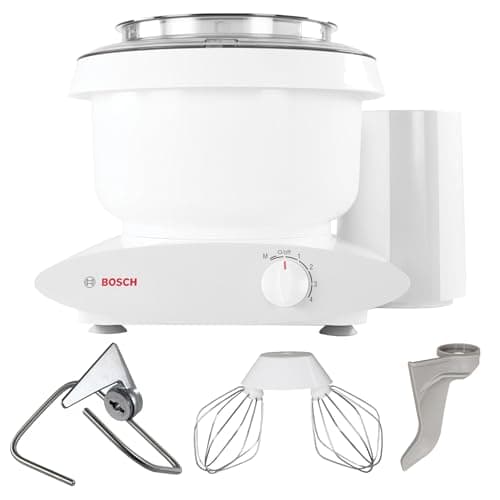
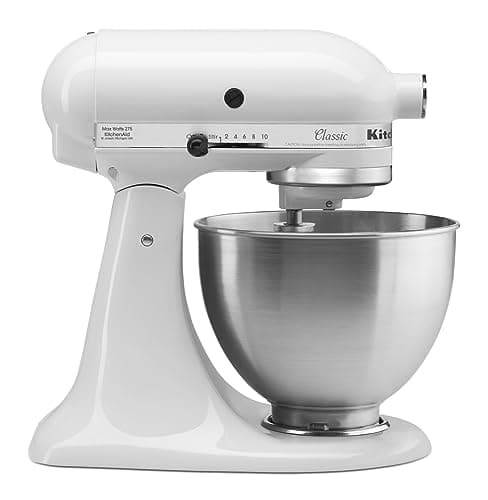
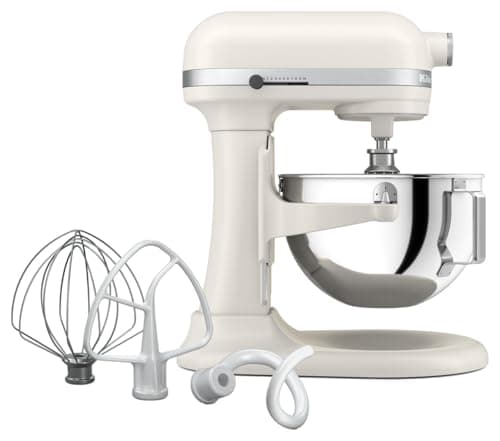
So that is where we start. We read the manuals, note the manufacturer's rated wattage, bowl capacity and drive type, and match them to what you actually bake. For most home bakers doing a batch or two of cookies and the occasional loaf, a 5-quart tilt-head KitchenAid has all the headroom they will ever use. For someone kneading stiff, heavy bread dough several times a week, a bottom-drive Bosch will out-work a tilt-head without straining — and it costs less than the premium KitchenAids. Knowing which of those two bakers you are is 90% of the decision.
Below is our ranked shortlist with live Amazon prices, then the full reviews and a plain how-to-choose guide. We don't run a testing lab and we don't claim to; the scores are judgments from published specs and aggregated owner reviews, on a rubric we publish in full.
#adWe earn a commission when you buy through our Amazon links, at no extra cost to you. It never changes our rankings, and we say so when the cheaper product is the better buy. How this works.
How to choose a stand mixer
Four things decide whether a stand mixer is right for you. Get these straight and the model almost picks itself.
1. Tilt-head vs bowl-lift (and bottom-drive)
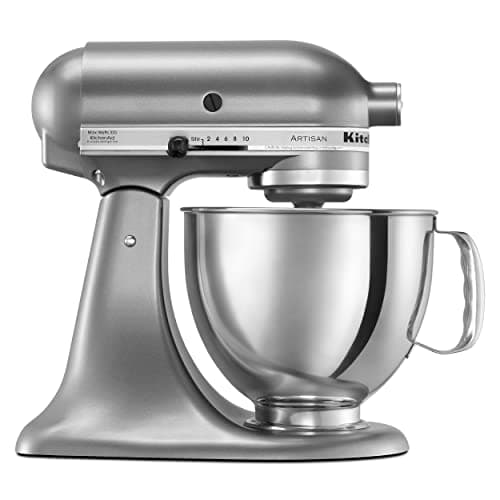
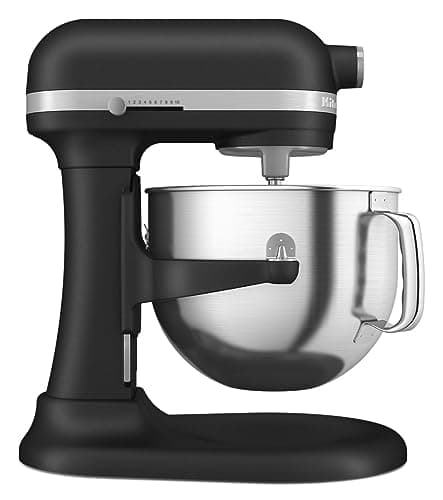
Tilt-head mixers (the classic KitchenAid shape) tip back so you can swap the bowl and beater easily — friendly for everyday baking, but the head can flex on very stiff dough. Bowl-lift mixers crank the bowl up to a fixed head and feel more planted under heavy loads. The Bosch Universal Plus uses a third design — a bottom-drive motor with an open bowl — which is why it kneads more bread dough than a tilt-head of similar price.
2. Motor headroom, not the wattage number
Wattage is a rough proxy, not a promise: a well-geared 300-watt motor can out-knead a cheap 600-watt one. Treat the rated figure as a claim, then read owner reports for the dough you actually make. The tell is always the same — does it slow down and heat up on stiff, low-hydration dough? If you bake bread often, buy for that worst case.
3. Bowl capacity vs your batch size
A 4.5-quart bowl handles single batches comfortably; 5 to 5.5 quarts covers a double batch of cookies or two loaves of bread dough; the Bosch's 6.5-quart bowl swallows three or four loaves at once. Bigger is not always better — whipping one egg white gets lost in a huge bowl — so match the bowl to your most common job.
4. The attachment ecosystem
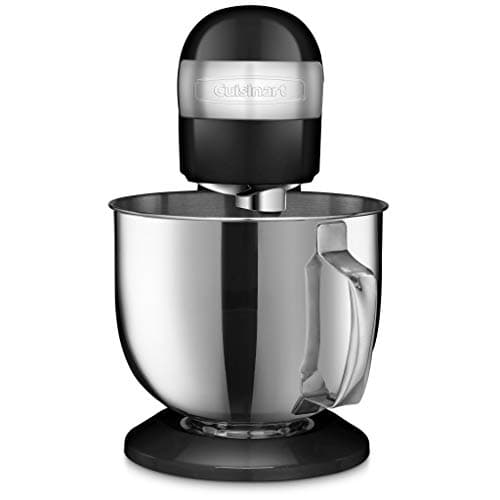
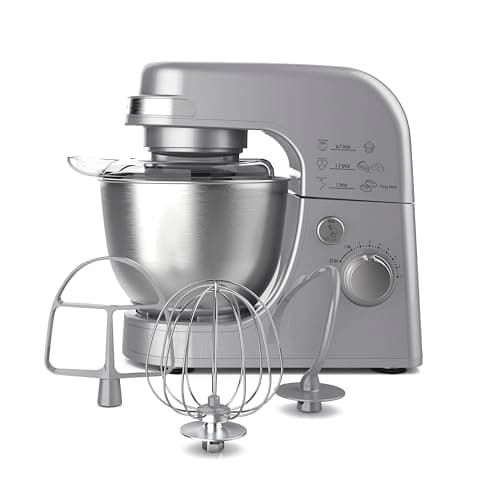
KitchenAid's front PowerHub is the deepest accessory system in the category: pasta rollers, meat grinders, spiralizers and ice-cream bowls all clip on. If you think you will grow into those, it's a real reason to pay the KitchenAid premium. If you only want to mix and knead, a Cuisinart or Bosch gives you more mixer for the money.