If this is your first stand mixer, the right one isn't the machine with the most watts or the biggest bowl — it's the one that's easiest to learn and lowest-risk to buy. A beginner wants a mixer that's simple to load, quick to swap beaters on, forgiving when you don't yet know the difference between speed two and speed four, and cheap enough that you're not out a fortune if you discover you bake less than you thought.
This is a different question from our best budget roundup, and it's worth being clear about the difference. The budget guide is price-first: it asks which mixers cost the least while still being genuinely good. This one is ease-first: it asks which mixer a brand-new baker will find simplest and least intimidating to live with, even if that isn't the single cheapest option on the shelf. The two lists overlap, but the reasoning — and the order — is not the same.
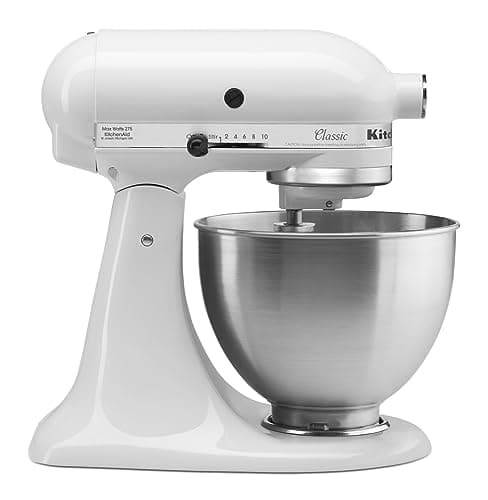
The KitchenAid Classicis our pick to start on. It's a tilt-head, which is the easy layout for a beginner: the head tips back so you can see into the bowl, scrape it and change beaters without wrestling anything. It's a real KitchenAid with the 10-speed planetary action and the front attachment hub, so it teaches you the whole platform and grows with you if your baking takes off — you're not buying something you'll want to replace the moment you get serious. It's the mixer we'd hand a friend who's never owned one.
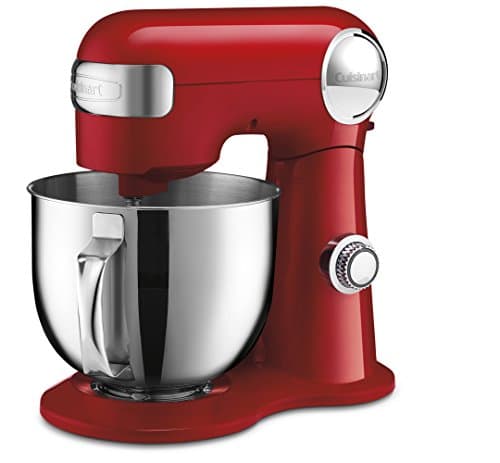
The Cuisinart Precision Masteris second and arguably the most forgiving to learn on. Its 5.5-quart bowl gives a beginner more margin for a batch that turns out bigger than expected, its 12 speeds include a genuinely slow start that keeps flour in the bowl on your first try, and it ships complete with a flat beater, dough hook and whisk, so there's nothing else to figure out or buy. You trade the KitchenAid ecosystem and resale value for more bowl and a lower price.
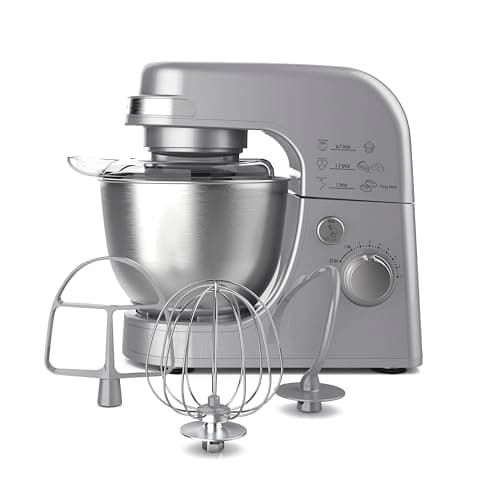
The Hamilton Beach 4-quartis the lowest-commitment way to try a stand mixer at all. It's the cheapest real stand mixer here — a 7-speed tilt-head with a dough hook, beater and whisk included — so if you're genuinely unsure whether you'll use one, it lets you find out without much on the line. It won't grow with a serious baker the way the KitchenAid will, but as a first toe in the water it does the everyday jobs honestly.
The short answer
Quick picks
| # | Product | Best for | Score | Price |
|---|
| 01 | KitchenAid Classic 4.5-Qt Tilt-Head (K45SS)The cheapest way into the KitchenAid ecosystem. Slightly smaller bowl and a hair less power than the Artisan, but the same attachment hub and the same 10-speed planetary action. For occasional bakers this is the smart buy. | Budget / occasional bakers | | $399.00·Amazon |
| 02 | Cuisinart Precision Master 5.5-Qt (SM-50)The value tilt-head. A larger 5.5-qt bowl and a stronger rated motor than the Artisan, usually for less money. The trade is a thinner accessory ecosystem and slightly rougher fit and finish. | Best value tilt-head | | $216.65·Amazon |
| 03 | Hamilton Beach 4-Qt Electric Stand MixerThe cheapest way to get a real stand mixer on the counter. A 4-quart tilt-head with a dough hook, flat beater and whisk in the box for a fraction of a KitchenAid's price. It won't match the build or the motor, but for occasional baking it's a lot of mixer for the money. | Cheapest tilt-head stand mixer | | $109.19·Amazon |
#ad · Live prices from the Amazon Product API, as of Sep 19, 2026. Where we have no verified live price we show none — a gap beats a number that has rotted.
In detail
The picks, in full
Budget / occasional bakers
KitchenAid Classic 4.5-Qt Tilt-Head (K45SS)
275 W rated4.5-qt bowl10 speedsTilt-headPowerHub port
The cheapest way into the KitchenAid ecosystem. Slightly smaller bowl and a hair less power than the Artisan, but the same attachment hub and the same 10-speed planetary action. For occasional bakers this is the smart buy.
- Motor / dough
- 7
- Capacity
- 7
- Build & durability
- 8
- Ease of use
- 9
- Value
- 9
Pros
- +Usually the lowest price for a genuine KitchenAid planetary mixer
- +Takes the same front-hub attachments as the pricier models
- +4.5-qt bowl is plenty for single batches
Cons
- −275 W rated motor is the weakest in the line
- −4.5-qt bowl gets tight on a full double batch
- −Fewer bowl/color options than the Artisan
Don't buy this if…
…you routinely bake double batches or bread — the extra half-quart and motor of the Artisan is worth the step up.
Best value tilt-head
Cuisinart Precision Master 5.5-Qt (SM-50)
500 W rated5.5-qt bowl12 speedsTilt-headSplash guard
The value tilt-head. A larger 5.5-qt bowl and a stronger rated motor than the Artisan, usually for less money. The trade is a thinner accessory ecosystem and slightly rougher fit and finish.
- Motor / dough
- 8
- Capacity
- 8.5
- Build & durability
- 7.5
- Ease of use
- 8.5
- Value
- 9
Pros
- +Bigger bowl and higher rated wattage than the same-price KitchenAid
- +12 speeds with a genuinely useful low start speed
- +Comes with dough hook, flat beater and whisk in the box
Cons
- −Far fewer first-party attachments than KitchenAid
- −Resale value and long-term parts support trail KitchenAid
- −Head latch feels less refined
Don't buy this if…
…you want to grow into pasta rollers, grinders and the wider attachment world — that's KitchenAid's home turf.
Cheapest tilt-head stand mixer
Hamilton Beach 4-Qt Electric Stand Mixer
4-qt bowl7 speedsDough hook + whisk incl.Tilt-headSplash guard
The cheapest way to get a real stand mixer on the counter. A 4-quart tilt-head with a dough hook, flat beater and whisk in the box for a fraction of a KitchenAid's price. It won't match the build or the motor, but for occasional baking it's a lot of mixer for the money.
- Motor / dough
- 6.5
- Capacity
- 7
- Build & durability
- 6.5
- Ease of use
- 8
- Value
- 9
Pros
- +One of the lowest prices for a genuine stand mixer, not a hand mixer
- +Ships with a dough hook, flat beater, whisk and splash guard
- +Light and easy to move on and off the counter
Cons
- −Plastic-forward build feels a long way from a cast KitchenAid
- −Smaller 4-qt bowl and a motor happier with batter than heavy dough
- −No attachment ecosystem to grow into
Don't buy this if…
…you bake bread often or want a machine that lasts a decade — a KitchenAid Classic or Cuisinart Precision Master is the sturdier buy.
How to choose your first stand mixer
Buying your first mixer is mostly about avoiding two mistakes: over-buying power you won't use, and under-buying something so limited you replace it in a year. Here's how to thread that.
A tilt-head is the easy place to start
Every mixer here is a tilt-head, and that's deliberate. The head tips back so you can see into the bowl, scrape the sides and swap a whisk for a beater in seconds — no cranking a bowl up and down, no fiddly alignment. A bowl-lift is a fine design, but it's a step you can grow into later; our tilt-head vs bowl-lift guideexplains when it's worth it. For learning, tilt-head keeps everything visible and simple.
Buy something you can grow into — or walk away from
There are two honest beginner strategies. One is to buy a platform you'll grow into: the KitchenAid Classic shares its attachment hub with every pricier KitchenAid, so it can add pasta rollers or a grinder later and it holds strong resale value if you upgrade. The other is to spend as little as possible until you know your habit: the Hamilton Beach lets you test whether you'll actually use a stand mixer before committing real money. Both are reasonable — just pick the one that matches how sure you are.
Included attachments mean less to figure out
A beginner benefits from a mixer that arrives ready to bake. The Cuisinart and Hamilton Beach both include the flat beater, dough hook and whisk in the box, so you can whip cream, cream butter and knead a soft dough on day one without a separate order. It's one less decision when you're still learning what each attachment is for.
Match the bowl to a real beginner batch
You don't need a huge bowl to start. A 4 to 5.5-quart bowl covers the batches a new baker actually makes — a batch of cookies, a cake, whipped cream, a single loaf of soft dough. If you're not sure, our size guide maps bowl capacity to batch sizes, and the home-bakers roundupcovers the everyday all-rounder once you've found your footing.
Is a stand mixer even the right first buy?
Before you spend anything, it's worth asking whether you need a stand mixer yet at all. If you bake a few times a year, a hand mixer may be the smarter first appliance. Our is-a-stand-mixer-worth-it guidewalks through the decision so your first mixer isn't one that sits unused.
How we picked
We don't run a testing lab
We read the manuals, compiled the published specifications, did the wattage-to-dough math and weighed aggregated owner reviews, then scored each product against a published rubric. The scores are judgments from documented research — they are not measurements we took, because we do not have a lab and we're not going to pretend we do. Every spec is the manufacturer's published figure, cited in Sources.
Questions
Frequently asked
What's the best stand mixer for a beginner?+
The KitchenAid Classic, for most first-time buyers. It's a simple tilt-head, it's a real KitchenAid that grows with you and holds its value, and it isn't intimidating to learn on. The Cuisinart Precision Master is the most forgiving with its bigger bowl and complete-in-the-box kit, and the Hamilton Beach is the lowest-commitment way to try one at all.
Is this the same as the cheapest stand mixer?+
Not quite. This list is about which mixer is easiest to learn and lowest-risk for a first buyer; our
best budget roundup is about which good mixers cost the least. They overlap, but the order and the reasoning differ — a beginner sometimes wants the more forgiving machine over the strictly cheapest one.
Should a beginner get a tilt-head or a bowl-lift?+
A tilt-head. The head tips back so you can see into the bowl, scrape it and change beaters easily, which is exactly what you want while you're learning. A bowl-lift is worth considering later if your baking gets heavy — see our
tilt-head vs bowl-lift guide.
Do I need attachments to start baking?+
No. The flat beater, dough hook and whisk that come with the Cuisinart and Hamilton Beach cover creaming, kneading a soft dough and whipping — everything a beginner does. Specialty attachments like pasta rollers can wait until you know you want them.
Receipts
Sources
We don't run a testing lab, and we don't pretend to. Specs are the manufacturer's published figures, cited above; scores are our judgments from that research. Where we couldn't verify something, we say so on the page rather than quietly leaving it out. Read our full method.