Most people want a bread machine to press one button and walk away. This roundup is for the other kind of baker — the one who wants to open the hood: adjust the knead, tune the rise, dial the crust, pick the loaf size, and generally treat the machine as something to program rather than obey. For that person, the differences between machines that all "make bread" suddenly matter a lot, because the whole point is how much the machine will let you change. The three here give you the most to work with, in that order.
A quick word on what "programmable" really means, because it covers a few different things. At the shallow end it is just the number of preset programs — basic, wheat, French, sweet, gluten-free and so on — and more presets means fewer recipes you have to bend to fit. Deeper down it is control over the process itself: crust-shade settings, loaf-size selection, and, on the most capable machines, custom courses that let you set your own knead, rise and bake times and save them. The most tinker-friendly machine is the one that gives you the most of that deeper control, not just the longest program list. If you want the mechanics of one cycle in full, our bread machine dough cycle guide shows exactly what a program is doing under the lid.
Our pick for tinkerers is the Breville Custom Loaf, the machine built to be fiddled with. Behind it, the Cuisinart CBK-110is the sensible programmable middle — plenty of control in a compact, affordable body — and the KBS 17-in-1 packs the longest program list of the group for the least money. None is a wrong answer; the ranking is about how deep you want to go and what you are willing to trade for it. For the top of the field across every measure, not just programmability, see our best overall roundup.
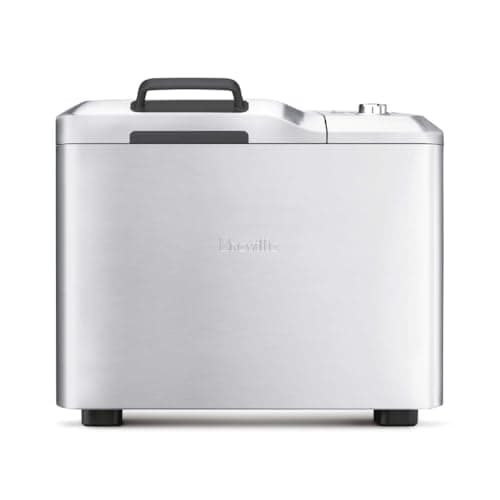
Breville Custom Loaf — the tinkerer's machine. This is the one to buy if you want to program and fuss. Its 13 settings give you the deepest control here over how a loaf is made, its four loaf sizes, from one pound to two and a half, let you scale a recipe to the batch you want instead of the batch the machine assumes, and its automatic fruit-and-nut dispenser drops in add-ins at the right moment without you standing over it. The collapsible paddlefolds down before the bake for a smaller hole in the base — a nice touch for a machine you will use a lot. The honest cons are the flip side of all that depth: it sits at a premium price, and it has more settings than a casual baker will ever touch, which makes it genuinely overkill for someone who just wants a daily sandwich loaf. For a tinkerer, that depth is the whole appeal; for a set-and-forget baker, it is money spent on capability you will not use. The full picture is in our Breville Custom Loaf review.
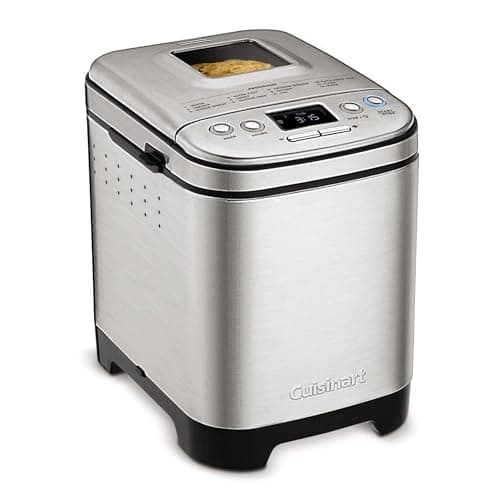
Cuisinart CBK-110 — the programmable middle. If the Breville is more machine than you need but you still want to tune your bread, this is the sensible landing spot. Its twelve programs cover gluten-free, sweet and low-carb breads, its three crust shades let you dial a loaf lighter or darker, and its 13-hour delay timer means you can program a finish time and wake to fresh bread. All of that lives in a compact vertical buildthat tucks under most cabinets, so you get real programmability without giving up the counter. The honest cons are the ones that come with a single-paddle vertical pan: it bakes a tall, square loaf rather than a standard horizontal one, and its crust browning is less even than a dual-heater machine. Those are bread-quality trade-offs, not programmability ones — on the control this roundup is about, it holds its own for far less than the Breville. The full write-up is in our Cuisinart CBK-110 review.
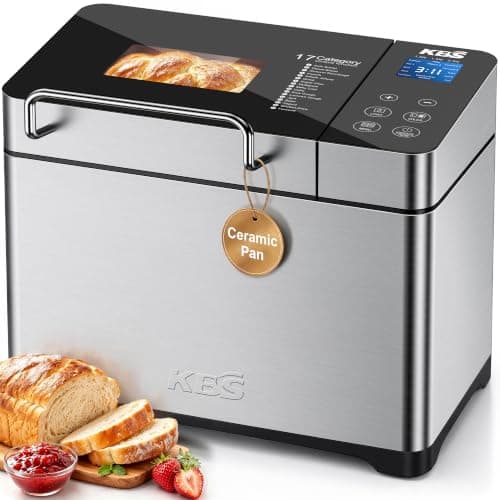
KBS 17-in-1 — the most programs for the money.If your idea of programmable is simply "the longest menu of things it can make," the KBS wins on that count. Its seventeen programs are the most of any machine here and stretch well beyond bread into things like yogurt and jam, and it adds an automatic fruit-and-nut dispenser, a viewing window and an interior light at a mid-range price — a lot of machine for the money. The honest cons are the ones that come with a value-loaded brand: its long-term durability record is shorter than the established Japanese and US names, and its manual translation is rough in places, which makes learning its many programs more of a chore than it should be. If you want maximum breadth for the least money and you accept a less-proven track record, it delivers; if you want the most reliable machine you will own for a decade, that is not its pitch. The full write-up is in our KBS bread machine review.
What makes a bread machine truly programmable
"Programmable" gets stamped on almost every bread machine, so it helps to break it into the layers that actually matter to a tinkerer. Here is what to weigh, from the shallow features to the deep ones, plus how to decide how far down you need to go.
Number of programs: breadth, not depth
The most visible spec is the program count — twelve, thirteen, seventeen. More presets mean more recipes you can run without adapting them, and specialty programs (gluten-free, sweet, low-carb, yogurt, jam) genuinely widen what the machine does. But a long menu is breadth, not depth: it gives you more starting points, not more control over each one. The KBS wins the raw count here; whether that matters depends on whether you will actually use programs beyond the basics. If you mostly bake a few styles of bread, a shorter list you tune deeply beats a long list you never scroll through.
Crust and loaf-size control: the everyday levers
The controls you will reach for most are crust shade and loaf size. Crust settings let you push a loaf lighter or darker to taste — the Cuisinart's three shades and the Breville's deeper controls both give you this — and loaf-size selection lets you match the bake to how much bread you want. The Breville's four sizes, from one pound to two and a half, are the widest range here and the most useful if your batch size changes from a small weeknight loaf to a big weekend one. These are the levers a programmable machine should make easy, because you use them on nearly every bake.
Custom courses: the deep end
The feature that truly separates a tinkerer's machine from a well-equipped one is custom programmability — the ability to set your own knead, rise and bake times and save them. Among these three, the Breville's thirteen settings give you the most process control, letting you shape how a loaf is made rather than picking from fixed presets. It is worth knowing that the deepest custom control on the market belongs to machines with dedicated custom courses that store your own recipes; our best overall roundup covers where that headroom lives. If you dream of dialing in a signature loaf and repeating it exactly, aim for the deep end; if you just want good presets plus crust and size control, the middle is plenty.
Add-in dispensers and quality-of-life extras
Programmability is not only about timings. An automatic fruit-and-nut dispenser — on both the Breville and the KBS — drops raisins, seeds or nuts into the dough at the right moment so you do not have to listen for a beep and add them by hand. A viewing window and interior light, like the KBS's, let you watch a stage without opening the lid and dropping the temperature. A collapsible paddle, like the Breville's, folds before the bake for a cleaner loaf base. None of these change how the bread tastes, but for someone who enjoys running the machine they make it a more pleasant tool to program.
Where programmability meets bread quality
Be honest with yourself about one thing: a machine can be highly programmable and still not bake the most even loaf. The Cuisinart is genuinely capable to program, but its single paddle bakes a tall, square loaf and its crust browns less evenly than a dual-heater machine — those are quality trade-offs that no amount of tinkering fixes. If even crust and a standard loaf shape rank above deep control for you, you may be shopping the wrong list. If control ranks first and you will happily work within a machine's baking limits, this is the right shelf. Our how to use a bread machine guide covers the full cycle so you know which stages you can actually influence.
How much programmability do you actually need?
The honest question underneath this whole roundup is not which machine is most programmable, but how much programmability you will use — because control you never touch is just money and menu clutter. A useful way to sort yourself is by how you plan to bake. If you make two or three familiar loaves and want to nudge the crust and size, the Cuisinart's presets, three crust shades and delay timer already cover you, and stepping up to the Breville buys depth you may leave idle. If you bake a wide variety — savory and sweet loaves, plus the odd batch of yogurt or jam — the KBS's long program list earns its keep by giving you a preset for each rather than making you adapt. And if you genuinely enjoy the process — adjusting a knead, extending a rise, chasing a particular crumb and repeating the result — the Breville's deeper settings are the point, not overkill. Name the way you bake first, then let it pick the machine; that is a more reliable guide than the program count on the box, and it keeps you from paying for control you will not reach for.
The bottom line for tinkerers
Buy the Breville if you want the deepest control, the widest loaf-size range and the collapsible paddle, and you will use that depth; buy the Cuisinart if you want real programmability — twelve programs, crust shades and a delay timer — in a compact, affordable body; buy the KBS if you want the most programs and specialty cycles for the least money and you accept a less-proven durability record. Match the depth of control to how much you actually like to tinker, and none of the three will disappoint you.