A stand mixer is one of the best big-ticket kitchen gifts you can give, for a simple reason: it lands somewhere between a treat and a tool. It's the kind of thing plenty of people want but hesitate to buy for themselves, it lives on the counter for a decade rather than in a drawer for a month, and it earns its keep every time someone bakes a birthday cake or a batch of holiday cookies. But "best stand mixer" and "best stand mixer to give" aren't quite the same question. A gift has to feel special, arrive without a homework assignment attached, and suit a kitchen you might not know inside out. So this ranking weighs the things that matter for a present — the wow factor, the safety of a sure-thing brand, and the price you want to spend — alongside the machine underneath.
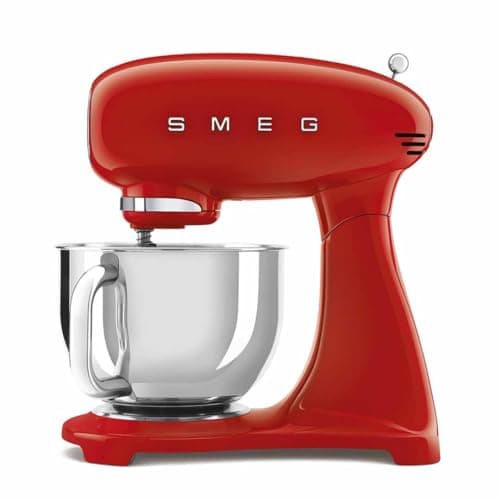
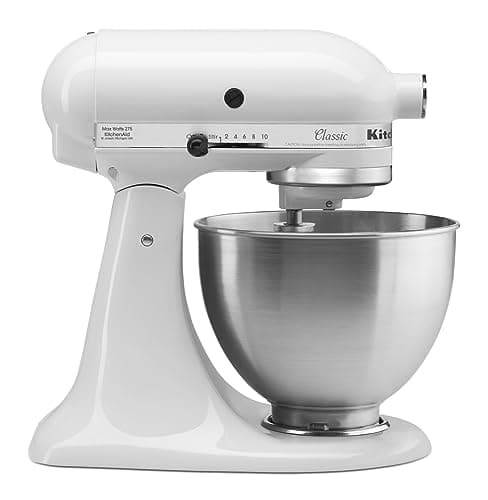
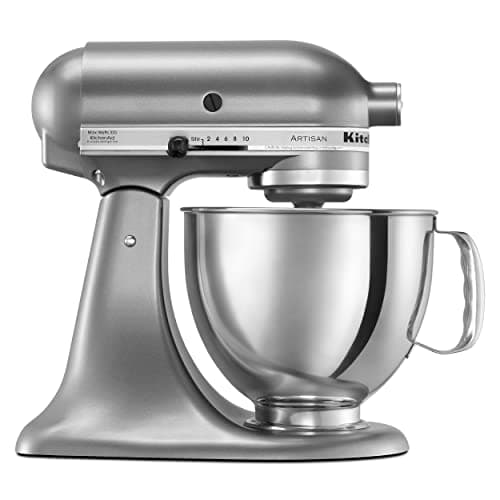
There are really three gifting situations, and a different mixer wins each one. If you want the safe, can't-go-wrong present that almost anyone will be thrilled to unbox, that's the KitchenAid Artisan— the iconic tilt-head that has become shorthand for "a real stand mixer." If you're buying for someone with counter space, an eye for design and a kitchen they show off, the Smeg SMF03 is the statement piece that doubles as decor. And if you want to give a genuine KitchenAid without the premium outlay, the KitchenAid Classicis the thoughtful budget gift — the same badge and the same attachment hub, in a smaller, cheaper package. None of the three is a bad machine; the honest differences below are about which present fits which person.
KitchenAid Artisan — the safe crowd-pleaser.If you only remember one gift idea from this page, make it this one. The 5-quart tilt-head Artisan is the mixer most people picture when they imagine owning a stand mixer, it comes in a wardrobe of colors so you can match a kitchen, and it plugs into the deepest attachment ecosystem in the category through its front PowerHub, so the gift can keep growing with pasta rollers, a grinder or an ice-cream bowl later. It holds its resale value and parts availability better than any rival, which matters for something meant to last. The honest cons: the rated 325-watt motor is only mid-pack, and the tilt-head can flex on very stiff, low-hydration dough — so for someone who kneads dense bagel or rye dough daily it isn't the powerhouse a bowl-lift is. For the vast majority of recipients, who bake a couple of times a week, that ceiling is one they'll never hit, which is exactly why it's the safe pick. Read the full KitchenAid Artisan review before you commit.
Smeg SMF03 — the design statement.Some gifts are chosen with the eyes. The Smeg 50s-style mixer has a die-cast body and retro colorways that make it the best-looking machine on most counters, and the build genuinely feels premium in a way photos undersell — it lands like a luxury object, which is precisely what you want a showpiece gift to do. It ships with four attachments, including a flex-edge beater, plus a dishwasher-safe stainless bowl, and it runs relatively quietly. Be honest about the trade-offs, though, because they're real: it sits at a steep premium, well above better-performing mixers, so you're paying largely for the look; reviewers consistently report its 800-watt motor can struggle on stiff, enriched dough and big meringues; its accessory ecosystem is smaller than KitchenAid's; and at around 20 pounds it wants dedicated counter space, with owners noting frequent bowl-scraping and a fiddly pouring shield. Give it to the person with the beautiful kitchen and the space to leave it out — not to the volume baker who will push it hard. The Smeg SMF03 review covers the styling-versus-substance trade in full.
KitchenAid Classic — the thoughtful budget gift.When you want to give a real KitchenAid but not spend Artisan money, the Classic is the answer. It's usually the lowest-priced genuine KitchenAid planetary mixer, and crucially it keeps the same 10-speed action and the same front attachment hub, so the recipient is buying into the identical ecosystem — the same pasta rollers and grinders clip straight on. It still arrives with the badge and the heirloom-appliance feel that make a KitchenAid such a satisfying thing to unbox. The honest cons are the ones you'd expect from the entry model: its rated 275-watt motor is the weakest in the line, the 4.5-quart bowl is the smallest here and gets tight on a full double batch, and it comes in fewer colors and bowl options than the Artisan. For an occasional or first-time baker, none of that bites — it's a lot of genuine KitchenAid for the money, and the smart move if the budget is the deciding factor. Our best-budget roundup puts it next to the cheaper alternatives if you want to weigh them.
How to choose a stand mixer as a gift
Buying a mixer for yourself and buying one as a gift are different projects. For yourself you can obsess over motor headroom and dough capacity; for a gift you're also weighing how it looks unboxed, whether the brand feels special, and how well it suits a kitchen and a baker you may only half know. Here is how to line those up so the present lands.
Start with how much they actually bake
The single best question to ask yourself is how the recipient really cooks. Someone who bakes weekly — cakes, cookies, the occasional loaf — is the classic Artisan or Classic customer, because a 4.5- or 5-quart tilt-head handles that life with room to spare. Someone who bakes rarely but loves a beautiful kitchen is the Smeg buyer, where the object matters as much as the output. And if you happen to be shopping for a serious, high-volume baker who kneads stiff dough constantly, none of these three is the muscle machine — that's bowl-lift or bottom-drive territory, and our best high-end roundup is the better starting point for that person. Matching the machine to the habit is what turns a nice gift into the right one.
The safe gift: why the Artisan is hard to get wrong
If you're not certain what the recipient wants, default to the Artisan and you'll rarely regret it. It's the mixer people recognize on sight, it comes in enough colors to suit almost any kitchen, and it opens the door to the widest range of add-on attachments if the person catches the baking bug. That combination — instantly understood, widely loved, endlessly expandable — is exactly what makes a gift feel safe. Its mid-pack motor and tilt-head flex are the only honest knocks, and both are irrelevant to the everyday baker who'll actually receive it. If you're still deciding between the two KitchenAids, the Artisan vs Classic comparison lays out what the extra spend buys.
The statement gift: when looks lead
A gift is sometimes about the moment it's unwrapped as much as the years it's used, and that's where the Smeg earns its place. Its retro shape and saturated colors make it a genuine centerpiece, and the die-cast build feels expensive in the hand. The catch is that you're paying a real premium for the styling, and its motor and accessory range trail the machines it costs more than — so it's the right call only when the recipient values the design and has the counter to display it. Don't give it to a baker who'll immediately try to knead heavy dough in it; give it to the person whose kitchen is part of the decor. Because a mixer is a real investment either way, it's worth confirming they'll get years of use out of it, and our take on whether a stand mixer is worth it is a good gut check before you spend at the top of the range.
The budget gift: a real KitchenAid for less
There's a particular satisfaction in giving something that carries a coveted badge, and the Classic delivers that without the Artisan's outlay. Because it shares the same planetary action and the same front hub, the recipient isn't getting a lesser experience so much as a smaller, more affordable one — the same attachments fit, and a single batch of cookies or cake comes out the same. Its trade-offs (the weakest motor in the line and the smallest bowl here) only start to matter for double batches and bread made often, which isn't the profile of most gift recipients. If your budget is the constraint, this is how you still give a genuine KitchenAid; if it needs to go lower still, weigh the alternatives in our best-budget roundup and the beginner-friendly picks in best for beginners.
Color, bowl and the little things that make it feel personal
Part of what makes a mixer such a good gift is that it can be personalized without being engraved. Both KitchenAids come in a range of finishes, so you can match a kitchen's palette or pick a bold color that feels like a treat; the Smeg leans into that even harder with its signature retro hues. Think about the recipient's counter and cabinetry before you choose — a color that suits their kitchen turns a generic appliance into something that looks chosen for them. If you know they bake specific things, a note about which attachment to add next (a pasta roller, a flex-edge beater) makes a thoughtful card, even though those accessories are sold separately from the mixer.
Size and counter space: don't gift a machine that won't fit
The one practical mistake to avoid is giving a mixer that overwhelms the kitchen it's meant for. All three picks here are tilt-heads rather than bulky bowl-lifts, which keeps their footprint reasonable, but the Smeg in particular is heavy and wants a permanent home on the counter. If you're buying for a small apartment or a tight galley kitchen, factor that in — a lighter, smaller machine may be the kinder gift. Our what-size guide helps you match the machine to the space, so the present is a joy to keep out rather than a chore to store.
Read each pick in full before you buy
A gift is a moment, but a mixer is a decade, so it's worth reading the detail before you spend. The Artisan review is the place to start for the safe crowd-pleaser, the Smeg SMF03 review works through the styling-first case, and the KitchenAid Classic review covers the budget route onto the same ecosystem. Each is honest about the cons a roundup can only summarize, so you give with your eyes open.