Skip to content
Plug & Prep

Hub 04 · Baking Gear · Baking Gear

Enameled vs bare cast iron for bread

Both bake the same loaf. The difference is what they ask of you - a seasoning routine versus a chip you cannot repair - plus one hard rule about preheats above 500°F.

By Stephen V.Updated How we pick
#ad

We earn a commission when you buy through our Amazon links, at no extra cost to you. It never changes our rankings, and we say so when the cheaper product is the better buy. How this works.

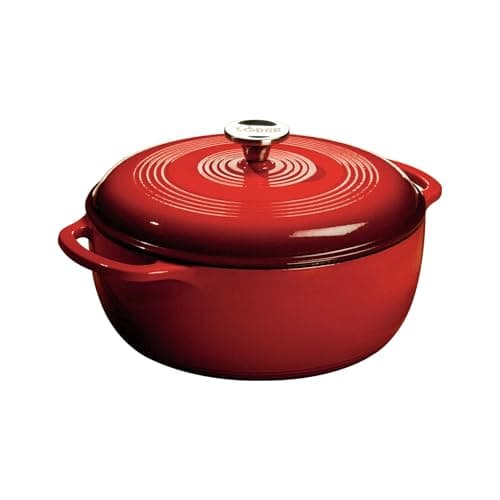
For most bread bakers, enameled cast iron is the right default— and the Lodge Essential Enamel 6-quart is our pick for it, because enamel needs no seasoning, will not carry a garlic-and-stew flavour into your loaf, and publishes a 500°F ceiling that covers almost every no-knead and sourdough recipe. Choose bare cast ironif any of three things is true: your recipe preheats above 500°F, you want a vessel with nothing that can chip, or you want the combo-cooker loading method that keeps your hands out of a hot well.

What neither material does is bake a better loaf than the other. Both are cast iron. Both store and release the same kind of heat for the same reason — mass. Both trap the dough's own steam under a heavy lid, which is the actual mechanism that gives you oven spring and a crackling crust. The enamel is a glass coating on the surface; it changes how you live with the pot, not what the pot does to bread.

The one hard rule: your preheat temperature

This is the only part of the decision that is not a preference, so settle it first. Enamel has a published temperature ceiling and bare iron effectively does not. The Lodge Essential Enamel pots publish 500°F, which clears the 475-500°F that most no-knead recipes specify. Cheaper enameled pots are frequently rated to 450°F, which does not clear it. Bare cast iron has no enamel to blister, so it is not limited this way.

If your recipe preheats the vessel to 550°F — and some artisan formulas do — buy bare iron. Do not buy enamel and run it past its rating: that is how a coating fails early, and it is outside the terms you bought the pot under. If you are at 500°F or below, both materials are in bounds and the rest of this page is the real decision. For the sizing question, see what size Dutch oven for bread.

What enamel actually buys you

No seasoning, ever. There is no routine. You wash it, you dry it, you put it away. For a vessel that bakes once or twice a week and then sits in a cupboard, that is a genuine advantage, because an unseasoned bare pot left damp will rust and a rusted pot needs work before it bakes again.

No flavour carryover.This one is underrated. Bare cast iron takes on and gives back strong flavours, so a pot that braised curry on Tuesday can put a faint something into Saturday's loaf. Enamel is glass; it carries nothing. If the same vessel is going to braise and bake, enamel is clearly the better choice.

You can see what is happening.A light interior shows you how the base is browning. This matters much less for bread than for a braise — you bake covered, then uncovered, looking at the crust from above — but it is not nothing.

What bare cast iron buys you

Nothing that can chip. The failure mode of an enameled pot is a chip from knocking the rim or dropping the lid, and a chipped interior cannot be repaired. Bare iron has no such failure. It can rust, and rust is reversible; a chip is not.

No temperature ceiling. Covered above, and it is the deciding factor for hot-preheat bakers.

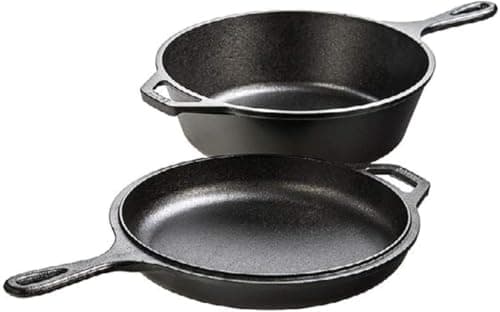
The combo-cooker trick, which only exists in bare iron.The Lodge Combo Cooker inverts: the 10.25-inch shallow skillet is the base and the 3.2-quart deep pot caps it. You load a proofed round onto a flat surface at counter height and then cap it, instead of lowering slack dough blind into a 450°F well. This is the best answer on the market to the genuinely dangerous step in Dutch oven baking, and it is bare iron because there would be no point enamelling a skillet you sear in.

Dual-purpose honesty. Bare iron is also a skillet, a cornbread pan and a braiser. So is enamel. The difference is that bare iron does the high-heat searing jobs enamel is not ideal for, and enamel does the acidic, long-braise jobs bare iron is not ideal for. Neither is more versatile; they are versatile in different directions.

What each one asks of you

Bare iron:Lodge's own instruction for the Combo Cooker is hand wash, dry and oil, every time. That is about ninety seconds of work per bake. If you will do it, bare iron lasts essentially forever. If you are the kind of cook who leaves a pan in the sink overnight, it will rust and you will resent it.

Enamel:treat the Lodge as hand-wash, do not knock the rim with metal, and do not drop the lid on it. There is no seasoning to maintain, and there is also no way back from a chip. Careful handling matters more than brand — see Lodge vs Le Creuset, where the warranty difference is the one thing the premium reliably buys.

Both:loop handles get extremely hot and neither material has a silicone grip. Two dry mitts, every time, no exceptions. A damp mitt on 450°F iron turns to steam against your hand.

The short answer

Quick picks

#ProductBest forScorePrice
01
Lodge Lodge Essential Enamel Cast Iron Dutch Oven, 6 Quart
Lodge Essential Enamel Cast Iron Dutch Oven, 6 Quart

The sweet spot for bread. Six quarts is the volume a standard 500 g boule wants, the published 500°F ceiling clears the temperature most no-knead recipes ask for, and the enamel means you skip seasoning entirely. It costs a fraction of a French-made pot and bakes a functionally identical loaf.

Most sourdough and no-knead bakers
8.8
$66.49Amazon
02
Lodge Lodge Cast Iron Combo Cooker, 3.2 Quart
Lodge Cast Iron Combo Cooker, 3.2 Quart

The bread baker's cult pick, and for a real reason: the shallow skillet becomes the base and the deep pot inverts over it as a lid, so you load a proofed round onto a flat surface at counter height instead of dropping it blind into a deep, 450°F well. Bare cast iron, so there is no enamel to chip.

Loading dough without burning your knuckles
8.8
$59.90Amazon
03
Challenger Breadware Challenger Bread Pan
Challenger Bread Pan

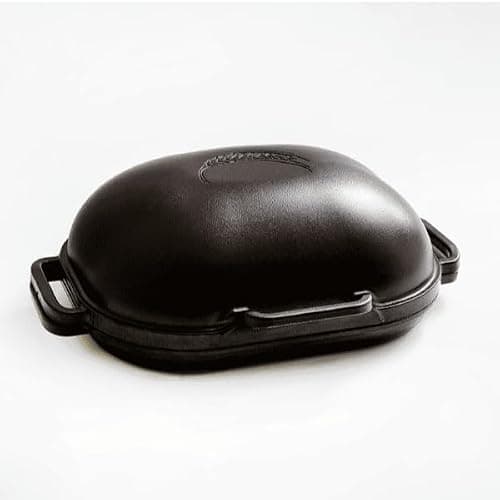
The only vessel here designed for bread and nothing else. The 15.5 x 10.5-inch interior is rectangular, so a batard fits lengthwise instead of being coiled into a round, and the 11.3-lb lid lifts off sideways — you are never reaching down into a hot well. If you bake bread weekly and shape batards, it is the one real upgrade on this page.

Weekly bakers who shape batards and baguettes
8.3
$299.00Amazon

#ad · Live prices from the Amazon Product API, as of October 5, 2026. Where we have no verified live price we show none — a gap beats a number that has rotted.

In detail

The picks, in full

01
Lodge Lodge Essential Enamel Cast Iron Dutch Oven, 6 Quart

Most sourdough and no-knead bakers

Lodge Essential Enamel Cast Iron Dutch Oven, 6 Quart

6-qt capacityEnameled cast iron500°F oven-safeStainless knobInduction ready
8.8/10

The sweet spot for bread. Six quarts is the volume a standard 500 g boule wants, the published 500°F ceiling clears the temperature most no-knead recipes ask for, and the enamel means you skip seasoning entirely. It costs a fraction of a French-made pot and bakes a functionally identical loaf.

Crust & steam
9
Build quality
8.5
Ease of use
8.5
Versatility
9
Value
9

Pros

  • 6-qt round shape gives a standard boule room to spring without spreading into a pancake
  • Published 500°F ceiling covers the preheat most no-knead and sourdough recipes specify
  • Enamel needs no seasoning and will not take on a garlic-and-stew flavor from other cooking

Cons

  • Enamel chips if you knock it or drop a lid on the rim, and a chipped interior cannot be repaired
  • No silicone grip — the loop handles get screaming hot and need two dry mitts
  • Heavier than it looks; lowering it into a low oven is awkward if you have weak wrists

Don't buy this if…

…your recipe preheats the vessel past 500°F — bare cast iron, not enamel, is the tool for a 550°F bake.

$66.49View on Amazon

$89.9026% off

Price as of October 5, 2026. Prices change — Amazon's at checkout is the one that counts.

#ad · we may earn a commission from this link to Lodge Essential Enamel Cast Iron Dutch Oven, 6 Quart

02
Lodge Lodge Cast Iron Combo Cooker, 3.2 Quart

Loading dough without burning your knuckles

Lodge Cast Iron Combo Cooker, 3.2 Quart

3.2-qt deep pot10.25 in skillet lidBare seasoned cast ironMade in USA12.85 lb
8.8/10

The bread baker's cult pick, and for a real reason: the shallow skillet becomes the base and the deep pot inverts over it as a lid, so you load a proofed round onto a flat surface at counter height instead of dropping it blind into a deep, 450°F well. Bare cast iron, so there is no enamel to chip.

Crust & steam
9
Build quality
9
Ease of use
9
Versatility
8
Value
9

Pros

  • Load the loaf onto the flat skillet, then cap it — far safer and more accurate than lowering dough into a deep pot
  • No enamel means nothing that can chip, and bare cast iron is not limited by an enamel temperature rating
  • Two pans in one: the skillet sears and bakes cornbread, the pot handles braises and soup

Cons

  • Needs seasoning maintenance — Lodge's own instruction is hand wash, dry, oil, every time
  • 3.2 qt suits one modest boule; a big 1 kg loaf will touch the sides
  • Bare cast iron will take on and give back strong flavors if you also braise in it

Don't buy this if…

…you want a zero-maintenance pot you can leave wet in the sink — this one rusts if you do, and enamel is the answer instead.

$59.90View on Amazon

Price as of October 5, 2026. Prices change — Amazon's at checkout is the one that counts.

#ad · we may earn a commission from this link to Lodge Cast Iron Combo Cooker, 3.2 Quart

03
Challenger Breadware Challenger Bread Pan

Weekly bakers who shape batards and baguettes

Challenger Bread Pan

15.5 x 10.5 x 5.5 in interiorCast iron, 20 lb totalPre-seasoned500°F guidanceFlat base, lift-off lid
8.3/10

The only vessel here designed for bread and nothing else. The 15.5 x 10.5-inch interior is rectangular, so a batard fits lengthwise instead of being coiled into a round, and the 11.3-lb lid lifts off sideways — you are never reaching down into a hot well. If you bake bread weekly and shape batards, it is the one real upgrade on this page.

Crust & steam
9.5
Build quality
9.5
Ease of use
9
Versatility
7
Value
6.5

Pros

  • Rectangular 15.5 x 10.5-inch interior fits a batard, baguettes or focaccia that no round pot will take
  • Flat, open base loads at counter height with a lid that lifts away rather than a well you reach into
  • The 11.3-lb lid forms a tight seal, which is what traps steam for a blistered, well-scored crust

Cons

  • Costs several times any other pick here, and only pays off if bread is a weekly habit
  • 20 lb in total — heavy to lift, heavy to store, and it monopolizes a cupboard shelf
  • Pre-seasoned bare cast iron, so it needs the same hand-wash-and-oil routine as the Lodge combo

Don't buy this if…

…you bake a loaf a month or shape only rounds — a 6-qt enameled pot does that job for a fraction of the money.

$299.00View on Amazon

Price as of October 5, 2026. Prices change — Amazon's at checkout is the one that counts.

#ad · we may earn a commission from this link to Challenger Bread Pan

Which to buy, by the kind of baker you are

You bake bread weekly and cook in the pot too → enameled

The flavour-carryover argument decides it. A pot that braises on weeknights and bakes at the weekend should be enamel, because nothing you cooked in it on Wednesday ends up in Saturday's crumb. The 6-quart Lodge is the pick: right size for a standard boule, published 500°F, stainless knob, and a fraction of the price of a French pot that bakes an indistinguishable loaf.

You bake bread and nothing else, and you are careful → either, lean bare

A dedicated bread vessel never braises, so flavour carryover is irrelevant, and the only remaining questions are the preheat ceiling and the chip risk — both of which favour bare iron. The counter-argument is the seasoning routine. If the pot bakes weekly, the routine is habit and bare iron is excellent. If it bakes monthly, the pot sits unused for long stretches, which is exactly when bare iron rusts and enamel does not care.

You are nervous about loading a preheated pot → bare, specifically the combo cooker

If the thing stopping you baking more bread is the moment where you lower dough into a hot pot, buy the Combo Cooker and the problem disappears. Load the flat skillet at counter height, score the loaf while you can see it properly, then cap it. People who have burned a forearm on a pot rim do not need this argued further.

You shape batards, not rounds → neither; buy a rectangular pan

A round pot cannot take an oval loaf, and no amount of material preference fixes that. The Challenger Bread Pan is bare pre-seasoned cast iron with a 15.5 x 10.5-inch rectangular interior, so a batard fits lengthwise instead of being coiled into a round, and the 11.3-lb lid lifts off sideways rather than making you reach into a well. It is several times the price of anything else on this page and only pays off if bread is a weekly habit — 20 lb total, heavy to lift, heavy to store, and it needs the same hand-wash-and-oil routine as the Combo Cooker. Our full review is honest about who should not buy it.

Four claims about this choice that are not true

“Bare cast iron makes a better crust”

It does not, and the mechanism explains why. Crust comes from trapped steam in the first half of the bake and from direct heat afterwards. Both materials trap steam identically, because trapping steam is the lid's job. Both conduct heat as cast iron, because the enamel layer is thin relative to the iron underneath. Where bare iron genuinely wins is the temperature you are allowed to run, which is a different claim and a real one.

“Enamel is a coating, so it will wear off like nonstick”

Enamel is fused glass, not a polymer release coating, and it does not wear off with use the way nonstick does. It chips from impact. Those are different failure modes and they call for different care: you do not need to baby enamel against spatulas, you need to not knock it.

“Seasoning a bare pot makes it nonstick enough to skip parchment”

Not for bread. A well-seasoned surface helps, and a slack high-hydration dough will still weld itself to bare iron. Use parchment, semolina or cornmeal under the loaf regardless of material. This is one of the few places where the two materials genuinely behave the same and the advice is identical.

“You can use any heavy pot with a lid”

Mostly true, with two caveats worth stating. The lid must be heavy enough to seal rather than lift as steam builds, which rules out thin stainless and glass lids. And any plastic or phenolic knob must be rated for your oven temperature — the pots here use stainless knobs precisely so there is no part to unscrew before a hot bake.

Where this decision sits

Material is the third question, not the first. Decide whether you want a covered bake at all — bread machine vs oven-baked bread is the page for that — then decide the size in what size Dutch oven for bread, then pick the material here. The full ranked field is in the best Dutch ovens for bread, and if the dough itself is the limiting factor rather than the vessel, our best stand mixers for bread dough roundup is the more useful page. For the steps either side of the bake, see how to use a proofing basket and how to tell when the loaf is done.
How we picked

We don't run a testing lab

We read the manuals, compiled the published specifications, did the wattage-to-dough math and weighed aggregated owner reviews, then scored each product against a published rubric. The scores are judgments from documented research — they are not measurements we took, because we do not have a lab and we're not going to pretend we do. Every spec is the manufacturer's published figure, cited in Sources.

Questions

Frequently asked

Is enameled or bare cast iron better for baking bread?
Neither bakes a better loaf - both are cast iron and both trap steam the same way. Enamel is better if the pot also cooks, because it needs no seasoning and carries no flavours. Bare iron is better if you preheat above 500°F, if you want nothing that can chip, or if you want the combo-cooker loading method.
Can you bake sourdough in a bare cast iron Dutch oven?
Yes, and many bakers prefer it — there is no enamel to chip and no published temperature ceiling to exceed. Use parchment, semolina or cornmeal under the loaf, because slack high-hydration dough sticks to seasoned iron. Expect to hand wash, dry and oil the pot after each bake; see the best Dutch ovens for bread.
What temperature can an enameled Dutch oven handle?
It depends on the pot and you must check the published figure. The Lodge Essential Enamel pots publish 500°F, which covers most no-knead and sourdough preheats. Budget enameled pots are often rated to 450°F, which does not. Above 500°F, use bare cast iron rather than exceeding a rating.
Does cast iron give bread a metallic taste?
Bare cast iron can carry strong flavours between dishes - a pot used for a heavily spiced braise may put a faint something into a loaf. That is flavour transfer rather than a metallic taste from the iron itself, and it is the main practical reason to choose enamel if the same vessel also cooks. Enamel is glass and carries nothing.
Can you repair a chipped enameled Dutch oven?
Not the interior, no. A chip in the cooking surface cannot be repaired, which is the one failure mode enamel has that bare iron does not. It is also why careful handling matters more than brand — though a limited lifetime warranty is the one thing the premium pots reliably add. See Lodge vs Le Creuset.

Keep reading

More in this category

More baking gear

All baking gear →

Receipts

Sources

We don't run a testing lab, and we don't pretend to. Specs are the manufacturer's published figures, cited above; scores are our judgments from that research. Where we couldn't verify something, we say so on the page rather than quietly leaving it out. Read our full method.