Skip to content
Plug & Prep

Hub 04 · Baking Gear · Baking Gear

The best dough proofing containers

Every sourdough recipe tells you to bulk ferment until the dough has risen by some percentage. In a mixing bowl that is a guess. In a straight-sided container with molded graduations it is a number you read off the side - which is the entire reason this category exists.

By Stephen V.Updated How we pick
#ad

We earn a commission when you buy through our Amazon links, at no extra cost to you. It never changes our rankings, and we say so when the cheaper product is the better buy. How this works.

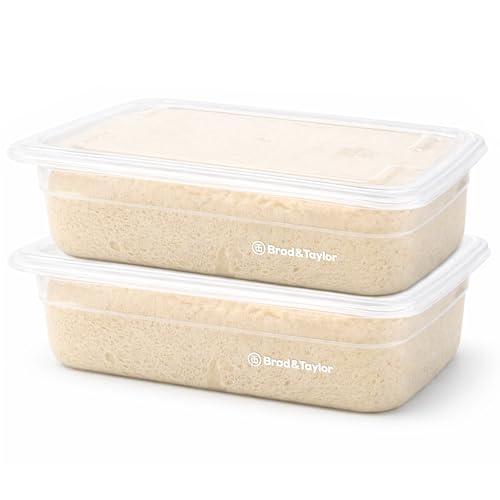
Buy the Cambro RFS6PP190 6-quart round. Straight translucent sides with graduations molded in quarts and liters, published as polypropylene rated -40°F to 160°F, NSF listed and safe in a commercial dishwasher — and it costs less than a bag of good bread flour. That combination is why it is the container most sourdough bakers end up with, and we are not going to pretend something cleverer is better. If you do stretch and fold in the container, the Brod & Taylor 6-liter boxis the right shape and the only pick here that publishes a dough weight — up to 3000 grams. If you want to actually see the bubble structure through the wall and wash it hotter, the Cambro Camwear 8-quart square is clear polycarbonate published to 210°F. The 2-pack of the Brod & Taylor is for overlapping doughs, and the Winco 6-quart whiteis the opaque alternative — which is the one thing a proofing container should probably not be.

The criteria: this is a measuring instrument, not a tub

Almost every modern bread recipe stopped telling you to bulk ferment for a fixed time, because time is not the variable — temperature and starter activity are. What recipes say instead is some version of until the dough has risen 50 to 75 percent, or until doubled. That is a volume measurement, and it is the job of this purchase to make it readable.

1. Straight sides. This is the spec, and it is why a mixing bowl does not work. In a bowl with curved, flaring sides, the same dough occupies a shape whose height changes non-linearly with its volume: a 50 percent rise climbs the wall far less than 50 percent, and it looks different depending on how much dough you started with. In a straight-sided container the height is the volume, so a 50 percent rise is literally half again as tall. Four of the five picks here are straight-sided; the one non-negotiable in the category.

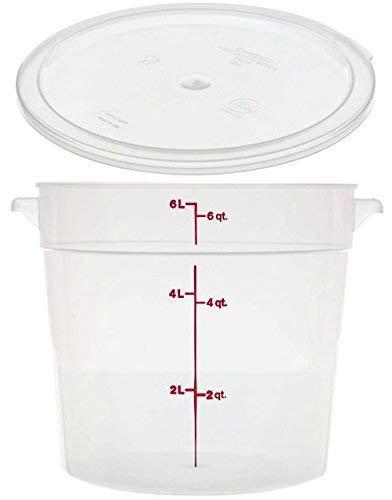
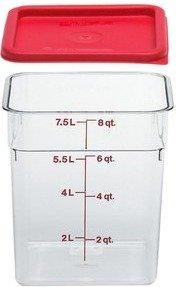
2. Molded graduations.Cambro molds quart and liter markings into both containers here. That turns the reading into arithmetic you do once — dough goes in at the 2-quart line, so 75 percent is the 3.5-quart line — instead of a judgment you repeat anxiously every hour. Printed markings on the outside wear off; molded ones cannot. The alternative, which costs nothing, is a rubber band or a strip of tape around the outside at the starting level, and it works on any container including an opaque one.

3. Whether you can see through it. The level tells you how much it has risen. The wall tells you something different and arguably more useful: whether the dough has an open, bubbled structure, whether those bubbles are fine and even or large and tunneling, and whether the mass is domed or starting to sink in the middle. A clear polycarbonate wall shows all of that. Translucent polypropylene shows the level and a hint of structure. An opaque white wall shows nothing, which is the reason the Winco ranks last here despite being a perfectly good container.

4. Published material and temperature rating. This is where Cambro earns its place twice over, because it publishes figures almost nobody else in the category does. Polypropylene — the translucent RFS6PP190 — is published at -40°F to 160°F. Camwear polycarbonate— the clear CamSquare — is published at -40°F to 210°F, with a two-year pro-rated warranty. That 50°F gap is a real decision: it is the difference between a container you keep out of the hottest dishwasher cycle and one you do not have to think about. Both are NSF listed. Brod & Taylor publishes BPA-free, food-safe polypropylene, dishwasher and freezer safe, and no temperature number. Winco's listing publishes dishwasher, freezer and BPA-free, and no temperature number either — we have not filled that gap in from a sibling product.

5. The shape argument: tall round or shallow box. These are two genuinely different designs for the same job, and the trade is clean.

A tall round bucketis the best instrument: the dough makes a deep column whose rise is easy to read against the graduations, and the small surface area means less skinning over. It is a poor place to work the dough — your hand goes down a narrow shaft, and folding properly means turning the dough out.

A shallow wide box— the Brod & Taylor is about 4 inches deep — is the best workspace: you can reach in with a wet hand, lift and fold from four sides, and never flour a bench. The same geometry means more surface area per unit volume, so the dough warms up and cools down faster, which is a help in a cold kitchen and in a cold retard. The cost is that a doubling is about two inches of depth, which is not something you can read at a glance.

If you fold on the bench, buy the round. If you fold in the container, buy the box. If you do a lot of both, this is the one category where two containers is a reasonable answer rather than an upsell, which is what the 2-pack is doing on the page.

What a proofing container is not

Two clarifications worth making, because the words overlap confusingly.

A proofing container is not a proofing basket. A banneton is a cane or wood-pulp basket that holds a shaped loaf during its final rise and leaves the spiral pattern on the crust; our banneton guide and basket review cover that end of the process. A proofing container holds the bulkdough before shaping. They are both “proofing” and they happen an hour apart, in that order.

A proofing container is also not a proofer. A proofer is a heated box that holds a set temperature; a container is a vessel. If your kitchen is cold enough that bulk fermentation takes all day, the fix is temperature, and our guide to proofing dough covers the free ways to get it before you buy hardware.

How much container do you need?

More than seems obvious, because the dough is going to grow and you need headroom above the line you are watching for.

A standard single sourdough loaf is roughly 900 to 1000 grams of dough, which occupies a little over a quart at the start. Doubled, that is about two and a half quarts, and you want air above it rather than dough pressed against a lid. A 6-quart container is the right size for one to two loaves— which is why 6 quarts is effectively the default in this category and why four of our five picks are that size or close to it. An 8-quartis for a double batch, or for a baker who wants to bulk two loaves' worth and divide afterwards.

Brod & Taylor's published figure is the useful way to think about it: 6 liters total, for dough up to 3000 grams. That is roughly a 1:2 ratio of dough weight in grams to container capacity in milliliters — so 1000 grams of dough wants about 2 liters of container as an absolute minimum, and a 6-quart (5.7 liter) container gives that dough nearly three times its own volume. That sounds generous until the first time a lively summer starter pushes a lid off.

One practical note on lids. You want the container covered during bulk ferment so the surface does not dry into a skin, but you do not want it sealed airtight — fermentation produces gas, and a truly sealed lid either deforms or pops. Resting the lid on top unlatched is the usual answer. And read the lid question carefully when you buy: Cambro sells covers as separate catalog items, and the Amazon listing for the RFS6PP190 is titled “with Lid” where Cambro's own line lists the RFSC6 cover as its own SKU, so what arrives depends on the seller rather than on the model number.

Where this sits in the sourdough kit

A container is the cheapest real upgrade in bread baking, and it is upstream of almost everything else. Bulk fermentation is the step that decides the crumb — underdone and the loaf is dense and gummy, overdone and it spreads flat and tears when you score it — and it is the step home bakers get wrong most often precisely because they were judging it by eye in a curved bowl.

Downstream of it: the dough gets divided and shaped with a bench scraper, goes into a Dutch oven or onto a stone, and gets scoredon the way in. Upstream of it: the flour and water get weighed, because a ferment you are measuring by volume still needs a dough you mixed by weight — our kitchen scale roundup is the other cheap instrument that removes a variable. And if you want the whole list in one place, our sourdough tools page ranks the set.

The short answer

Quick picks

#ProductBest forScorePrice
01
Cambro Cambro RFS6PP190 6-Quart Round Food Storage Container
Cambro RFS6PP190 6-Quart Round Food Storage Container

The container almost every sourdough baker ends up with, and the cheapest thing on this page. Straight translucent sides with molded graduations in quarts and liters turn 'until doubled' from a guess into a reading, and Cambro publishes the figures: polypropylene, -40F to 160F, NSF listed, commercial-dishwasher safe.

Almost everyone
9.1
$6.72Amazon
02
Brod & Taylor Brod & Taylor Proofing Container, 6 L
Brod & Taylor Proofing Container, 6 L

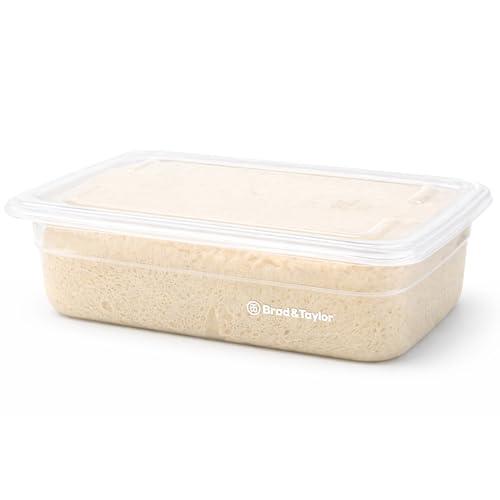
The one container here designed for dough rather than adapted from food storage, and the only one that publishes a dough weight: 6 liters total, rated for dough up to 3000 grams. Its shape is the argument - a shallow wide box about 4 inches tall, which means you can fold the dough in the container instead of turning it out.

Folding in the container
8.2
$24.95Amazon
03
Cambro Cambro Camwear CamSquare 8-Quart Polycarbonate Container with Lid
Cambro Camwear CamSquare 8-Quart Polycarbonate Container with Lid

The clear one, the big one, and the one you can wash hottest. Cambro publishes Camwear polycarbonate at -40F to 210F - a full 50F above its polypropylene line - with quart and liter graduations, NSF listing and a 2-year pro-rated warranty. Genuinely clear walls mean you can watch the bubble structure at the side, not just the level.

Big batches and watching the dough
8.5
$33.77Amazon
04
Brod & Taylor Brod & Taylor Proofing Container, 6 L (2-Pack)
Brod & Taylor Proofing Container, 6 L (2-Pack)

Two of the 6-liter boxes, which is the honest shape of a weekend sourdough schedule: one container bulk fermenting while the other holds dough already shaped or waiting. Buying the pair costs less than two singles and solves the problem of needing the container you are currently using.

Two doughs at once
8.1
$39.90Amazon
05
Winco Winco 6-Quart White Round Food Storage Container
Winco 6-Quart White Round Food Storage Container

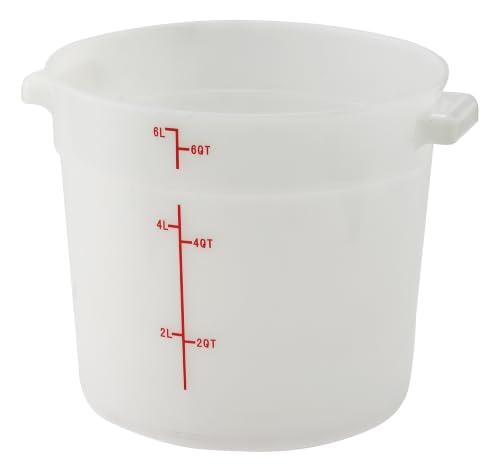
A foodservice-grade 6-quart round in white, published dishwasher safe, BPA-free and freezer safe. It is the pick for someone who already has a scale-and-timer routine and does not read the rise visually - because the one thing a white container cannot do is let you see the dough.

Fridge storage and cold retards
6.8
$15.02Amazon

#ad · Live prices from the Amazon Product API, as of November 17, 2026. Where we have no verified live price we show none — a gap beats a number that has rotted.

In detail

The picks, in full

01
Cambro Cambro RFS6PP190 6-Quart Round Food Storage Container

Almost everyone

Cambro RFS6PP190 6-Quart Round Food Storage Container

6 qt, straight sidesGraduations in qt and LPolypropylenePublished -40F to 160FNSF listed
9.1/10

The container almost every sourdough baker ends up with, and the cheapest thing on this page. Straight translucent sides with molded graduations in quarts and liters turn 'until doubled' from a guess into a reading, and Cambro publishes the figures: polypropylene, -40F to 160F, NSF listed, commercial-dishwasher safe.

Rise readability
9
Shape for dough
8.5
Published specs
9.5
Build & durability
8.5
Value
10

Pros

  • Molded graduations plus straight sides is the whole point of the category - you read the rise as a volume instead of estimating it
  • Cambro publishes a real spec sheet: material, temperature range, NSF listing and commercial-dishwasher rating, which almost nothing else in this category does
  • Foodservice pricing - this costs less than a bag of good flour and lasts for years

Cons

  • The Amazon listing title says 'Camwear' and 'with Lid', and neither matches Cambro's catalog: Camwear is Cambro's clear POLYCARBONATE line, while RFS6PP190 is the translucent polypropylene round, and Cambro sells the matching RFSC6 cover as a separate item
  • Published to 160F, 50F lower than Cambro's polycarbonate line - fine for a dishwasher, not for anything hot
  • Translucent rather than clear, so you can read the level and not really see the crumb structure through the wall

Don't buy this if…

…you want to fold the dough in the container - a 6-quart round is too deep and narrow for that, and the Brod and Taylor box is the right shape.

$6.72View on Amazon

$9.8031% off

Price as of November 17, 2026. Prices change — Amazon's at checkout is the one that counts.

#ad · we may earn a commission from this link to Cambro RFS6PP190 6-Quart Round Food Storage Container

02
Brod & Taylor Brod & Taylor Proofing Container, 6 L

Folding in the container

Brod & Taylor Proofing Container, 6 L

6 L capacityPublished up to 3000 g doughApprox. 12.8 x 10.5 x 4 inBPA-free polypropyleneDishwasher and freezer safe
8.2/10

The one container here designed for dough rather than adapted from food storage, and the only one that publishes a dough weight: 6 liters total, rated for dough up to 3000 grams. Its shape is the argument - a shallow wide box about 4 inches tall, which means you can fold the dough in the container instead of turning it out.

Rise readability
6.5
Shape for dough
9.5
Published specs
9
Build & durability
8.5
Value
7.5

Pros

  • Publishes a dough capacity in grams, not just a volume - the only pick here that speaks the unit bread recipes are written in
  • Shallow and wide, so stretch-and-fold happens in the container with a wet hand and no bench flour at all
  • More surface area per unit volume means a bulk ferment that warms and cools faster, which is useful in a cold kitchen and in the fridge

Cons

  • A shallow box is the worst shape here for reading rise as a ratio - a doubling is 2 inches of depth, not a line you can see at a glance
  • Brod and Taylor's published outer dimensions differ slightly between its own regional sites and retailers (32.5 x 26.5 x 10 cm vs 26.7 x 32.5 x 10.2 cm)
  • Four times the price of the Cambro round, for a container that holds the same order of dough

Don't buy this if…

…you judge bulk fermentation by volume increase - buy a straight-sided round with graduations and keep the folding on the bench.

$24.95View on Amazon

Price as of November 17, 2026. Prices change — Amazon's at checkout is the one that counts.

#ad · we may earn a commission from this link to Brod & Taylor Proofing Container, 6 L

03
Cambro Cambro Camwear CamSquare 8-Quart Polycarbonate Container with Lid

Big batches and watching the dough

Cambro Camwear CamSquare 8-Quart Polycarbonate Container with Lid

8 qt, square, straight sidesPolycarbonate (Camwear)Published -40F to 210FGraduations in qt and LLid included on this listing
8.5/10

The clear one, the big one, and the one you can wash hottest. Cambro publishes Camwear polycarbonate at -40F to 210F - a full 50F above its polypropylene line - with quart and liter graduations, NSF listing and a 2-year pro-rated warranty. Genuinely clear walls mean you can watch the bubble structure at the side, not just the level.

Rise readability
9.5
Shape for dough
8.5
Published specs
9.5
Build & durability
8
Value
7

Pros

  • Clear polycarbonate shows the bubble structure through the wall, which is how you read a ferment rather than just time it
  • The highest published temperature rating here by 50F, so it takes a hot commercial dishwasher without clouding
  • Square sides stack and store in a fridge far better than a round, and 8 quarts covers a double batch

Cons

  • Polycarbonate is harder and more brittle than polypropylene - it scratches from metal scrapers and can crack if dropped on a hard floor, where the poly round just bounces
  • Five times the price of the Cambro poly round for the same job on a smaller batch
  • Cambro lists the graduation color for this model as Winter Rose while retailers describe red markings, so the exact print varies by run

Don't buy this if…

…you only ever make a single loaf - 8 quarts of container for 900 grams of dough is a lot of fridge shelf.

$33.77View on Amazon

Price as of November 17, 2026. Prices change — Amazon's at checkout is the one that counts.

#ad · we may earn a commission from this link to Cambro Camwear CamSquare 8-Quart Polycarbonate Container with Lid

04
Brod & Taylor Brod & Taylor Proofing Container, 6 L (2-Pack)

Two doughs at once

Brod & Taylor Proofing Container, 6 L (2-Pack)

Two 6 L containersPublished up to 3000 g eachApprox. 12.8 x 10.5 x 4 in eachBPA-free polypropyleneStackable, dishwasher safe
8.1/10

Two of the 6-liter boxes, which is the honest shape of a weekend sourdough schedule: one container bulk fermenting while the other holds dough already shaped or waiting. Buying the pair costs less than two singles and solves the problem of needing the container you are currently using.

Rise readability
6.5
Shape for dough
9.5
Published specs
9
Build & durability
8.5
Value
7

Pros

  • A real schedule need: overlapping bulk ferments, or a bulk in one and a cold retard in the other
  • Cheaper per container than buying two singles
  • Stackable, so two shallow boxes take one shelf rather than two

Cons

  • Same shallow shape, so the same weakness - you cannot read a doubling as a line the way you can in a straight-sided round
  • Two containers is two containers to store when you are only baking one loaf
  • The most expensive pick on this page, for twice as much of the second-ranked product

Don't buy this if…

…you bake one loaf at a time - the single is the same container for half the money and half the cupboard.

$39.90View on Amazon

Price as of November 17, 2026. Prices change — Amazon's at checkout is the one that counts.

#ad · we may earn a commission from this link to Brod & Taylor Proofing Container, 6 L (2-Pack)

05
Winco Winco 6-Quart White Round Food Storage Container

Fridge storage and cold retards

Winco 6-Quart White Round Food Storage Container

6 qt, straight sidesOpaque whiteDishwasher and freezer safeBPA-freeNo temperature range published
6.8/10

A foodservice-grade 6-quart round in white, published dishwasher safe, BPA-free and freezer safe. It is the pick for someone who already has a scale-and-timer routine and does not read the rise visually - because the one thing a white container cannot do is let you see the dough.

Rise readability
4
Shape for dough
8.5
Published specs
6
Build & durability
8.5
Value
7

Pros

  • Straight sides and a foodservice build at a hardware-store price
  • Opaque white hides nothing that matters in the fridge and resists staining better than a clear wall shows it
  • Freezer rated, which makes it a legitimate dough-storage and par-baked-loaf container as well as a proofing one

Cons

  • You cannot see the dough, which is the single most useful thing about every other pick on this page
  • Winco's listing publishes dishwasher, BPA-free and freezer safe and no temperature range at all, where Cambro publishes a number for both of its materials
  • More than twice the price of the translucent Cambro round that does the job better

Don't buy this if…

…you are learning to judge bulk fermentation - you need to see the dough, and the Cambro translucent round costs less.

$15.02View on Amazon

Price as of November 17, 2026. Prices change — Amazon's at checkout is the one that counts.

#ad · we may earn a commission from this link to Winco 6-Quart White Round Food Storage Container

How to choose and use a dough proofing container

Buy 6 quarts, straight-sided, translucent or clear

For one or two loaves, 6 quarts with straight sides is the answer, and it is available for the price of a sandwich. Spend more only for a specific reason: clear polycarbonate and a higher wash temperature (the Camwear square), a shape you can fold in (the Brod & Taylor box), or two containers for overlapping doughs. Opaque is the one property to avoid if you are still learning to read a ferment.

Mark the starting level, every time

Put the dough in, smooth the top, and mark where it starts — read it against the molded graduations, or put a rubber band or a strip of tape around the outside at that height. Then do the arithmetic once: a 50 percent rise is half that height again, a doubling is twice it. This single habit is the difference between bulk fermentation being a measurement and being an anxiety, and it works on any container, including an opaque one.

Use a straight-sided container to read percentages, not time

A recipe's stated bulk time assumes a kitchen temperature it cannot know. Read the volume instead: most sourdough recipes are looking for somewhere between a 50 and 100 percent rise at room temperature before shaping, with the lower end for strong flour and a long cold retard afterwards and the higher end for a softer, enriched dough. Watch the dough rather than the clock; the container is what makes that possible.

Oil it lightly, or do not - but be consistent

A thin film of neutral oil or spray on the walls makes turning the dough out cleanly much easier and it does not interfere with fermentation. The argument against is that a slick wall gives the dough nothing to climb, so a heavily oiled container reads a slightly lower rise than a dry one. Pick one approach and keep to it so your readings mean the same thing week to week.

Cover it, do not seal it

Rest the lid on top rather than latching or clamping it. You want to stop the surface from drying into a skin that tears when the dough expands; you do not want to trap the gas that bulk fermentation produces. A snapped-on lid on a lively dough will either deform or come off on its own, usually at two in the morning.

Mind the published temperature when you wash it

Both Cambro materials are dishwasher rated, but the published ceilings differ by 50°F — 160°F for the polypropylene round, 210°F for the Camwear polycarbonate square. A hot sanitizing cycle plus a heated dry can exceed the lower figure, and the symptom is a container that goes slightly soft and warps out of round, which costs you the straight sides you bought it for. Top rack, normal cycle, no heated dry is the safe default for anything polypropylene — which is also both Brod & Taylor picks and the Winco.

Do not scrape it with metal

Polycarbonate is the harder, more brittle of the two plastics: it resists heat better and scratches more readily, and a wall covered in fine scratches stops being clear, which was the reason to buy it. Use a flexible plastic or silicone bowl scraper to get the dough out. The same scraper is the right tool for folding in a shallow container.

What we did not feature, and why

Glass proofing containers with wooden lids.Several are live, and they look lovely. We did not rank one because glass at this size is heavy when full of dough, the wooden lids are hand-wash only, and none we checked published a thermal-shock or temperature rating — which matters because people move these between a warm counter and a fridge.

Small 2-quart “dough proofing containers with red scale” that dominate this search. The printed scale is a genuinely good idea. We left them off because 2 quarts is too small for a single standard loaf once it has risen, the brands have no continuity, and the scales are printed rather than molded.

The Cambro 6-quart opaque (the commercial-grade opaque version), which is live and costs about the same as the translucent round. It is the same container minus the one feature you are buying: being able to see the dough.

Proofers and bread-proofing boxes. Heated appliances rather than vessels, and a different purchase. If your kitchen is too cold, read how to proof bread doughfirst — most of the fixes are free.
How we picked

We don't run a testing lab

We read the manuals, compiled the published specifications, did the wattage-to-dough math and weighed aggregated owner reviews, then scored each product against a published rubric. The scores are judgments from documented research — they are not measurements we took, because we do not have a lab and we're not going to pretend we do. Every spec is the manufacturer's published figure, cited in Sources.

Questions

Frequently asked

Why not just use a mixing bowl to bulk ferment?
Because a bowl cannot give you a volume reading, and bulk fermentation is a volume measurement. In a bowl with curved, flaring sides, the height of the dough does not change in proportion to its volume - a 50 percent rise climbs the wall much less than 50 percent, and how much less depends on how much dough you started with. In a straight-sided container the height is the volume, so half again as tall is a 50 percent rise, every time. A bowl works if you only ever make the same recipe in the same quantity and have learned what it looks like; a straight-sided container with graduations works the first time.
What size proofing container do I need for one loaf?
Six quarts covers one to two standard loaves comfortably, which is why 6 quarts is the default size in this category. A single sourdough loaf is roughly 900 to 1000 grams of dough, a little over a quart at the start and about two and a half quarts doubled, and you want real headroom above that rather than dough pressed against the lid. Brod & Taylor publishes the useful version of this ratio for its 6-liter box: dough up to 3000 grams. Go to 8 quarts if you bulk a double batch and divide afterwards.
Polypropylene or polycarbonate for a dough container?
Cambro publishes both figures, and the gap is real: its polypropylene round is rated -40°F to 160°F and its Camwear polycarbonate square -40°F to 210°F. Polycarbonate is genuinely clear, so you can see the bubble structure at the wall, and it takes the hottest dishwasher cycle without complaint — but it is harder and more brittle, so it scratches from metal and can crack on a tile floor. Polypropylene is translucent rather than clear, tougher, cheaper, and needs to stay out of a heated sanitizing cycle. For most home bakers the polypropylene round is the better buy and the clear square is the upgrade with a specific reason behind it.
Does the Cambro RFS6PP190 come with a lid?
Depends on the listing rather than the model, and it is worth checking. Cambro's catalog treats covers as separate items — the RFSC6 cover is its own SKU, and foodservice retailers list the RFS6PP190 container alone, explicitly noting that no lid is included. The Amazon listing we link is titled “with Lid.” The same title also says “Camwear,” which is Cambro's clear polycarbonate line, while the model code RFS6PP190 is the translucent polypropylene round — so treat the title as approximate and the model number as authoritative. If a lid matters to you, confirm it is in the box before counting on it; a plate or a shower cap over the top works perfectly well in the meantime, since you should not be sealing it airtight anyway.
Should the lid be sealed during bulk fermentation?
No - rest it on top without latching it. Covering the container stops the dough's surface from drying into a skin, which otherwise tears as the dough expands and makes shaping harder. Sealing it traps the carbon dioxide that fermentation is producing, and on an active dough the lid will either bow or pop off by itself. Loosely covered is the whole requirement, which is also why an improvised cover works fine.
Is a proofing container the same as a proofing basket?
No — they are different steps, about an hour apart. A proofing container holds the bulk dough during its first, long fermentation, before the dough is divided and shaped. A proofing basket, or banneton, holds an already-shaped loaf during its final rise and leaves the ring pattern on the crust. Our banneton guide covers the second one. You need the container more than the basket: a basket improves the shape of a loaf, while the container is what lets you judge the ferment that decides the crumb.

Keep reading

More in this category

More baking gear

All baking gear →

Receipts

Sources

We don't run a testing lab, and we don't pretend to. Specs are the manufacturer's published figures, cited above; scores are our judgments from that research. Where we couldn't verify something, we say so on the page rather than quietly leaving it out. Read our full method.