People often own one of these and wonder whether it can do the other's job. The short version: a stand mixer and a food processor both make dough, but they work in almost opposite ways, and that difference decides which is right for which dough. A stand mixer kneads — a hook works the dough slowly and steadily to develop gluten over minutes. A food processor cuts and mixes — a blade brings dough together in seconds through sheer speed.
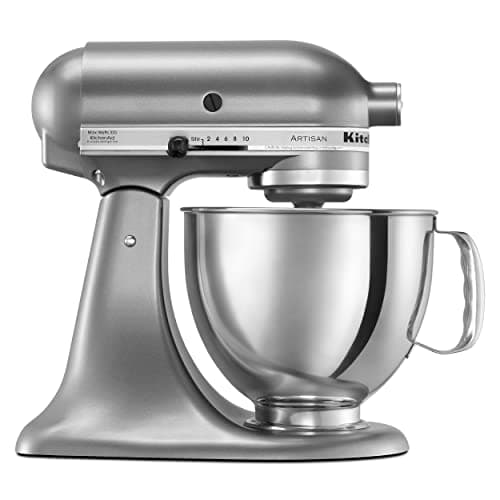
That makes them suited to different doughs. For bread, the stand mixer is the better tool: gentle, sustained kneading develops the gluten structure bread needs, and a machine like the KitchenAid Artisan can run unattended while it does. A food processor canmake bread dough fast, but its blade heats the dough quickly and it's easy to over-process, and capacity is limited by the bowl. For pastry— pie crust, biscuits, anything where you want to keep butter in cold, distinct pieces — the food processor's fast cutting action is actually the advantage, doing in a few pulses what a stand mixer does clumsily.
So this isn't really a contest with a single winner. If you bake bread, a stand mixer is the right dough tool and the more versatile machine overall — it also whips, creams and takes attachments. If your "dough" is mostly pie and pastry, a food processor earns its place for that specific job. Many kitchens end up with both for different reasons; if you're buying one machine and bread is anywhere in the picture, buy the mixer.
The short answer
Quick picks
| # | Product | Best for | Score | Price |
|---|
| 01 | KitchenAid Artisan 5-Qt Tilt-Head (KSM150)The default for a reason: 5-qt tilt-head, a mature attachment ecosystem, and enough motor for a couple of loaves a week. Not the mixer for daily heavy dough — but that's a small slice of home bakers. | Most home bakers | | $449.00·Amazon |
#ad · Live prices from the Amazon Product API, as of Sep 19, 2026. Where we have no verified live price we show none — a gap beats a number that has rotted.
In detail
The picks, in full
Most home bakers
KitchenAid Artisan 5-Qt Tilt-Head (KSM150)
325 W rated5-qt bowl10 speedsTilt-headPowerHub port
The default for a reason: 5-qt tilt-head, a mature attachment ecosystem, and enough motor for a couple of loaves a week. Not the mixer for daily heavy dough — but that's a small slice of home bakers.
- Motor / dough
- 8
- Capacity
- 8
- Build & durability
- 8.5
- Ease of use
- 9
- Value
- 8.5
Pros
- +Huge attachment ecosystem (grinder, pasta, ice cream) via the front PowerHub
- +5-qt bowl handles roughly a double batch of cookie dough or 2 loaves of bread dough
- +Holds resale value and parts availability better than any rival brand
Cons
- −Tilt-head flex shows on very stiff, low-hydration dough
- −325 W rated motor is mid-pack — it will bog if you knead dense dough daily
Don't buy this if…
…you knead stiff bagel or heavy rye dough every day — a bowl-lift or a Bosch has the motor headroom you'll keep asking for.
Which tool for which dough — and which to buy first
Bread and pizza dough: stand mixer
Yeasted doughs want steady kneading to build gluten, and they benefit from a machine you can walk away from. A stand mixer's hook is built for exactly this; a food processor's blade can do it but risks over-working and heating the dough, and it can't match the mixer's batch size. For anything bread, start with the stand mixer roundup.
Pie crust and pastry: food processor
Here the food processor's speed is the point. A few pulses cut cold butter into flour and bring a shortcrust together before the butter warms, which is exactly what a flaky pastry needs. A stand mixer's slower action tends to over-blend pastry and warm the butter. If pastry is your main dough, the processor is the specialist.
If you can only buy one
Buy the stand mixer if bread, pizza or general baking is anywhere in your plans — it's the more versatile machine, handling dough plus whipping, creaming and the whole attachment ecosystem. Buy the food processor first only if your cooking is dominated by chopping, slicing and pastry rather than baking bread. Our is-a-stand-mixer-worth-it guide helps size that decision.
The bottom line
They're complementary, not interchangeable. Bread wants the mixer's slow knead; pastry wants the processor's fast cut. Match the tool to the dough you make most, and if bread is in the mix at all, the stand mixer is the one to own.
How we picked
We don't run a testing lab
We read the manuals, compiled the published specifications, did the wattage-to-dough math and weighed aggregated owner reviews, then scored each product against a published rubric. The scores are judgments from documented research — they are not measurements we took, because we do not have a lab and we're not going to pretend we do. Every spec is the manufacturer's published figure, cited in Sources.
Questions
Frequently asked
Can a food processor knead bread dough like a stand mixer?+
It can bring bread dough together quickly, but through fast cutting rather than steady kneading — which heats the dough and is easy to over-process. For bread, a stand mixer's slow, sustained kneading develops gluten better and handles bigger batches.
Is a food processor better than a stand mixer for pastry?+
For flaky pastry and pie crust, often yes — a few pulses cut cold butter into flour before it warms, which is exactly what pastry needs. A stand mixer tends to over-blend and warm the butter on that job.
If I can only buy one, which should I get?+
Buy the stand mixer if bread or general baking is in your plans — it's far more versatile. Choose the food processor only if your cooking is mostly chopping, slicing and pastry. See our
worth-it guide to weigh it.
Receipts
Sources
We don't run a testing lab, and we don't pretend to. Specs are the manufacturer's published figures, cited above; scores are our judgments from that research. Where we couldn't verify something, we say so on the page rather than quietly leaving it out. Read our full method.