If you buy one thing off this page, buy the digital scale.It is the cheapest pick here and the one that changes a baker's results most — because baking by weight instead of by cup is the single biggest accuracy upgrade available, and most home bakers still scoop flour. It suits almost anyone who bakes, from a complete beginner to someone ten years in who has somehow never bought one. Everything else on this page is here for a more specific person, and we say which one next to each pick.
Twenty-five dollars is a real budget for baking, not a consolation prize. The tools that actually get used weekly in a baking kitchen are mostly cheap — the expensive things are the appliances, and the person you are buying for either already owns those or has strong opinions about which one they want. A good small tool gets used on every bake. A mediocre gadget goes in the back of a drawer. The difference is not price; it is whether the thing solves a problem the baker actually has.
Every pick below is a product we already cover in depth somewhere on this site, re-sorted for a gifter rather than a buyer. Each was under $25 on the day we checked, and the live price in the table above is read from the Amazon Product API and stamped with that date — small-tool prices move, so check the number before you commit rather than trusting a figure typed into a page months ago. If this band is too tight, our under $50 guide is the next tier up.
The six picks, and who each one is for
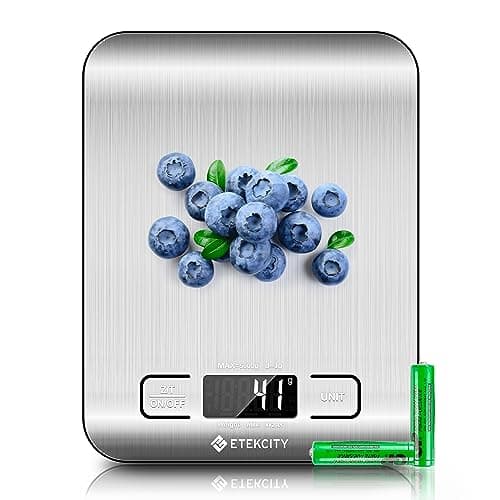
1. Etekcity 11-lb digital food scale — for anyone who bakes at all
Who it is for: the broadest gift here. A beginner, an experienced baker who never bought one, anyone whose bread comes out differently every time. What it does, in plain terms: recipes written in cups are guesses, because a cup of flour can vary by a third depending on how it was scooped. A scale removes the guess. This one reads to the gram, switches between five units and has a tare button, which is the function that lets you zero the display with a bowl already on it and add ingredients one on top of another in the same bowl. What to check:nothing — it needs no compatibility with anything, and the two AAA batteries are included. The honest cons: the fixed display can get hidden under a wide mixing bowl, there is no 0.1-gram fine mode, and the auto-off is aggressive enough to switch off mid-recipe. For the step up with a pull-out readout, see our OXO vs Etekcity comparison, and how to measure flour by weight for why this matters so much.
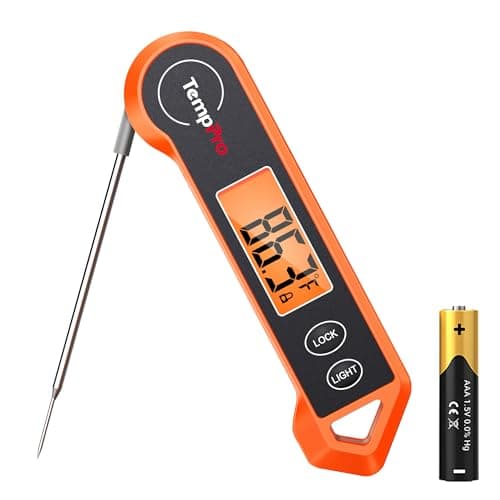
2. TempPro TP19H instant-read thermometer — for a bread baker
Who it is for: someone who bakes yeast bread, especially if they have ever cut into a loaf and found it wet in the middle. What it does: bread is done at an internal temperature, not at a clock time, and this reads that temperature in about a second so the oven door is barely open. It also covers meat, custards and candy, so it earns its drawer space outside baking. What to check:if they only bake in a bread machine, skip it — a machine bakes to its own program and they will rarely probe a loaf. The cons are what you would expect at the price: a budget brand rather than a lab-grade instrument, a battery rather than a rechargeable cell, and a probe that is splash-resistant rather than submersible. Our bread thermometer guide covers the target temperatures.
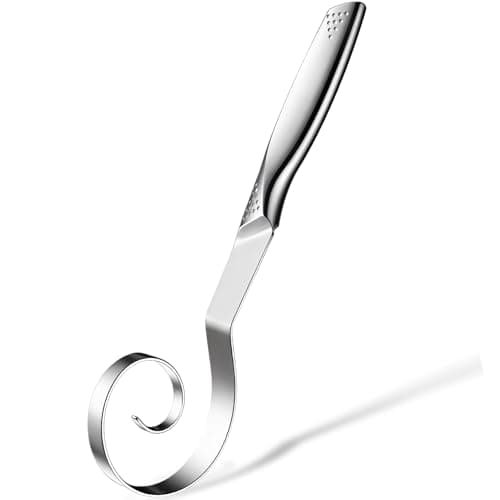
3. Danish dough whisk — for a sourdough or no-knead baker
Who it is for:specifically someone who mixes wet dough by hand — sourdough, no-knead, focaccia, high-hydration anything. What it does: the open stainless coil cuts through shaggy, sticky dough without packing solid the way a spoon or a balloon whisk does. It is a few dollars and it genuinely makes the worst part of hand-mixing less miserable. What to check: this is a hand-mixing tool. If they already own or plan to buy a stand mixer and let it do the dough, the whisk will not get used. Also note that wooden-handled versions need hand-washing. See is a dough whisk worth it for the honest answer, and our Danish dough whisk review for the detail.
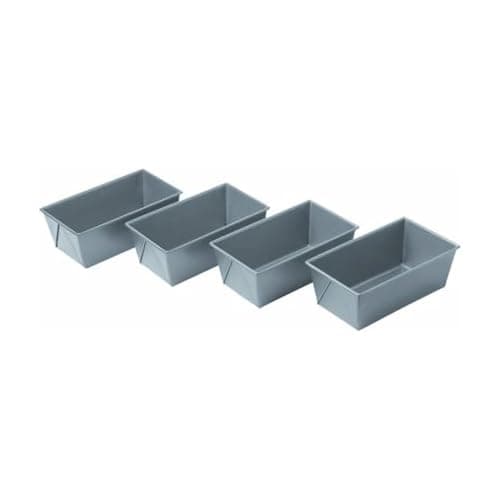
4. Chicago Metallic mini loaf pans, set of 4 — for someone who bakes to give away
Who it is for: the person who makes six banana breads in December and hands them out. What it does:four separate half-pound pans rather than one linked tray, which is the detail that matters — you can bake two, rotate them, or hand one away still in its pan. Heavy aluminized steel with reinforced rims, the same construction as the brand's full-size commercial pans, with a nonstick coating that suits sticky gift loaves. Mini loaves also bake faster and give you far more crust per slice. What to check: if they only ever bake one full-size loaf at a time, this is a specialist pan and the uncoated full-size pan below is the better gift. The nonstick coating is a wear item, and four small pans take more cupboard room than one big one.
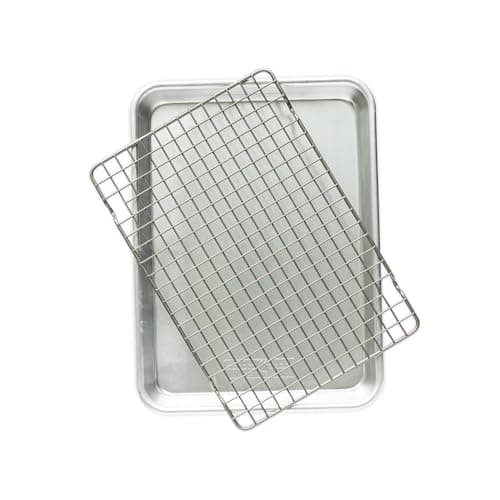
5. Nordic Ware Naturals quarter sheet with grid — for a small kitchen or a toaster oven
Who it is for: someone in a flat, a dorm or an RV, someone who cooks for one or two, or anyone who uses a countertop oven. What it does:half the footprint of a standard half sheet, so it fits a toaster oven where a full pan simply will not go — right for toasting nuts, roasting a single portion of vegetables or baking four cookies without heating a full-size pan. Same bare aluminum and encapsulated steel rim as Nordic Ware's professional half sheets, with a lifetime warranty, and the included nonstick grid works as an in-pan roasting rack or a small cooling rack. What to check:measure their toaster oven if that is the intended home. It is a supplementary pan, never someone's first one, and bare aluminum is hand-wash only — the dishwasher discolours it permanently. Our Nordic Ware vs USA Pan baking sheets comparison explains the bare-aluminum argument.
6. Chicago Metallic Commercial II uncoated 1-lb loaf pan — for a serious bread baker
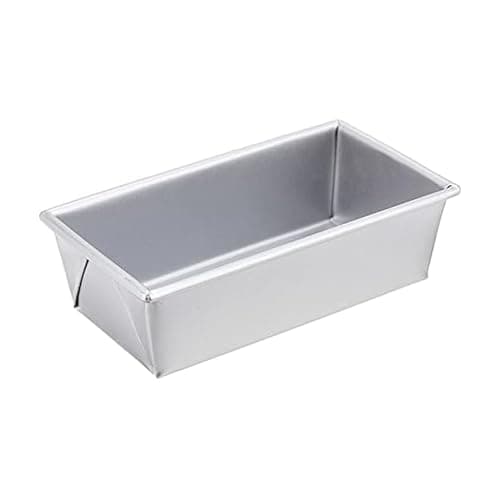
Who it is for: someone who bakes yeasted sandwich bread regularly and probably owns a thin supermarket pan they complain about. What it does:this is the bakery pan — an 8.5 x 4.5-inch baking surface, which is the size most yeast bread recipes are actually written for, in heavy aluminized steel with no coating at all. Nothing to scratch, nothing to blister, nothing to wear off. Folded corners and a wire-rod reinforced rim keep it flat through repeated hot bakes, and the line carries a lifetime warranty. What to check: uncoated means greasing, flouring or lining on every bake, and it punishes you the one time you forget. If they bake mostly sticky high-sugar quick breads, a coated pan is kinder. It will also darken with use and never look new again, which is a feature to a professional and a flaw to some gift recipients. See USA Pan vs Nordic Ware loaf pans for the size question and the best loaf pans for the full field.
How to pick one of these if you do not bake yourself
Ask one question: what do they make?
You do not need to know a banneton from a bench scraper. You need one fact, and you can usually get it from memory. If they make bread, the thermometer or the uncoated loaf pan. If they make sourdough specifically, the dough whisk. If they make cakes, cookies and quick breads, the mini loaf pans or the quarter sheet. If you genuinely do not know, buy the scale — it is useful to all of them, and it is the one tool that improves results regardless of what comes out of the oven.
Do not buy a duplicate of something they already own
The risk at this price point is not buying something bad; it is buying a second one. Scales, thermometers and loaf pans are all things a keen baker may already have. Two rules help. First, a second loaf pan is almost never wasted — bakers run out of pans constantly, and a matching pair bakes two loaves at once. Second, a second scale is wasted, so if you think they might have one, pick something else from this page.
Nothing here needs to match an appliance
This is the main advantage of the under-$25 tier as a gift band. Every pick on this page is brand-agnostic: nothing has to fit a particular mixer, nothing needs a compatible attachment hub, nothing is the wrong size for their machine. That is a real problem higher up the price ladder — a mixer accessory bought for the wrong brand is a returned gift — and it does not exist here. If you are shopping in the tier where it does, our under $150 guide flags the compatibility check on every pick.
What we left off, and why
Gadgets that do one thing badly
The under-$25 search results are full of single-purpose plastic tools: dough cutters, icing kits, measuring-cup sets with twelve sizes. We left them out on purpose. The test we apply is whether a tool gets used weekly, and a tool that only works for one specific recipe does not. Every pick above is used on most bakes or on every bake of a particular kind.
Ingredients and consumables
Good flour, a sourdough starter, vanilla paste — all defensible gifts, and all gone in a month. If you want the gift to still be in the kitchen next year, buy a tool. If you want it to be used this weekend, ingredients are a fine answer; we simply do not rank them, because we rank gear.
Unbranded versions of these same tools
You can find a cheaper scale, a cheaper thermometer and a cheaper loaf pan than the ones above. The pattern we will not recommend is the one with no published specifications, no warranty path and no brand behind it — because at that point nobody, including us, can tell you whether the scale is accurate or the pan will warp. Our how we pick page sets out the standard: we score from published manufacturer specifications and aggregated owner reports, we do not run a lab, and we will not rank a product we cannot stand behind.
Pairings, if you want to spend a little more
The scale plus the thermometer
Our favourite combination on this page and still comfortably under $50 at the prices we read. Weighing flour fixes the dough; probing the loaf fixes the bake. Those two together solve most of what goes wrong with home bread, and neither duplicates the other. Together they also make a complete-feeling gift rather than one small item.
Two of the same loaf pan
Unglamorous, genuinely useful: most bread recipes make two loaves, and most home bakers own one good pan. A matching pair means both loaves bake at once in identical pans, which is also the only way to get consistent results between them.
The dough whisk plus a proofing basket
If the recipient is deep into sourdough, the whisk is a small gift on its own. Add a banneton and it becomes a real one — see our proofing basket review, which sits in the next tier up, and the best gifts for bread bakers for that person specifically.