Spend up on a stand mixer and you are paying for one of three things: design, capacity, or motor headroom. Almost no machine gives you all three at once, so the honest question at the premium end isn't "which is best" — it's "which kind of better am I buying, and do I actually need it?" The three picks here each answer that differently, and for a lot of bakers the right move is to spend less, not more.
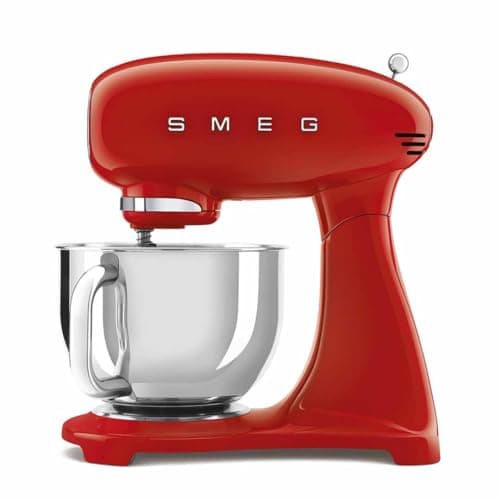
The SMEG 50s-Styleis the design splurge. Its die-cast aluminum body and zinc base genuinely feel more premium than most rivals, the retro styling is the reason people buy it, and it ships with four attachments including a flex-edge beater and a dishwasher-safe stainless bowl. On paper it lists an 800-watt motor — the highest number here — but reviewers consistently report it can lag a KitchenAid or a Bosch on stiff, enriched dough and big meringues, and at around 20 pounds it's heavy for its class. You're paying largely for how it looks, and if that matters to you, that's a legitimate reason.
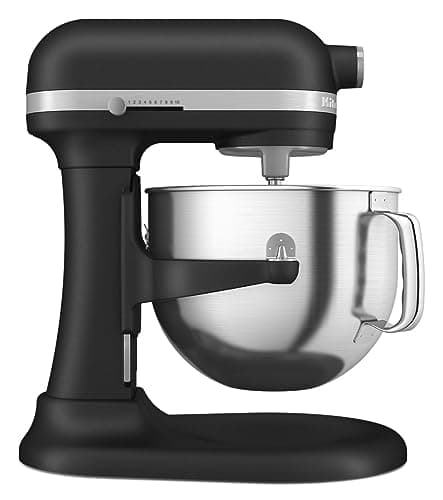
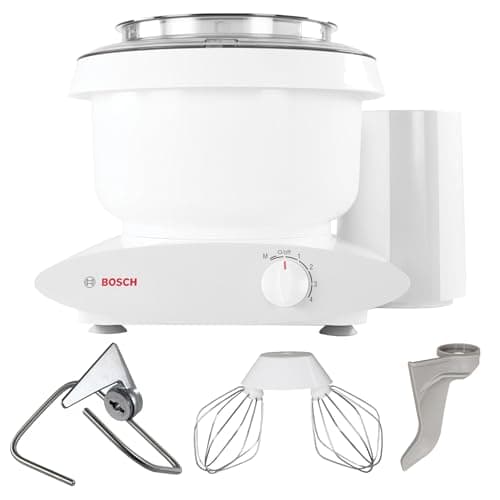
The KitchenAid 7-quart bowl-lift and the Bosch Universal Plus are the performance splurges. The 7-quart KitchenAid is the most mixer the brand sells for a home kitchen: a 500-watt motor, an 11-speed bowl-lift frame that stays planted on heavy dough, and a bowl big enough for roughly 8 pounds of bread dough or 16 cups of flour in one go — with the full PowerHub attachment ecosystem behind it. The Bosch takes a different route to the same goal, driving a 6.5-quart bowl from the bottom to knead about 5 to 6 pounds of dough without the head flex a tilt-head shows. Both cost real money; both earn it only if you bake in volume.
SMEG 50s-Style — the design leader.Nothing else here looks like it, and the build backs the styling up: a die-cast aluminum body, a heavy zinc base, ten speeds, a dishwasher-safe stainless bowl and four attachments including a flex-edge beater. It runs relatively quietly, too. The honest cons are the ones owners raise most: the 800-watt rated motor can struggle on stiff, enriched dough and big meringues despite that big number, it's heavy at around 20 pounds, the pouring shield is fiddly, and it needs frequent bowl-scraping. You are paying a clear premium for the look, and that's the honest case for and against it.
KitchenAid 7-quart bowl-lift — the capacity splurge. A 500-watt motor, an 11-speed bowl-lift frame and a 7-quart bowl that takes about 16 cups of flour or 8 pounds of dough at once, plus six accessories in the box and the full PowerHub attachment range. It stays planted on heavy dough where a tilt-head flexes. The honest cons are size and price: it stands about 16.5 inches tall (often too tall for a standard 18-inch wall cabinet), weighs around 28 pounds so it lives out permanently, and comes only with a stainless bowl that can dull over time. Buy it for genuine volume, not for prestige.
Bosch Universal Plus — the workhorse.The efficient way to spend up if bread is the point: a bottom-drive motor and an open 6.5-quart bowl knead about 5 to 6 pounds of stiff dough without straining, and it usually costs less than the premium KitchenAids while out-muscling them on pure dough. It's also light for its capacity and easy to store. The honest cons: the plastic-forward build feels less premium than a cast KitchenAid, its US accessory ecosystem is smaller, and small jobs — a single egg white, a little butter — get lost in the big open bowl.
What the extra money actually buys — and who should skip it
The premium end is where marketing and value diverge the most. Here's what a bigger budget genuinely gets you, feature by feature, so you can tell the upgrades that will change your baking from the ones that just change your counter.
Design and build (the SMEG's case)
A die-cast body, a heavier base and a quieter motor are real, and the SMEG delivers them along with a look nothing else matches. If a mixer lives out on your counter and you want it to be an object you enjoy, that's a valid thing to pay for. What you should not do is buy the SMEG expecting it to out-knead a workhorse — owners note frequent bowl-scraping, a fiddly pouring shield, and a motor that can struggle on the stiffest doughs. Our SMEG vs KitchenAid comparison lays that trade out in full.
Capacity (the 7-quart KitchenAid's case)
The clearest thing money buys at this tier is bowl size. The 7-quart KitchenAid handles a batch that a 5-quart tilt-head simply can't — big holiday baking, tripled cookie recipes, multiple loaves' worth of dough. But that capacity comes with a footprint: it stands about 16.5 inches tall (often too tall for a standard 18-inch wall cabinet) and weighs around 28 pounds, so it's a machine you leave out rather than move. If your biggest bake is a normal two-layer cake, that's capacity you'll pay for and never use — the best-for-large-batches roundup is the place to size this honestly.
Motor headroom for dough (the Bosch's case)
If bread in volume is the point, the Bosch is the efficient way to spend up. Its bottom-drive motor and open 6.5-quart bowl knead about 5 to 6 pounds of stiff dough without straining, and it typically costs less than the premium KitchenAids while out-muscling them on pure dough. The trade is that it's plastic-forward rather than premium-feeling, its US accessory ecosystem is smaller, and small jobs get lost in the big bowl. Weigh it against the bowl-lift in our KitchenAid vs Bosch guide.
Who should NOT spend up
Most home bakers. If you bake a loaf or two a week, cakes, cookies and the occasional big batch, a mid-priced 5-quart tilt-head does all of it and leaves the premium difference in your pocket. Spend up only for a specific reason you can name: you want the design object (SMEG), you genuinely bake in large volume (7-quart KitchenAid), or bread is your main event and you want the most dough capacity per dollar (Bosch). If you can't point to one of those, the performance and versatility you need live a tier down, and paying more is the actual mistake.
Serviceability and how long it lasts
Part of what a premium price should buy is a machine you can keep. This is where KitchenAid's long-established parts-and-service network is a genuine advantage — a bowl-lift head is a serviceable design that a technician can repair years down the line, which is a real part of what you pay for and a big reason these machines hold their value. Weigh that against the SMEG's styling and the Bosch's raw dough value; a beautiful or powerful mixer that's harder to get parts for is a different long-term proposition. If it comes down to the two heavy hitters, our KitchenAid vs Bosch guide works the durability and support question through in detail.
Counter footprint and noise
Premium mixers are big mixers. The 7-quart KitchenAid is tall and heavy enough that it's a permanent counter fixture, not something you tuck away between bakes, and even the design-led SMEG is a substantial object at around 20 pounds. Before you spend up, measure the space — especially the height under your wall cabinets — and be honest about whether you want an appliance this size on display. A machine you resent leaving out, or can't fit where you want it, is a poor use of a premium budget no matter how well it mixes.
Match the splurge to your actual baking, not the spec sheet
The trap at this tier is buying the biggest number rather than the right tool. The SMEG's 800-watt figure is the highest here, yet it's the Bosch and the bowl-lift KitchenAid — both rated at 500 watts — that actually knead heavy dough better, because drive design and gearing matter more than the wattage printed on the box. If you batch-bake bread, weigh the two 500-watt workhorses in the large-batches roundup rather than chasing the biggest rated motor. Buy for the job you do most, and let the number on the box come last.
What premium does — and doesn't — buy in attachments
The extra money changes how far you can extend each machine. The 7-quart KitchenAid plugs into the full PowerHub ecosystem — pasta rollers, grinders, spiralizers and more — and ships with six accessories, so it's the most expandable of the three. The SMEG comes with four attachments, including a flex-edge beater, but its wider accessory range is narrower than KitchenAid's. The Bosch is the most specialized: superb for dough with its hook and whisks, but its US accessory ecosystem is the smallest here. If growing into pasta or grinding is part of the dream, that pushes you toward the KitchenAid; if it's purely about mixing and kneading, the Bosch spends your money more efficiently and the SMEG spends it on style.
The bottom line at the top of the market
There is no single "best" high-end mixer, only the best version of what you're actually buying. Spend on the SMEG for design, the 7-quart KitchenAid for capacity and the ecosystem, or the Bosch for dough value — and if you can't name which of those you need, take that as a sign the smart money is a tier down. The premium tier rewards a clear purpose and punishes a vague one.