The Challenger Bread Pan is worth the money if, and only if, two things are true:bread is a weekly habit, and you shape batards, baguettes or focaccia rather than only rounds. For that baker it is the one genuine upgrade in bread vessels — a rectangular 15.5 x 10.5-inch interior that takes loaves no round Dutch oven will, and a flat open base with a lid that lifts away sideways, so you are never reaching down into a preheated well. For everyone else, including most people who find this page, a 6-quart enameled pot bakes an excellent loaf for a fraction of the price, and we would rather say so than sell you this.
That is the whole review in two paragraphs, because the Challenger is not a complicated product. It is a well-made, very expensive, single-purpose piece of cast iron, and almost every disappointed owner we can find bought it without being honest with themselves about how often they bake.
What it is
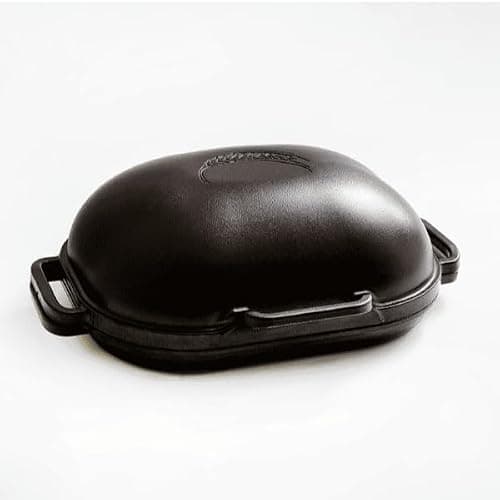
Cast iron, pre-seasoned, in two parts: a shallow flat base with a rim, and a deep lid with a handle on each end. The interior measures 15.5 x 10.5 x 5.5 inches. The whole thing weighs about 20 lb, of which the lid alone is 11.3 lb. Challenger's published guidance is 500°F. Being bare pre-seasoned iron rather than enamel, there is nothing on it that can chip, and no enamel rating to run up against — which is a real advantage if your recipes preheat hot. The trade is the care routine, which is the same hand-wash, dry and oil discipline bare cast iron always asks for; our enameled vs bare cast iron guide sets out what that commits you to.
The two things it does that a round pot cannot
It takes a loaf that is not round.This is the functional argument and it is not a matter of degree. A batard is an oval; a baguette is a long cylinder. A round Dutch oven cannot accommodate either, so bakers who shape them either coil the dough into a round — which defeats the shaping — or bake uncovered on a stone and lose the steam. The Challenger's 15.5-inch length takes a batard lengthwise. It will also take focaccia, or two baguettes side by side. If oval loaves are what you make, no amount of money spent on a round pot solves this, and that is the one case where the Challenger is not a luxury but the correct tool.
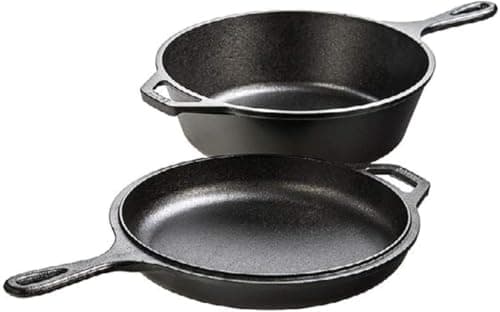
It removes the dangerous step.Loading a slack proofed loaf into a deep 450°F pot is the part of Dutch oven baking that burns forearms and deflates loaves. The Challenger inverts the geometry: the base is flat and open, at counter height, so you place and score the loaf while you can actually see it, then lower the lid over the top. The 11.3-lb lid is heavy enough to seal properly, which is what traps the steam that gives you spring and a blistered, well-defined score. The Lodge Combo Cooker achieves the same trick for a fraction of the price, which is exactly why it is the second pick on this page.
Who should not buy it
If you bake a loaf a month. The cost per loaf is absurd and the pot will sit in a cupboard taking a whole shelf. Buy the Lodge 6-quart and spend the difference on good flour, a scale and a thermometer— those three will improve your bread considerably more than this pan will.
If you shape only rounds.A boule bakes beautifully in a 6-quart enameled pot. The Challenger's rectangular interior is wasted on you, and a wide pan actually gives a round loaf more room to spread sideways than a correctly sized round pot does.
If 20 lb is a problem. This is a serious physical object. The lid alone is 11.3 lb, and lifting it off a hot pan at the halfway point of a bake, one-handed, over a loaf you do not want to touch, is a real manoeuvre. If that sounds like a bad idea in your kitchen, it is.
If you will not maintain bare iron. Pre-seasoned is a starting point, not a permanent state. It needs hand washing, drying and oiling, and it will rust if left wet. If you want a vessel you can be careless with, enamel is the answer.
If you have nowhere to put it. Worth saying plainly: it monopolises a cupboard shelf and it is awkward to shift. People underestimate this and then stop using it, which is the most expensive possible outcome.
How we score it, and what that means
We rate it highest here on crust and steam and on build, lowest on versatility and value — a pattern that describes the product accurately. Those are judgments from published specifications and aggregated owner reports, not measurements: we do not run a lab, and how we pick says so in those words. We have not baked a controlled side-by-side and we are not going to claim we have. What we can state as fact is geometric: a 15.5-inch rectangular interior fits loaves a 10-inch round interior does not, and a lid that lifts off sideways is a different loading procedure from a well you reach into. Those facts are the whole case for the pan.
The honest decision framework
Count your bakes before you count the dollars
Work out how many loaves you baked in the last three months. If the answer is thirty, this pan is a reasonable purchase and you will use it constantly. If the answer is three, buy a Lodge and revisit the question in a year when you know whether sourdough is a phase or a habit. This is not a pan to buy in order to become a better baker; it is a pan to buy once you already are one and have hit the limit of a round pot.
Then look at what you shape
Open your phone and look at photos of your last few loaves. If they are rounds, the Challenger's defining feature is not doing anything for you. If they are ovals — or you have been shaping rounds only because your pot forces you to — that is the actual case for it, and it is a good one. Our proofing basket guide covers the shaping side, since an oval loaf also wants an oval banneton.
Compare it against the Combo Cooker, not against a Dutch oven
Most comparisons put the Challenger against a round pot, which misses the point. Its two advantages are shape and loading, and the Lodge Combo Cooker delivers the loading advantage for a small fraction of the price — a 10.25-inch shallow skillet as the base, the 3.2-quart deep pot inverted as the lid, bare iron, made in the USA, 12.85 lb. Where the Combo Cooker loses is shape: it is round, and 3.2 quarts suits one modest boule, so a 1 kg loaf will touch the sides. If loading is your only problem, buy the Combo Cooker. If shape is also your problem, that is when the Challenger starts to make sense.
And be realistic about the second lid lift
The standard method is covered for the first half of the bake, then uncovered to colour the crust. With this pan, that means lifting 11.3 lb of hot cast iron off, at arm's reach, mid-bake, and putting it somewhere. Plan where it goes before you start — a trivet, a cold hob ring, a wooden board — because improvising with a glowing lid in your hands is how accidents happen.
Living with it
Seasoning and washing
Treat it like any bare cast iron: hand wash with minimal soap, dry it thoroughly — heat on a hob ring for a minute if you want to be sure — and wipe a thin film of neutral oil over the interior. Never leave it wet. The seasoning builds over time and gets better with use, which is the compensation for the routine.
Use a liner anyway
Seasoning helps but will not stop a high-hydration dough welding itself to iron. Parchment, semolina or cornmeal under the loaf, same as any bare-iron bake. This also makes retrieving the finished loaf considerably easier.
Preheating
It is a lot of mass, so give it a proper preheat — this is not a pan to rush with a ten-minute oven. The upside of all that iron is the heat it dumps into the base of the loaf in the first minutes, which is what produces the spring; the downside is the energy and time to get there.
Scoring, which is where it genuinely shines
Because the loaf sits on a flat open base at counter height, you can score it properly rather than slashing at dough down a hot well. If you have been frustrated by scores that close up or wander, this alone will improve how your loaves look — see how to score sourdough bread.
Where it sits in the field
The Challenger is the top of our bread-vessel range and the narrowest product on it. The full ladder, from a budget enameled pot through the combo cooker to this, is ranked in the best Dutch ovens for bread. If you have not settled the size question, start at what size Dutch oven for bread. If you are weighing a premium vessel against premium cookware, Lodge vs Le Creusetmakes the case that money spent on a bread-specific pan beats money spent on finish. And if the dough is your bottleneck rather than the vessel, a mixer with real dough headroom is the better purchase — see the best stand mixers for sourdough.