Skip to content
Plug & Prep

Hub 01 · Stand Mixers · Stand Mixers

Alternatives to KitchenAid

KitchenAid is the default for good reasons, and none of them is that nothing else works. Here is what the brand is actually known for, and four mixers that either match one of those strengths or cost markedly less.

By Stephen V.Updated How we pick
#ad

We earn a commission when you buy through our Amazon links, at no extra cost to you. It never changes our rankings, and we say so when the cheaper product is the better buy. How this works.

If you want the strongest alternative, buy the Bosch Universal Plus. It beats every KitchenAid tilt-head outright at the one job people most often outgrow a KitchenAid on: kneading a lot of stiff dough, which a bottom-drive motor and a 6.5-quart bowl handle without the head flex a hinge introduces. If you want the same kind of mixer for less money, the Cuisinart Precision Master (SM-50) matches a KitchenAid Artisan on bowl volume and exceeds it on published rated wattage at a lower price. The SMEG SMF03 is the alternative for someone buying on build and looks. And the budget pick is the Hamilton Beach 4-Quart, the cheapest mixer here that still creams butter and sugar properly — the right answer for an occasional baker who does not want to spend KitchenAid money at all.

First, what KitchenAid is actually known for

This matters, because “alternative” only means something once you know what you are replacing. KitchenAid is a good product and the reasons it dominates this category are real and specific. There are three.

The front attachment port. Every KitchenAid tilt-head and bowl-lift in our registry carries the same PowerHub port. That port accepts pasta rollers, meat and food grinders, spiralizers, ice-cream bowls and a very large third-party accessory market built to the same fitting. No other brand in this category has an ecosystem of that depth. This is the strength that is genuinely hard to replace, and the honest answer for a buyer who wants it is: buy a KitchenAid.

Parts and bowl availability. Replacement bowls, beaters, dough hooks and the common wear parts for these models are easy to buy years after purchase, which is the kind of advantage that is invisible at the checkout and decisive at year eight.

Resale value. Used KitchenAids hold price better than used mixers of any other brand in this category, which lowers the real cost of ownership if you ever sell.

What KitchenAid is notuniquely good at, on its own published specifications, is motor rating or bowl volume for the money — the Artisan publishes 325 W rated and 5 quarts, and the cheaper Cuisinart publishes 500 W rated and 5.5. And on stiff dough a tilt-head hinge is a limitation of the design rather than a flaw in the brand. Those are the two openings the alternatives below use. We have no interest in talking anyone out of a KitchenAid; this page exists because “alternatives to KitchenAid” is a question people actually ask, and it deserves a straight answer.

The four alternatives, and what each one matches it on

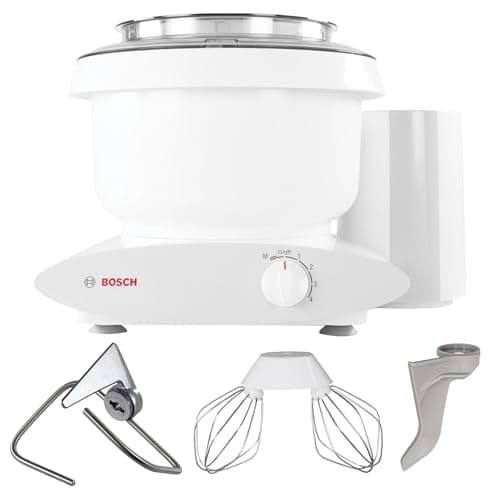
Bosch Universal Plus — beats it on dough. This is the only pick here that is better than a KitchenAid tilt-head at a named job rather than cheaper at the same job. Its motor sits beneath the bowl and drives the hook from below, so dough load lands on the drive instead of being cantilevered on an overhead arm, and its published 6.5-quart bowl and 5-to-6-pound dough capacity are both larger than anything a tilt-head KitchenAid publishes. For a baker making several loaves a week this is a straight upgrade, and the full comparison is at KitchenAid vs Bosch. What you give up is real: a big open bowl with a bottom drive is poor at small aeration jobs, the build is more plastic-forward than a cast KitchenAid, and the US accessory range is much smaller.

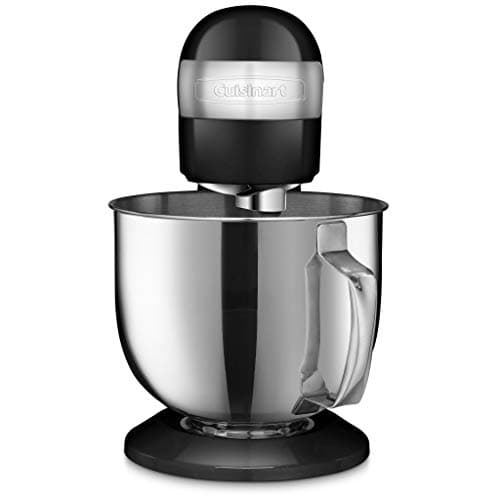
Cuisinart Precision Master — matches the Artisan for less.A 5.5-quart bowl against the Artisan's 5, a published 500 W rated motor against 325 W, twelve speeds against ten, a splash guard in the box, and a lower price. It is the most direct like-for-like substitute on this page, and the thing it cannot replace is the port. Our head-to-head is at KitchenAid vs Cuisinart.

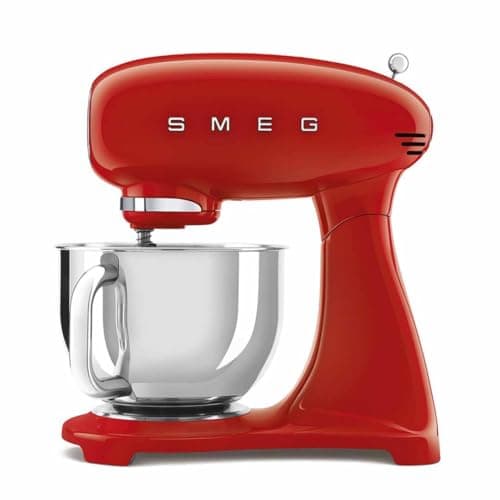
SMEG SMF03 — competes on build and design. A die-cast body, the highest published rated wattage on this page at 800 W, and four attachments including a flex-edge beater, in a mixer bought at least partly because of how it looks on a counter. It is not cheaper than a KitchenAid and it is not pretending to be; it is the alternative for someone whose objection to KitchenAid is aesthetic rather than financial. See SMEG vs KitchenAid.

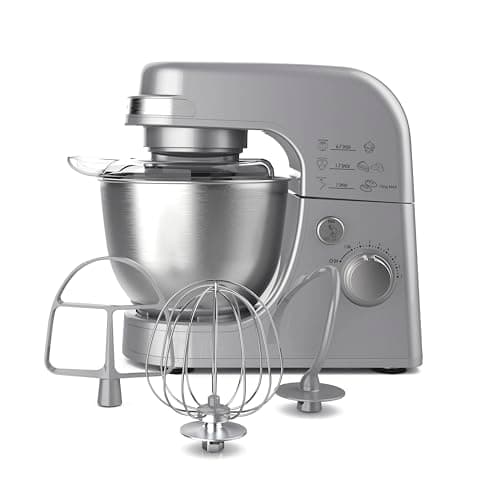
Hamilton Beach 4-Quart — the budget pick. Seven speeds, a 4-quart stainless bowl, a splash guard, a dough hook and whisk in the box, and a price a long way below the band KitchenAid sells in. It is the cheapest mixer on this page that still does the thing cheap mixers usually fail at, which is creaming butter and sugar to a properly aerated texture. No attachment port, no dough ambitions. For someone who bakes a few times a year, the honest recommendation is this rather than a KitchenAid, and KitchenAid vs Hamilton Beach lays out exactly what the gap is.

The short answer

Quick picks

#ProductBest forScorePrice
01
Bosch Bosch Universal Plus Stand Mixer
Bosch Universal Plus Stand Mixer

The bread baker's mixer. A belt-driven motor at the base and a big open bowl let it knead far more dough than a KitchenAid without straining. Less elegant, less versatile for whipping small amounts — but for loaves it's the one.

High-volume bread dough
8.5
$499.00Amazon
02
Cuisinart Cuisinart Precision Master 5.5-Qt (SM-50)
Cuisinart Precision Master 5.5-Qt (SM-50)

The value tilt-head. A larger 5.5-qt bowl and a stronger rated motor than the Artisan, usually for less money. The trade is a thinner accessory ecosystem and slightly rougher fit and finish.

Best value tilt-head
8.3
$199.99Amazon
03
SMEG SMEG 50s-Style Stand Mixer (SMF03)
SMEG 50s-Style Stand Mixer (SMF03)

The design-first stand mixer. SMEG's die-cast body and retro colorways make it the best-looking mixer on most counters, and the build genuinely feels premium. On paper it has an 800-watt motor and a full attachment set — but reviewers consistently note it can lag a KitchenAid or Bosch on stiff, enriched dough, and you pay a steep premium for the styling.

Design-led kitchens
7.8
$570.79Amazon
04
Hamilton Beach Hamilton Beach 4-Qt Electric Stand Mixer
Hamilton Beach 4-Qt Electric Stand Mixer

The cheapest way to get a real stand mixer on the counter. A 4-quart tilt-head with a dough hook, flat beater and whisk in the box for a fraction of a KitchenAid's price. It won't match the build or the motor, but for occasional baking it's a lot of mixer for the money.

Cheapest tilt-head stand mixer
7.4
$109.00Amazon

#ad · Live prices from the Amazon Product API, as of November 8, 2026. Where we have no verified live price we show none — a gap beats a number that has rotted.

In detail

The picks, in full

01
Bosch Bosch Universal Plus Stand Mixer

High-volume bread dough

Bosch Universal Plus Stand Mixer

500 W rated6.5-qt bowlBottom-drive~5–6 lb doughDough hook + whisks
8.5/10

The bread baker's mixer. A belt-driven motor at the base and a big open bowl let it knead far more dough than a KitchenAid without straining. Less elegant, less versatile for whipping small amounts — but for loaves it's the one.

Motor / dough
9.5
Capacity
9.5
Build & durability
8
Ease of use
7.5
Value
8

Pros

  • Bottom-drive motor kneads large, stiff dough batches most tilt-heads can't finish
  • 6.5-qt bowl swallows 3–4 loaves' worth of dough at once
  • Lightweight for its capacity and easy to store

Cons

  • Not ideal for very small jobs — whipping one egg white gets lost in the big bowl
  • Plastic-forward build feels less premium than a cast KitchenAid
  • Smaller accessory ecosystem in the US

Don't buy this if…

…you mostly whip cream, beat butter and do single-batch baking — a tilt-head KitchenAid is friendlier for that work.

$499.00View on Amazon

Price as of November 8, 2026. Prices change — Amazon's at checkout is the one that counts.

#ad · we may earn a commission from this link to Bosch Universal Plus Stand Mixer

02
Cuisinart Cuisinart Precision Master 5.5-Qt (SM-50)

Best value tilt-head

Cuisinart Precision Master 5.5-Qt (SM-50)

500 W rated5.5-qt bowl12 speedsTilt-headSplash guard
8.3/10

The value tilt-head. A larger 5.5-qt bowl and a stronger rated motor than the Artisan, usually for less money. The trade is a thinner accessory ecosystem and slightly rougher fit and finish.

Motor / dough
8
Capacity
8.5
Build & durability
7.5
Ease of use
8.5
Value
9

Pros

  • Bigger bowl and higher rated wattage than the same-price KitchenAid
  • 12 speeds with a genuinely useful low start speed
  • Comes with dough hook, flat beater and whisk in the box

Cons

  • Far fewer first-party attachments than KitchenAid
  • Resale value and long-term parts support trail KitchenAid
  • Head latch feels less refined

Don't buy this if…

…you want to grow into pasta rollers, grinders and the wider attachment world — that's KitchenAid's home turf.

$199.99View on Amazon

$319.9537% off

Price as of November 8, 2026. Prices change — Amazon's at checkout is the one that counts.

#ad · we may earn a commission from this link to Cuisinart Precision Master 5.5-Qt (SM-50)

03
SMEG SMEG 50s-Style Stand Mixer (SMF03)

Design-led kitchens

SMEG 50s-Style Stand Mixer (SMF03)

800 W rated~5-qt bowl10 speedsTilt-head4 attachments incl. flex edge
7.8/10

The design-first stand mixer. SMEG's die-cast body and retro colorways make it the best-looking mixer on most counters, and the build genuinely feels premium. On paper it has an 800-watt motor and a full attachment set — but reviewers consistently note it can lag a KitchenAid or Bosch on stiff, enriched dough, and you pay a steep premium for the styling.

Motor / dough
7.5
Capacity
8
Build & durability
9
Ease of use
8
Value
6.5

Pros

  • Die-cast aluminum body and zinc base feel more premium than most rivals
  • Comes with four attachments, including a flex-edge beater, plus a dishwasher-safe stainless bowl
  • Iconic 50s-retro styling in a wide range of colors, and runs relatively quietly

Cons

  • Reviewers report the 800 W motor can struggle on stiff, enriched dough and big meringues
  • Heavy (~20 lb) and priced well above better-performing mixers
  • Owners note frequent bowl-scraping and a fiddly pouring shield

Don't buy this if…

…you're buying on kneading power per dollar — a Bosch Universal Plus or a KitchenAid bowl-lift out-muscles it for less, and you're paying here largely for the look.

$570.79View on Amazon

Price as of November 8, 2026. Prices change — Amazon's at checkout is the one that counts.

#ad · we may earn a commission from this link to SMEG 50s-Style Stand Mixer (SMF03)

04
Hamilton Beach Hamilton Beach 4-Qt Electric Stand Mixer

Cheapest tilt-head stand mixer

Hamilton Beach 4-Qt Electric Stand Mixer

4-qt bowl7 speedsDough hook + whisk incl.Tilt-headSplash guard
7.4/10

The cheapest way to get a real stand mixer on the counter. A 4-quart tilt-head with a dough hook, flat beater and whisk in the box for a fraction of a KitchenAid's price. It won't match the build or the motor, but for occasional baking it's a lot of mixer for the money.

Motor / dough
6.5
Capacity
7
Build & durability
6.5
Ease of use
8
Value
9

Pros

  • One of the lowest prices for a genuine stand mixer, not a hand mixer
  • Ships with a dough hook, flat beater, whisk and splash guard
  • Light and easy to move on and off the counter

Cons

  • Plastic-forward build feels a long way from a cast KitchenAid
  • Smaller 4-qt bowl and a motor happier with batter than heavy dough
  • No attachment ecosystem to grow into

Don't buy this if…

…you bake bread often or want a machine that lasts a decade — a KitchenAid Classic or Cuisinart Precision Master is the sturdier buy.

$109.00View on Amazon

$126.9514% off

Price as of November 8, 2026. Prices change — Amazon's at checkout is the one that counts.

#ad · we may earn a commission from this link to Hamilton Beach 4-Qt Electric Stand Mixer

Choosing between them

If your reason for looking is price

Go to the Cuisinart first and the Hamilton Beach second. The Cuisinart is the one that costs less without asking you to accept less mixer; the Hamilton Beach costs much less and does ask you to accept less mixer, and is still the right buy for an occasional baker. Our under-$500 roundup puts all of these in the same band with live prices.

If your reason for looking is dough

Go straight to the Bosch and do not compromise. People who outgrow a KitchenAid almost always outgrow it on dough, and the fix is a different drive design rather than a bigger number on the same design. Best for sourdough and best for bread dough both rank the Bosch first for this reason.

If your reason for looking is that you want attachments but not the price

Then the honest answer is to buy the cheapest KitchenAid rather than a different brand. The KitchenAid Classic carries the same PowerHub port as the pricier models at the bottom of the KitchenAid range. Nothing on this page can give you that port, and an adapter does not exist.

What we did not feature, and why

The Dash 3.5-quart is a genuine low-cost alternative and is in our registry, but it carried no verified live price when we published this page, and our rule is that a pick without a verifiable offer does not go on a ranked list. It has its own review.

Commercial planetary mixers from foodservice brands are a real answer for a few people and a bad answer for most: heavy, loud, usually 10 quarts and up, and priced well past this category. We have not ranked one because it is a different product class, not a KitchenAid alternative.

Unbranded KitchenAid lookalikesare the biggest group of listings returned for this query and publish almost nothing: no bowl material, no care instruction, no parts channel, often no stable model number. Our rubric scores published specifications, so there is nothing here to score — see how we pick. We would rather recommend the Hamilton Beach, which publishes its specs and has a service channel, than a higher wattage number with nothing behind it.
How we picked

We don't run a testing lab

We read the manuals, compiled the published specifications, did the wattage-to-dough math and weighed aggregated owner reviews, then scored each product against a published rubric. The scores are judgments from documented research — they are not measurements we took, because we do not have a lab and we're not going to pretend we do. Every spec is the manufacturer's published figure, cited in Sources.

Questions

Frequently asked

What is the best alternative to a KitchenAid stand mixer?
For dough, the Bosch Universal Plus, which beats any KitchenAid tilt-head at kneading because its motor drives the hook from beneath the bowl rather than through an overhead arm, and its published bowl and dough capacities are bigger. For a like-for-like mixer at a lower price, the Cuisinart Precision Master, which matches an Artisan on bowl volume and exceeds it on published rated wattage. For an occasional baker, the Hamilton Beach 4-Quart. Live prices for all four are in the Quick picks table with the date they were fetched.
Is there a stand mixer like a KitchenAid but cheaper?
Yes - the Cuisinart Precision Master SM-50 is the closest thing to a like-for-like substitute. It is the same kind of machine, a planetary tilt-head, with a 5.5-quart bowl against the Artisan's 5 quarts, a published 500 W rated motor against 325 W, and twelve speeds against ten, at a lower price. The one thing it cannot replace is the front attachment port, so if you want to add a pasta roller or a grinder later, the cheaper route is the KitchenAid Classic rather than a different brand.
What is KitchenAid actually better at?
Three specific things, and it is worth being precise rather than dismissive. The front PowerHub port, which no rival ecosystem matches for depth — pasta rollers, grinders, spiralizers, ice-cream bowls, plus a large third-party market built to the same fitting. Parts and bowl availability years after purchase, which is invisible at checkout and decisive later. And resale value, which is better than any other brand in this category and lowers real cost of ownership. What it is not uniquely good at, on published specs, is motor rating or bowl volume per dollar.
Can I use KitchenAid attachments on another brand of mixer?
No. The PowerHub fitting is KitchenAid's, and no other brand on this page accepts it - there is no adapter that makes a pasta roller fit a Cuisinart or a Bosch. SMEG ships four of its own attachments on its own fitting, which is not interchangeable either, and Bosch has its own smaller US range. Beaters, whisks and dough hooks are not cross-compatible between brands either, because the shaft and the bowl geometry differ. If attachments are the reason you are looking at KitchenAid, buy a KitchenAid; the Classic is the cheapest model carrying the same port.
Is a Bosch Universal Plus better than a KitchenAid?
At kneading dough, yes, and the reason is design rather than marketing: the motor is under the bowl, so dough load goes straight into the drive instead of being cantilevered on an arm, and the published 6.5-quart bowl takes roughly 5 to 6 pounds of dough — three to four loaves at once. At everything else, it is a trade. A large open bowl with a bottom drive is poor at whipping small quantities, the build is more plastic-forward than a cast KitchenAid, and the US accessory range is much smaller. Full detail in KitchenAid vs Bosch.

Keep reading

More in this category

More stand mixers

All stand mixers →

Receipts

Sources

We don't run a testing lab, and we don't pretend to. Specs are the manufacturer's published figures, cited above; scores are our judgments from that research. Where we couldn't verify something, we say so on the page rather than quietly leaving it out. Read our full method.