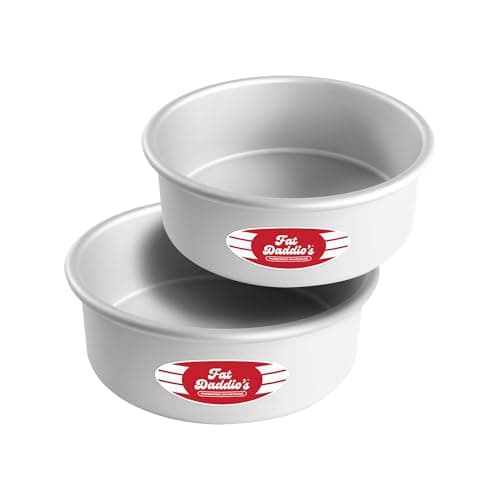
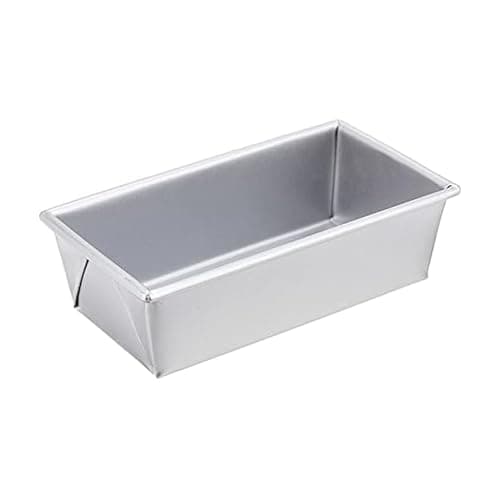
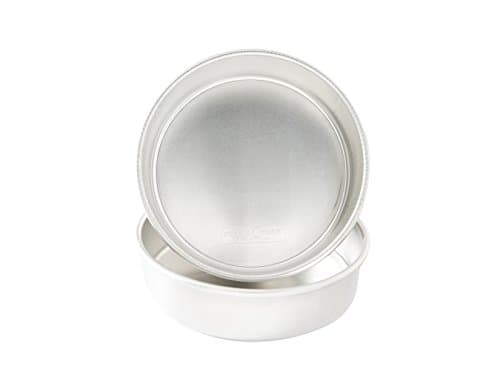
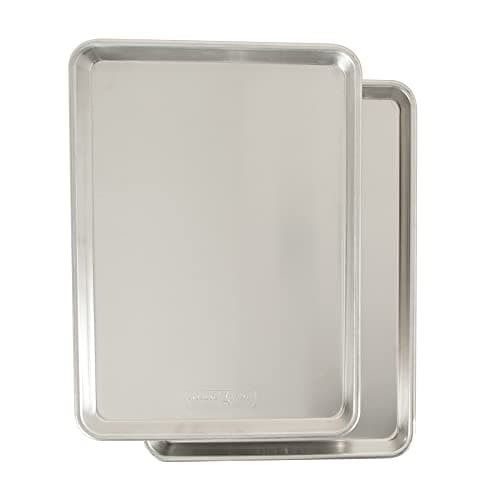
If you want bakeware with no coating on it at all, the Nordic Ware Naturals half sheet 2-pack is where to start — bare aluminum, an encapsulated galvanized steel rim, a 17.1 by 12.1-inch cooking surface, made in the USA and covered by a lifetime warranty. It is also the pan most professional kitchens actually use. For cake, the Fat Daddio's 8 by 3-inch anodized pair; for loaves, Chicago Metallic's uncoated Commercial II; for 9-inch layers, Nordic Ware's bare-aluminum 2-pack.Every pan on this page asks the same thing of you — grease it, flour it or line it, every single time — and gives you the same thing in return: a baking surface that cannot peel, flake, blister or wear out, because it is just metal.
What “uncoated” actually means, and the three kinds here
The phrase covers three genuinely different surfaces, and the distinction matters when you shop.
Bare aluminumis raw, light-colored metal — Nordic Ware's Naturals line is the best-known example. It conducts heat fast and browns gently, which is why cookies baked on it do not scorch underneath the way they do on dark pans. It discolors and mottles with age, it is not dishwasher-friendly, and it is not a release surface.
Anodized aluminumis aluminum whose surface has been electrochemically hardened. Fat Daddio's is the name serious cake bakers standardize on, and the company's claim is the useful one: anodizing is a surface, not a coating, so it will not peel, rust, flake or chip. It also tolerates heat that coated pans cannot — Fat Daddio's publishes 550°F against the 450°F of most coated steel pans.
Uncoated aluminized steelis steel with an aluminum-silicon layer bonded to it, left bare. Chicago Metallic's Commercial II traditional-uncoated line is the bakery version: heavier than aluminum, dimensionally very stable, and it darkens with use into a surface that bakes beautifully and never looks new again.
All three are distinct from a PTFE-free coating, which is still a coating. USA Pan's Americoat and Caraway's ceramic both avoid the fluorochemical family and both still wear out eventually. If avoiding PTFE specifically is your goal rather than avoiding coatings altogether, aluminum vs nonstick baking sheets is the page that compares those directly.
The picks, by published specification
| Pan | Surface | Size | Heat rating | Who it is for |
|---|
| Nordic Ware Naturals half sheet, 2-pack | Bare aluminum | 17.9 x 12.9 in, 17.1 x 12.1 in surface | No coating to limit it | Everyone, as the default pair |
| Fat Daddio's PRD-83SET, 8 x 3 in, 2-pack | Anodized aluminum | 8 x 3 in, 5-cup capacity | 550°F | Layer cakes you split |
| Chicago Metallic Commercial II loaf, 1 lb | Uncoated aluminized steel | 8.5 x 4.5 x 2.75 in | No coating to limit it | Yeast sandwich loaves |
| Nordic Ware Naturals 9 in round, 2-pack | Bare aluminum | 9 x 9 x 2.4 in | No coating to limit it | A 9-inch layer set on a budget |
Every figure is the manufacturer's published number, cited in Sources below. Three of the four carry a lifetime warranty — which is a claim a company can only make about a pan with nothing on it to wear out.
Why a baker chooses no coating
Three reasons, in rough order of how often people give them.
It does not wear out.A nonstick surface is a consumable with an undefined lifespan. It survives a few years of careful use, then releases less well, then shows wear, and at that point the pan is finished even though the metal under it is perfect. An uncoated pan has no such clock. Chicago Metallic's lifetime warranty on the Commercial II line and Nordic Ware's on Naturals are both statements about that.
It browns better. Light, bare metal reflects radiant heat and conducts fast, which gives you even browning rather than a scorched base. This is the single biggest reason cheap dark coated sheet pans burn cookie bottoms, and it is why bakeries use bare aluminum. See the best baking sheets for cookies for how much difference it makes on one specific job.
It handles heat.Coated steel pans typically publish a 450°F ceiling. Anodized aluminum and bare metal are not limited that way — Fat Daddio's publishes 550°F. If you roast at high heat on the same pans you bake on, that matters.
The cost, stated honestly
You grease, flour or line every time, without exception, and bare metal punishes the one bake you forget. Sticky, high-sugar batters — caramel-topped anything, a sticky bun, a very wet banana bread — grab harder on bare metal than on a coating. The pans also discolor: bare aluminum mottles and darkens, uncoated aluminized steel goes brown, and neither ever looks new again. Nordic Ware and Chicago Metallic both advise against the dishwasher, so washing is by hand.
If any of that sounds like a deal-breaker, the honest recommendation is a PTFE-free coated pan instead: the best baking sheets and the best loaf pans both rank coated options first, and a coated pan is a better pan for a baker who will not line things.
How to bake on bare metal without losing anything
- Parchment, not grease, on sheet pans.A half sheet is flat, so a sheet of parchment covers the whole working surface and lifts off with the bake on it. This is the entire answer to “but it sticks” and it costs pennies per bake.
- Grease and line the base of round pans. Butter or oil the pan, drop in a parchment circle, then grease the circle too. A cake released from bare aluminum this way comes out as cleanly as from any coated pan — the greasing and lining method is the same for loaves.
- Use a parchment sling in loaf pans. A strip of parchment running the long way with ends hanging over the rim gives you two handles to lift a loaf straight out. Uncoated loaf pans want this; it also stops you levering at a hot crust with a knife.
- Hand wash, dry immediately. Bare aluminum in a dishwasher comes out chalky and permanently discolored. Warm water, a soft brush, dry it straight away.
- Let the patina happen. A darkened pan is a seasoned pan, not a dirty one. Scouring it back to bright metal every time wears the surface and achieves nothing.
What to look for if you shop beyond these four
An encapsulated or wire-reinforced rim. This is the feature that stops a light pan buckling with a bang when it hits oven heat. Both Nordic Ware pans here have an encapsulated galvanized steel rim and the Chicago Metallic has a wire-rod rim. A flat sheet of aluminum with a plain rolled edge will warp, and how to keep baking sheets from warping explains why.
Gauge, where it is published.Fat Daddio's publishes 16-gauge for its pans. Most brands publish nothing, and “heavy-duty” on a listing means nothing at all. Weight in the hand is the next best proxy.
Light color. Within uncoated pans, lighter is better for baking. Dark metal absorbs more radiant heat and sets a base before the middle cooks.
A warranty that is actually written down. A lifetime warranty is cheap for a manufacturer to offer on an uncoated pan and expensive on a coated one. Its presence is a reasonable signal about what the company thinks will fail.
Building an uncoated kit in order
Start with two half sheet pans. They are the most-used pan in any kitchen, they cost the least per bake, and two means one bakes while the other cools. Add a loaf pan next if you bake bread, or a pair of round pans next if you bake cake — and in both cases buy the pair rather than a single, because matched pans bake matched layers. A cooling rack is the fourth purchase and it matters more than a fifth pan.
For the ranked view inside each category, see best baking sheets, best loaf pans and best cake pans— each of those pages ranks coated and uncoated together on the merits, which is the right comparison if avoiding coatings is a preference rather than a rule. If it is a rule, this page is the shortlist.