A bread machine will not bake you a pizza — but its dough cycle is one of the most useful shortcuts in a home pizza kitchen. Add flour, water, yeast, salt and a little oil, press the dough setting, and the machine takes over the two jobs that eat the most time and attention: it mixes and kneads the dough into a smooth, elastic ball, then holds it at a warm, steady temperature for the first rise. When it beeps you lift out a fully risen dough, divide and shape it into bases by hand, and bake them in your own oven — ideally on a hot stone or steel. The machine does the tedious part; you keep control of the part that actually makes a pizza good.
That is the single most important thing to understand before you shop: for pizza, you are buying a mixer and a proofing box, not a baker. A lot of the features these machines are sold on — even crust browning, loaf shape, delay timers — simply do not come into play, because the dough never bakes inside the machine. What matters instead is a short list: a genuine dough cycle, enough kneading muscle to handle a firmer, lower-hydration pizza dough, and a pan big enough for the batch you want. Every machine here has a dough cycle (it is a category-standard program on modern bread makers), so the ranking comes down to how well each one kneads a stiff dough, how much you can scale the batch, and how much control you get over the knead and the rise. If you want the mechanics of that cycle in full, our bread machine dough cycle guide walks through it step by step.
Our pick for most people is the Zojirushi Virtuoso Plus. Behind it, the Breville Custom Loaf is the machine for tinkerers who want to dial in every stage, and the Cuisinart CBK-110is the compact value all-rounder that makes perfectly good pizza dough for a lot less money and counter space. None of the three is a wrong answer; the ranking is about which trade-offs suit which cook. And remember that a pizza-dough machine is really just a machine with a strong dough cycle — the same cycle makes rolls, focaccia, pretzels and more, which our guide to what you can make in a bread machine covers.
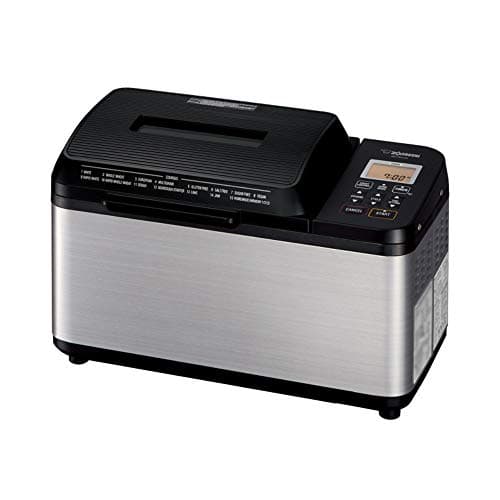
Zojirushi Virtuoso Plus — our pick. The reason it leads here is kneading and control, not the features it is usually praised for. Its horizontal pan runs two paddlesrather than one, so it works a stiff dough across a wider mass and kneads it more thoroughly — exactly what a firmer pizza dough asks for. More important still are its three programmable custom courses: you can set your own knead and rise times and save a pizza-dough recipe you like, which is the closest a home machine gets to a dedicated pizza program. It is honest to note that its headline feature — the dual heatersthat give it the best crust of any machine on this site — does nothing for you here, because you never bake the pizza inside it. So the two real cons carry more weight for this job than usual: it is the priciest machine on the list, and it has the largest counter footprint. If you make pizza often and want the most consistent dough with the least fuss, the premium is worth it. The full picture is in our Zojirushi Virtuoso Plus review.
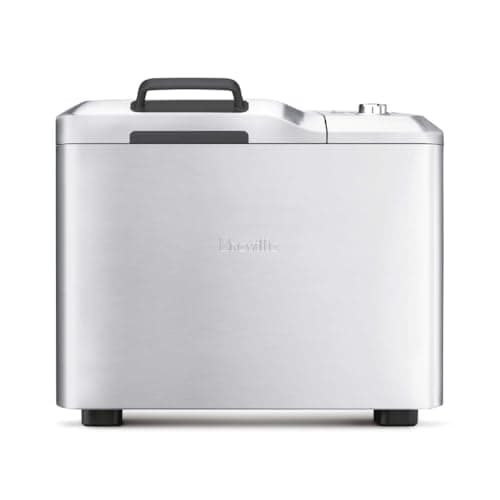
Breville Custom Loaf — the most customizable. If you like to fiddle, this is the one. Its four loaf sizes, from one pound to two and a half, matter more for pizza dough than they do for a sandwich loaf, because they let you scale the batch to how many pizzas you are making — a single dinner-for-two base or a big weekend batch for a crowd — without guessing at proportions. Its deep settings range gives you room to adjust the process to your recipe. The collapsible paddleis a nice touch for baked loaves, though for pizza you lift the dough out before any bake stage so it barely comes into it, and the automatic fruit-and-nut dispenser is simply not part of the pizza job. The honest cons are the same ones it has everywhere: it carries a premium price close to the Zojirushi, and it has more settings than a casual cook will ever touch — depth that is a gift to a tinkerer and clutter to everyone else. Our Breville Custom Loaf review goes deeper, and the Zojirushi vs Breville comparison weighs the two premium machines head to head.
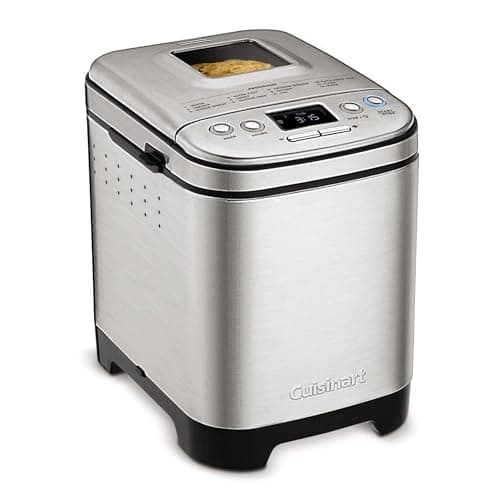
Cuisinart CBK-110 — the value all-rounder. You do not need to spend up to get good pizza dough, and this is the proof. Its 12 programs include a dough setting that mixes and proofs a batch just fine, and its compact vertical build tucks under most cabinets, so it earns its counter space even in a small kitchen. The 13-hour delay timeris a headline feature that mostly matters for waking up to a baked loaf rather than for dough — you generally want to shape pizza dough fresh — but it is there if you want a batch ready when you get home. The honest cons that count against it as a bread machine — a single paddle that makes a tall, square loaf, and crust browning that is less even than the dual-heater Zojirushi — barely register for pizza, because you remove the dough before it bakes and finish it in your oven. That is what makes it such a sensible pizza pick: the things it does less well are the things pizza does not need. The full write-up is in our Cuisinart CBK-110 review.
What actually makes a bread machine good at pizza dough
Buying a bread machine for pizza is different from buying one for bread, because the machine only does the first half of the work. Here is what to weigh, in the order it matters, plus how to get a good base out of whichever machine you choose.
A genuine dough cycle is the whole point
The dough (or "pizza dough") cycle mixes, kneads and runs the first rise, then stops before any bake stage and beeps to tell you the dough is ready. That is exactly the workflow pizza wants: hands-off mixing and a temperature-controlled bulk proof, followed by you taking over to shape and bake. Every machine in this roundup has this cycle, and it is near-universal on modern bread makers, so it is less a differentiator than a baseline — but confirm it exists before you buy an unusual model, and read our dough cycle guide to see precisely what it does and when to intervene.
Kneading strength for a firmer dough
Pizza dough is typically stiffer and lower in hydration than a soft sandwich loaf, which asks more of the motor and the paddle. A machine that kneads a heavy dough thoroughly develops the gluten that gives a base its stretch and chew; a weaker one can leave a firm dough under-worked. This is where the Zojirushi's two-paddle horizontal pan helps, working the dough across a wider mass, and it is a reason the sturdier machines edge ahead. If your dough regularly comes out dense or tight, the fix is usually hydration and knead time rather than the hardware, and our guide to why bread machine bread turns out dense applies to dough too.
Capacity: match the pan to your pizza night
Dough capacity roughly tracks a machine's loaf capacity. The Zojirushi and the Cuisinart handle up to a two-pound batch, and the Breville stretches to a larger size — enough dough, in each case, for a couple of medium pizzas or one big one, comfortably feeding a small household. If you routinely make pizza for a crowd, the Breville's range of loaf sizes lets you scale up in a single batch rather than running the machine twice. If it is usually dinner for one or two, a smaller batch is easier to shape fresh and you will not miss the extra room. Our loaf sizes explained guide translates those numbers into practical amounts.
Custom programs let you save a pizza recipe
The feature that genuinely separates a good pizza-dough machine from a basic one is programmable control. The Zojirushi's three custom courses let you set your own knead and rise times and store a dough recipe you have tuned, and the Breville's deep settings give you similar room to adjust the process. On a simpler machine you take the dough cycle as it comes, which is perfectly workable — you just intervene by hand (a longer bench rest, a cold overnight proof in the fridge) rather than by reprogramming the machine.
Why crust, loaf shape and delay timers do not matter here
It is worth stating plainly, because it changes the ranking: several of the specs these machines compete on for bread are irrelevant to pizza. You never bake the pizza inside the machine, so the dual-heater crust browning that makes the Zojirushi the best bread baker does nothing for a pizza base; the tall, single-paddle loaf shape that counts against the Cuisinart for sandwich bread does not apply to a dough you remove and shape yourself; and a delay timer, so useful for waking up to a finished loaf, is a minor extra for dough you generally want to work fresh. Judge a pizza machine on mixing, kneading, capacity and control — not on how it bakes.
How to turn machine dough into good pizza
Once the cycle beeps, a little technique does the rest. Turn the dough onto a lightly floured surface, divide it into portions, and shape each into a tight ball. If you have time, let the balls rest, covered, for 15 to 30 minutes so the gluten relaxes and the dough stretches without snapping back — or, for more flavor, refrigerate them for several hours or overnight and bring them back to room temperature before shaping. Stretch by hand rather than crushing the air out with a rolling pin, top lightly, and bake as hot as your oven will go on a preheated stone or steel. The bread machine gave you a well-mixed, well-proofed dough; these steps are what turn it into a crust with char and chew.
When a stand mixer or your hands make more sense
A bread machine is not the only hands-off route to pizza dough. A stand mixer with a dough hook kneads a batch just as capably and gives you more control over exactly when to stop, though it will not run the rise for you at a set temperature the way a machine does. And a simple no-knead or hand-kneaded dough needs no appliance at all — just time. If you are choosing between approaches, our comparison of a bread machine vs a stand mixer lays out where each wins, and if you are still deciding whether a machine is worth buying at all, start with are bread machines worth it.
The bottom line for pizza dough
Buy the Zojirushi if you make pizza regularly and want the most thorough kneading plus the ability to save your own dough program; buy the Breville if you love to tinker and want to scale batch sizes; buy the Cuisinart if you want a genuinely good pizza dough from a compact machine without paying the premium. Whichever you choose, you are buying the mix and the first proof — the shaping, topping and baking, the parts that make pizza fun, stay yours.