Skip to content
Plug & Prep

Hub 05 · Guides · Guides & Comparisons

Zojirushi Virtuoso Plus vs Mini

Same trusted brand, two very different machines: the full 2-lb dual-heater flagship or the compact 1-lb mini. The right one comes down to how many people you're feeding and how much counter you've got.

By Stephen V.Updated How we pick
#ad

We earn a commission when you buy through our Amazon links, at no extra cost to you. It never changes our rankings, and we say so when the cheaper product is the better buy. How this works.

Both of these carry the Zojirushi name and its reputation for reliable, well-built bread machines, so this isn't a quality contest — it's a sizing one. The Virtuoso Plus is the full flagship: a 2-pound loaf, dual heaters for the most even crust of any home machine, and custom programs to dial in your own recipes. The Home Bakery Miniis the compact one: a right-sized 1-pound loaf in the smallest footprint here, built for one or two people or a tight counter. The decision is mostly about how many people you're feeding and how much space you have.

The short version: buy the Virtuoso Plus if you bake for a household or a family, want the most even crust and a standard loaf shape, and have the counter space; buy the Mini if it's one or two of you, counter space is tight, and a smaller loaf with less waste suits you. Our Zojirushi Virtuoso Plus review and Zojirushi Mini review cover each in full, and our best compact bread machines roundup is where the Mini earns its place.

Start with the thing that decides most of it: capacity and household size. The Virtuoso bakes a standard 2-pound loaf— enough for a family or a week's sandwiches — while the Mini tops out at a 1-pound loaf, which is the right size for one or two people with less bread going stale before it's eaten. Neither is wrong; a 2-pound machine baking tiny loaves wastes capacity, and a 1-pound machine simply can't feed a family. Be honest about how much bread you actually go through in a few days, because that number picks the machine more than any feature does.

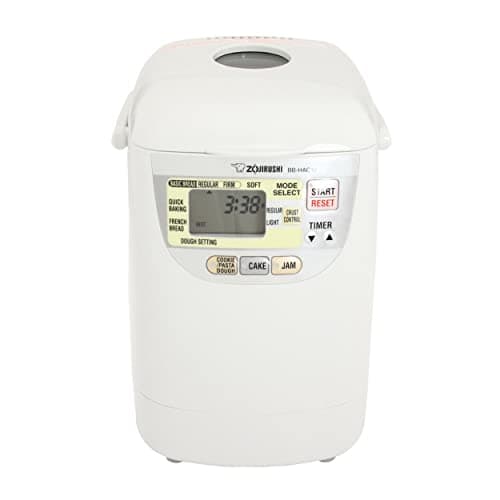
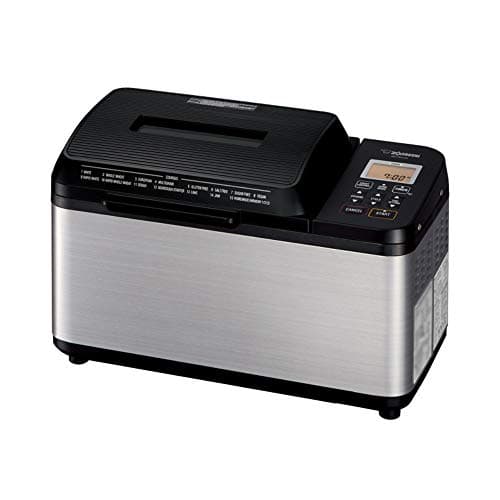
Next, crust and loaf shape. The Virtuoso's standout is its dual heaters, top and bottom, which give the most even crust color of any home machine, and its horizontal pan with two paddles bakes a standard rectangular loaf that slices like store bread rather than a tall tower. The Mini is a simpler machine: it bakes a taller 1-pound loaf with a single paddle, which leaves a small hole in the base. If crust evenness and a conventional loaf shape matter to you, the Virtuoso is clearly the more refined baker; if you just want good, fresh small loaves and don't mind the shape, the Mini delivers Zojirushi quality in miniature.

Then footprint, where the Mini turns the tables. It has the smallest footprint on our list — genuinely small enough to leave out on a tight counter — while the Virtuoso, honestly, takes up real space; a large counter footprint is one of its few drawbacks. Both bring useful cycles: the Virtuoso adds a gluten-free cycle and three programmable custom courses for your own recipes, while the Mini keeps things simpler with dough and jam cycles, a quick cycle and a 13-hour delay timer for fresh bread on waking. If your kitchen can't spare the space for a full machine, the Mini's size is the whole argument.

Finally, price for size, and here's the honest wrinkle: the Mini is expensive for how little bread it makes. It costs a premium next to full 2-pound machines because you're paying for Zojirushi build and reliability in a compact body, not for capacity — so it only makes sense if the small size is a feature you actively want, not a compromise you're settling for. The Virtuoso is the priciest machine on our list too, but it's the flagship and bakes accordingly. If you're still deciding whether a bread machine belongs in your kitchen at all, our are bread machines worth it guide is the honest gut-check to read first.

The short answer

Quick picks

#ProductBest forScorePrice
01
Zojirushi Zojirushi Virtuoso Plus (BB-PDC20)
Zojirushi Virtuoso Plus (BB-PDC20)

The best bread machine most people can buy, full stop. Dual heaters (top and bottom) brown the crust evenly, the horizontal 2-lb pan makes a standard loaf shape, and the custom programs let you dial in your own recipe. It's expensive because it's better.

Best overall bread machine
8.8
$454.00Amazon
02
Zojirushi Zojirushi Home Bakery Mini (BB-HAC10)
Zojirushi Home Bakery Mini (BB-HAC10)

The compact bread machine for one or two people. It bakes a right-sized 1-lb loaf with Zojirushi's build quality in the smallest footprint here — small enough to leave out. You pay a premium for a little machine, but it's the reliable compact pick.

Small households / tight counters
8.0
$269.99Amazon

#ad · Live prices from the Amazon Product API, as of Aug 5, 2026. Where we have no verified live price we show none — a gap beats a number that has rotted.

In detail

The picks, in full

01
Zojirushi Zojirushi Virtuoso Plus (BB-PDC20)

Best overall bread machine

Zojirushi Virtuoso Plus (BB-PDC20)

2-lb loafDual heatersHorizontal panGluten-free cycleCustom programs
8.8/10

The best bread machine most people can buy, full stop. Dual heaters (top and bottom) brown the crust evenly, the horizontal 2-lb pan makes a standard loaf shape, and the custom programs let you dial in your own recipe. It's expensive because it's better.

Loaf quality
9.5
Ease of use
9
Crust & settings
9.5
Build & footprint
8
Value
8

Pros

  • Dual heaters give the most even crust color of any home machine
  • Standard horizontal loaf shape (two paddles), not a tall tower
  • Three programmable custom courses for your own recipes

Cons

  • The priciest bread machine on this list
  • Large footprint on the counter

Don't buy this if…

you only want the occasional loaf and don't care about crust control — a sub-$150 machine will feed you fine.

$454.00View on Amazon

Price as of Aug 5, 2026. Prices change — Amazon's at checkout is the one that counts.

#ad · we may earn a commission from this link to Zojirushi Virtuoso Plus (BB-PDC20)

02
Zojirushi Zojirushi Home Bakery Mini (BB-HAC10)

Small households / tight counters

Zojirushi Home Bakery Mini (BB-HAC10)

1-lb loafCompact footprintDough + jam cyclesQuick cycle13-hr delay timer
8.0/10

The compact bread machine for one or two people. It bakes a right-sized 1-lb loaf with Zojirushi's build quality in the smallest footprint here — small enough to leave out. You pay a premium for a little machine, but it's the reliable compact pick.

Loaf quality
8
Ease of use
8.5
Crust & settings
7.5
Build & footprint
9
Value
7

Pros

  • Smallest footprint on the list — genuinely fits a tight counter
  • Zojirushi build and reliability in a mini machine
  • A 1-lb loaf is the right size for one or two people, with less waste

Cons

  • 1-lb only — too small to feed a family
  • Expensive for its size next to full 2-lb machines
  • Single paddle bakes a tall loaf with a hole in the base

Don't buy this if…

you bake for a family or want a standard 2-lb loaf — a full-size Cuisinart or the Zojirushi Virtuoso Plus makes more bread for the money.

$269.99View on Amazon

Price as of Aug 5, 2026. Prices change — Amazon's at checkout is the one that counts.

#ad · we may earn a commission from this link to Zojirushi Home Bakery Mini (BB-HAC10)

Zojirushi Virtuoso Plus vs Mini: how to choose

Capacity and household size

This is the deciding factor. The Virtuoso bakes a full 2-pound loaf, enough for a family or a week of sandwiches; the Mini tops out at 1 pound, the right size for one or two people with less waste. A 2-pound machine baking tiny loaves wastes its capacity, and a 1-pound machine can't feed a household. Count how much bread you actually eat in a few days and let that pick the machine — it matters more than any single feature.

Crust evenness and loaf shape

The Virtuoso wins on both. Its dual heaters, top and bottom, give the most even crust color of any home machine, and its horizontal two-paddle pan bakes a standard rectangular loaf that slices like store bread. The Mini bakes a taller 1-pound loaf with a single paddle that leaves a small hole in the base. If crust and a conventional shape matter, the Virtuoso is the more refined baker; the Mini trades some of that polish for its compact size.

Footprint and counter space

Here the Mini turns it around. It has the smallest footprint on our list — small enough to leave out on a tight counter — while the Virtuoso takes up real space, one of its few genuine drawbacks. If your kitchen can house a full machine, the Virtuoso's size is a fair trade for what it does; if counter space is the constraint, the Mini is built for exactly that, which is why it anchors our best compact roundup.

Programs and features

The Virtuoso is the more capable machine: a gluten-free cycle and three programmable custom courses let you dial in your own recipes, on top of the standard settings. The Mini keeps it simpler with dough and jam cycles, a quick cycle and a 13-hour delay timer for fresh bread on waking. If you like to tinker with recipes, the Virtuoso's custom courses are a real draw; if you just want reliable small loaves with minimal fuss, the Mini has what you need.

Price for size

Be clear-eyed here. The Mini is expensive for how little bread it makes — you're paying a premium for Zojirushi build in a compact body, not for capacity — so it only makes sense if the small size is something you genuinely want. The Virtuoso is the priciest machine on our list, but it's the flagship and bakes like one. Buy the size you'll actually use, not the one that looks like more machine for the money.

Which to buy

Buy the Zojirushi Virtuoso Plus if you bake for a household or family, want the most even crust, a standard loaf shape and deep recipe control, and have the counter space for a full machine. Buy the Zojirushi Miniif it's one or two of you, your counter is tight, and a right-sized 1-pound loaf with less waste is exactly what you want. If you're also weighing the Virtuoso against other brands, our Zojirushi vs Cuisinart comparison is the next one to read. Check both reviews for the full cons before you decide.
How we picked

We don't run a testing lab

We read the manuals, compiled the published specifications, did the wattage-to-dough math and weighed aggregated owner reviews, then scored each product against a published rubric. The scores are judgments from documented research — they are notmeasurements we took, because we do not have a lab and we're not going to pretend we do. Every spec is the manufacturer's published figure, cited in Sources.

Questions

Frequently asked

Should I buy the Zojirushi Virtuoso Plus or the Mini?
Decide by household size and counter space. The Virtuoso Plus bakes a full 2-pound loaf with dual heaters for the most even crust, ideal for a family; the Mini bakes a 1-pound loaf in the smallest footprint, ideal for one or two people or a tight counter. See the Virtuoso Plus review and Mini review for the full picture.
What size loaf does each Zojirushi make?
The Virtuoso Plus bakes a standard 2-pound loaf - enough for a family or a week of sandwiches - in a horizontal two-paddle pan that gives a normal rectangular shape. The Mini tops out at a 1-pound loaf, the right size for one or two people with less bread going stale, though its single paddle bakes a taller loaf with a small hole in the base.
Which Zojirushi has the better crust?
The Virtuoso Plus. Its dual heaters, top and bottom, give the most even crust color of any home bread machine, and its horizontal pan bakes a standard loaf shape. The Mini is a simpler, compact machine focused on right-sized loaves rather than crust control, so the Virtuoso is the more refined baker of the two.
Is the Zojirushi Mini worth the price for its size?
Only if you actively want the small size. The Mini costs a premium for how little bread it makes, because you're paying for Zojirushi build and reliability in a compact body rather than for capacity. If a 1-pound loaf and the smallest footprint genuinely suit you, it's the reliable compact pick; if you want more bread for the money, a full 2-pound machine makes more sense.

Keep reading

Receipts

Sources

We don't run a testing lab, and we don't pretend to. Specs are the manufacturer's published figures, cited above; scores are our judgments from that research. Where we couldn't verify something, we say so on the page rather than quietly leaving it out. Read our full method.