Frosting looks like the easy job, but it's the one where a hand mixer's manners show. Powdered sugar erupts out of the bowl if the mixer jumps to speed the moment you press the button. A stiff American buttercream needs steady power at medium speed to whip air in and turn pale and fluffy. Cream-cheese frosting needs the opposite discipline — a gentle hand, because over-beating turns it soupy. So the frosting mixer isn't the most powerful one on the shelf; it's the one with the smoothest low-speed control, a beater design that moves frosting rather than flinging it, and enough steady torque at medium to not stall in a thick buttercream.
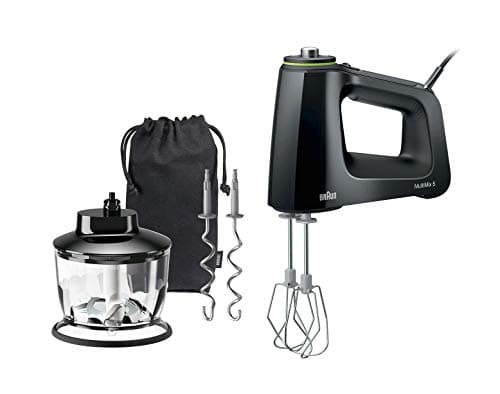
The Braun MultiMix 5 leads here, and control is the reason more than raw muscle. Its SmartMix ramp eases the beaters up to speed instead of snapping them there, which is exactly what a bowl of powdered sugar demands, and its 350-watt-rated motor holds a steady medium speed through a stiff buttercream without bogging — so the frosting keeps whipping air in rather than slowing to a churn. The honest trade-offs are real, though: its controls follow a European layout that takes a bake or two to learn, and its single-piece beaters are a matter of taste against the twin-wire style some bakers like for scraping a bowl. Neither hurts the frosting; both are worth knowing.
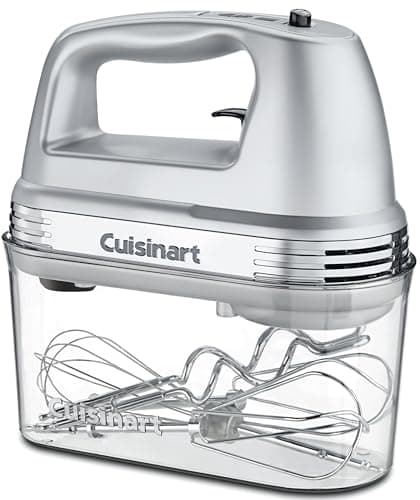
The Cuisinart Power Advantage Plusis the value pick, and a strong one for frosting specifically because it ships with a whisk in the box alongside the beaters — and a whisk is the attachment that makes whipped frostings and light meringue-style icings come together fastest. Its nine speeds give you the fine control frosting rewards, and its 220-watt-rated motor has genuine headroom for a medium-speed buttercream. Its one honest weakness for this job is that speed one is a touch quicker than a true soft-start mixer's, so with a big batch of powdered sugar you have to bury the beaters and be deliberate on the first press to avoid a cloud.
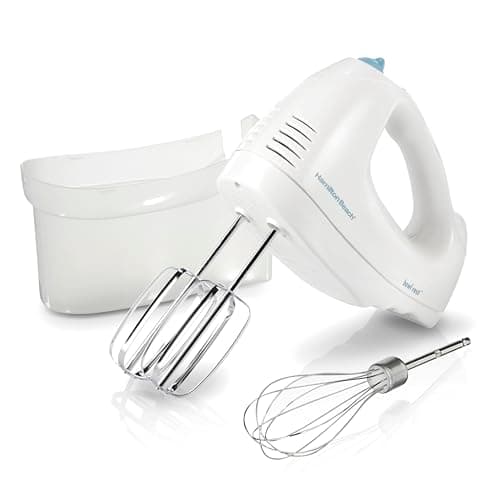
The Hamilton Beach 6-Speedis the budget floor, and for frosting a few times a month it's genuinely enough. Its QuickBurst button is handy for a short jolt to break up cold butter before you start creaming, the included whisk covers lighter whipped frostings, and it's light to hold through the long medium-speed run a fluffy buttercream needs. Be honest about the limits: with only six speeds the steps are coarser and the lowest setting isn't as gentle as a soft-start model's, so a heap of powdered sugar wants extra care, and its motor is happier with a modest batch than a triple recipe of stiff buttercream.
It helps to match the mixer to the frosting you make most, because "frosting" isn't one job. If you live on classic American buttercream — butter and powdered sugar whipped stiff and light — prioritize steady medium-speed power and a smooth start, which is the Braun's wheelhouse and, on smaller batches, the Cuisinart's. If your go-to is a whipped or ermine-style frosting, or a stabilized whipped cream, the included whisk on the Cuisinart and Hamilton Beach earns its keep faster than raw wattage does. And if cream-cheese frosting is your signature, almost any of these works, because the limiting factor is your restraint at the controls, not the motor. There is no single frosting mixer — there is the one that suits the icing you actually pipe.
One thing no mixer fixes is the temperature of your ingredients, and it does more to make or break a frosting than the machine does. Butter that's too cold stays lumpy no matter how much power you throw at it and can strain a motor for no reason; butter that's too warm gives you a soupy buttercream that never holds a peak. Let butter and cream cheese come to a cool room temperature first — soft enough to dent with a finger but not greasy — and the weakest mixer here will out-perform the strongest one fed cold, hard butter. Get the ingredients right and the choice between these three comes down to comfort, control and budget, exactly as it should.
If frosting is part of a bigger baking habit, any of these will also handle the cake, cookies and whipped cream around it — they're all-rounders first. Our best hand mixer overall ranking covers that wider picture, and if whipped cream and light aeration are the jobs you care about most, our guide to whipping cream with a hand mixer walks through the technique that carries straight over to whipped frostings.
What actually makes a hand mixer good at frosting
Frosting rewards a different set of qualities than cookie dough does. Power is nice to have, but control and beater design do more of the work. Here's what to weigh, and how to use whichever mixer you buy so the frosting comes out light instead of splattered or split.
Smooth low-speed control comes first
Almost every frosting starts slow — sifting powdered sugar into butter, or easing cream cheese into a smooth base — and the mixer that starts gently is the one that keeps the sugar in the bowl and off your cabinets. A genuine soft start or a controlled ramp (the Braun's SmartMix) is worth more here than an extra speed at the top. If your mixer lacks a true soft start, the workaround is simple: bury the beaters down in the ingredients before you switch on, and start on the lowest speed for a few seconds before stepping up.
Steady power at medium speed is what fluffs a buttercream
American buttercream turns pale and light because you whip air into it at a steady medium speed for several minutes. A weaker motor slows under the load and the frosting churns instead of aerating; a motor with headroom holds its speed and does the job faster. This is where the Braun's higher rated motor and the Cuisinart's real headroom pull ahead of a budget mixer on a big or stiff batch. Treat wattage as a rough proxy — our hand-mixer wattage guide explains why — but for a triple batch of buttercream, more headroom genuinely helps.
Beater design and whether a whisk is included
Standard beaters do most frosting work, moving the mass around the bowl as they turn. For whipped frostings and lighter, meringue-style icings, a wire whisk aerates faster — which is why an included whisk is a real plus. The Cuisinart and Hamilton Beach both bundle one; the Braun includes a whisk and a chopper. Beater shape is partly taste: twin-wire beaters scrape a bowl a little more thoroughly, while single-piece designs like the Braun's are easier to clean. Whichever you have, scrape the bowl down once or twice mid-batch so the frosting mixes evenly.
Don't over-beat cream-cheese frosting
The one frosting that punishes too much power is cream-cheese frosting: beat it too long or too fast and it goes from thick to runny as the cream cheese warms and slackens. Here the budget Hamilton Beach's gentler ceiling is almost an advantage — but on any mixer, keep to low or medium speed, stop as soon as it's smooth, and don't chase extra volume. Control, not power, is the whole game with cream cheese. For the wider set of everyday jobs these mixers share, our best hand mixers for baking roundup covers how they compare beyond frosting.
Batch size decides how much motor you really need
Most of the time frosting doesn't stress any competent hand mixer — a single batch to top a dozen cupcakes is light work. The picture changes when you scale up. A double or triple batch of stiff American buttercream for a layer cake is a genuinely heavy, several-minute load, and that's the moment a motor with headroom stops churning and keeps whipping air in. If you decorate cakes often or bake for a crowd, weight your decision toward the Braun's power; if you frost the occasional tray of cupcakes, the budget Hamilton Beach is honestly enough, and the money is better saved. Buy for the biggest batch you make regularly, not the average one.
Keep the bowl steady and scrape as you go
A hand mixer leaves the bowl in your other hand, so a heavy, stable bowl on a damp towel keeps things from wandering while you work at medium speed. Just as important is scraping: frosting collects on the sides and bottom where the beaters don't reach, so stop once or twice, scrape everything back to the center with a spatula, and mix again — it's the difference between an evenly smooth buttercream and one with streaks of unmixed sugar or butter. A deep bowl also tames splatter better than a wide, shallow one. None of this depends on which mixer you buy; it's technique that makes any of these three frost better.