Skip to content
Plug & Prep

Hub 05 · Guides · Guides & Comparisons

Dash vs Hamilton Beach stand mixer

Two of the cheapest real stand mixers you can buy: the Dash mini is tiny and light, the Hamilton Beach 4-quart is bigger and more capable. Here's which budget pick fits your kitchen.

By Stephen V.Updated How we pick
#ad

We earn a commission when you buy through our Amazon links, at no extra cost to you. It never changes our rankings, and we say so when the cheaper product is the better buy. How this works.

If you want a genuine stand mixer for as little money as possible, two names come up again and again at the very bottom of the price range: the Dash 3.5-quart mini and the Hamilton Beach 4-quart. Both are tilt-heads, both ship with the dough hook, beater and whisk you need to start, and both cost a fraction of a KitchenAid. But they're aimed at slightly different buyers, and the choice comes down to how much you bake and how little space (and money) you want to spend. Neither is a serious bread machine or a decade-long heirloom — they're budget tools — but for the right baker either is a lot of mixer for the money.

The short version: the Hamilton Beach is the more capable mixer and the Dash is the smaller, cheaper one. The Hamilton Beach's bigger 4-quart bowl and sturdier build make it the better all-round budget choice for someone who bakes regular batches, while the Dash's tiny 3.5-quart body is the pick for a genuinely small kitchen, a dorm, or a first-timer who wants the cheapest possible way to try a stand mixer. If you're weighing the wider budget field, our best budget stand mixers roundup and the best for small kitchens list both put these two in context.

Start with the two numbers that decide what any mixer can do: bowl size and how it copes with dough. The Hamilton Beach's 4-quart bowl takes a meaningfully bigger batch than the Dash's 3.5-quart, which matters more than the half-quart sounds when you're mixing a full batch of cookie dough or a cake. Both are happiest with batters — cakes, cookies, whipped cream, frosting — and both are light-duty on bread: they can knead a modest, soft dough in a pinch, but neither has the motor for stiff or heavy dough, and the smaller Dash reaches its limit sooner. If bread is anywhere in your plans, neither is ideal, and our best for bread dough roundup is the better place to look; but for batter-based baking, both do the job.

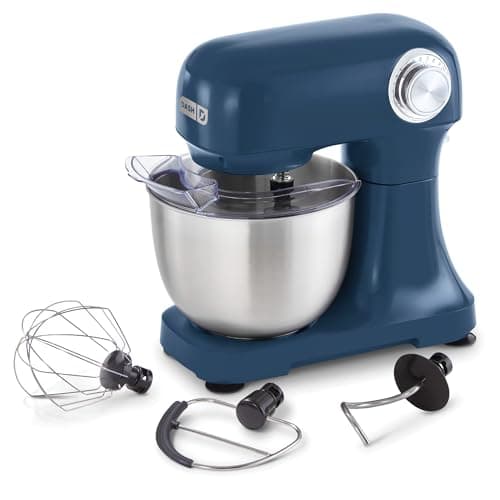
The Dash's whole appeal is size and price. At around six pounds and a compact footprint, it's genuinely tiny — easy to lift with one hand, easy to store in a small cupboard or a dorm, and about as cheap as a real stand mixer gets. It comes with a dough hook, paddle, whisk and splash guard, all dishwasher-safe, and twelve speeds. Its honest limits are exactly what you'd expect: the small bowl and light-duty motor are for small batches, not heavy or high-volume dough; the plastic-forward build feels budget and isn't made to last a decade; and the warranty is short. Read the full Dash stand mixer review for the detail.

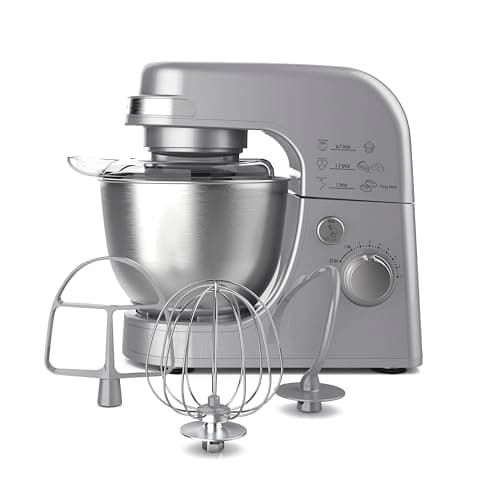
The Hamilton Beach answers with a bit more of everything that mattersfor the money. The larger 4-quart bowl, a slightly sturdier feel, seven speeds, and the same in-the-box hook, beater, whisk and splash guard make it the more useful all-rounder for regular baking — it's one of the lowest prices for a real stand mixer that still handles a normal batch comfortably. Its honest cons are the same family as the Dash's: plastic-forward build a long way from a cast KitchenAid, a motor happier with batter than heavy dough, and no attachment ecosystem to grow into. But for a few dollars more than the mini, you get a mixer that fits everyday baking better. The full Hamilton Beach review covers it.

One more honest point: for occasional baking, neither is a compromise you'll regret. Plenty of bakers make cakes, cookies and the odd soft dough on a budget mixer for years. The Dash makes sense when space and price are the hard constraints and your batches are small; the Hamilton Beach makes sense the moment you want a bit more bowl and capability without stepping up in price. And if you find yourself regularly wanting to knead bread or make big batches, that's the signal that you've outgrown the budget tier entirely and should look at a sturdier tilt-head or a bowl-lift.

The short answer

Quick picks

#ProductBest forScorePrice
01
Hamilton Beach Hamilton Beach 4-Qt Electric Stand Mixer
Hamilton Beach 4-Qt Electric Stand Mixer

The cheapest way to get a real stand mixer on the counter. A 4-quart tilt-head with a dough hook, flat beater and whisk in the box for a fraction of a KitchenAid's price. It won't match the build or the motor, but for occasional baking it's a lot of mixer for the money.

Cheapest tilt-head stand mixer
7.4
$126.95Amazon
02
Dash Dash 3.5-Qt Tilt-Head Stand Mixer
Dash 3.5-Qt Tilt-Head Stand Mixer

The mini stand mixer for a tiny kitchen or a first-timer. A 3.5-quart tilt-head with a paddle, dough hook, whisk and splash guard in the box, for well under a hundred dollars. It's light-duty and plastic-bodied — it won't knead heavy dough or last a decade — but for small-batch baking in a small space it's a lot of mixer for the money.

Small kitchens / occasional small batches
6.7
$79.99Amazon

#ad · Live prices from the Amazon Product API, as of Aug 5, 2026. Where we have no verified live price we show none — a gap beats a number that has rotted.

In detail

The picks, in full

01
Hamilton Beach Hamilton Beach 4-Qt Electric Stand Mixer

Cheapest tilt-head stand mixer

Hamilton Beach 4-Qt Electric Stand Mixer

4-qt bowl7 speedsDough hook + whisk incl.Tilt-headSplash guard
7.4/10

The cheapest way to get a real stand mixer on the counter. A 4-quart tilt-head with a dough hook, flat beater and whisk in the box for a fraction of a KitchenAid's price. It won't match the build or the motor, but for occasional baking it's a lot of mixer for the money.

Motor / dough
6.5
Capacity
7
Build & durability
6.5
Ease of use
8
Value
9

Pros

  • One of the lowest prices for a genuine stand mixer, not a hand mixer
  • Ships with a dough hook, flat beater, whisk and splash guard
  • Light and easy to move on and off the counter

Cons

  • Plastic-forward build feels a long way from a cast KitchenAid
  • Smaller 4-qt bowl and a motor happier with batter than heavy dough
  • No attachment ecosystem to grow into

Don't buy this if…

you bake bread often or want a machine that lasts a decade — a KitchenAid Classic or Cuisinart Precision Master is the sturdier buy.

$126.95View on Amazon

Price as of Aug 5, 2026. Prices change — Amazon's at checkout is the one that counts.

#ad · we may earn a commission from this link to Hamilton Beach 4-Qt Electric Stand Mixer

02
Dash Dash 3.5-Qt Tilt-Head Stand Mixer

Small kitchens / occasional small batches

Dash 3.5-Qt Tilt-Head Stand Mixer

350 W rated3.5-qt bowl12 speedsTilt-headHook + whisk incl.
6.7/10

The mini stand mixer for a tiny kitchen or a first-timer. A 3.5-quart tilt-head with a paddle, dough hook, whisk and splash guard in the box, for well under a hundred dollars. It's light-duty and plastic-bodied — it won't knead heavy dough or last a decade — but for small-batch baking in a small space it's a lot of mixer for the money.

Motor / dough
5.5
Capacity
5.5
Build & durability
6
Ease of use
8
Value
8.5

Pros

  • Compact and light (~6 lb) — easy to store in a small kitchen or dorm
  • Ships with a dough hook, paddle, whisk and splash guard, all dishwasher-safe
  • Costs a fraction of a full-size stand mixer

Cons

  • 3.5-qt bowl and light-duty motor are for small batches, not heavy or high-volume dough
  • Plastic-forward build feels budget and isn't made to last like a cast machine
  • Short 1-year warranty (2 years only if you register)

Don't buy this if…

you bake bread or double batches — even a budget full-size mixer like the Hamilton Beach 4-qt has the bowl and motor you'll want.

$79.99View on Amazon

Price as of Aug 5, 2026. Prices change — Amazon's at checkout is the one that counts.

#ad · we may earn a commission from this link to Dash 3.5-Qt Tilt-Head Stand Mixer

Dash vs Hamilton Beach: how to choose

Capacity: 3.5 quarts versus 4 quarts

The clearest difference is bowl size. The Hamilton Beach's 4-quart bowl holds a bigger batch than the Dash's 3.5-quart, which is the difference between comfortably mixing a full batch of cookie dough or a cake and having to work in smaller loads. If you bake for more than one or two people, the extra half-quart is the feature you'll actually use. If you bake small — single portions, little batches, the occasional treat — the Dash's smaller bowl is enough and its smaller body is the point. Remember whipped cream and egg whites triple in volume, so leave headroom above the mixed level on either.

Dough: both are light-duty

Be realistic about dough with either machine. Both are budget mixers with light-duty motors, and neither is built for stiff bread or big, heavy doughs — push either hard and you'll hear the motor labor. They can each knead a modest, soft dough in a pinch, but the Hamilton Beach's slightly larger bowl and motor give it a little more room, and the smaller Dash reaches its limit sooner. If you bake bread regularly, the honest advice is that neither budget mini is the right tool — step up to a sturdier machine from our best for bread dough roundup. For batter, both are fine.

Size, weight and storage

This is where the Dash wins outright. At around six pounds it's light enough to lift and stow with one hand, and small enough for a dorm, an RV, or a kitchen with almost no counter or cabinet space. The Hamilton Beach is still compact and light compared with a full-size cast mixer, but the Dash is the genuine mini. If your deciding factor is fitting a stand mixer into a tiny kitchen, the Dash is built for exactly that — see our best for small kitchens roundup, where compact footprint is the whole point.

Build, longevity and value

Both lean on plastic to hit their prices, and neither will last like a cast KitchenAid, but the Hamilton Beach generally feels a touch more substantial and its larger motor isn't working at its limit as often, which tends to mean a slightly longer life for regular baking. The Dash's value is in being the cheapest, smallest way into a stand mixer at all. Neither has an attachment ecosystem to grow into, so what you buy is what you get. On pure value for everyday baking, the Hamilton Beach's extra capacity for a small price bump makes it the better buy for most people; on value-for-the-space, the Dash wins for a tiny kitchen.

Which to buy

Choose the Hamilton Beach if you want the more capable budget all-rounder: a bigger bowl, a bit more capability, and better everyday value for regular batter-based baking. Choose the Dashif space and price are the hard constraints — a genuinely tiny kitchen, a dorm, a first-timer testing whether they'll use a stand mixer at all — and your batches are small. Both are honest budget tools with honest budget limits; buy the one whose size and capacity match your kitchen, and read the individual reviews for the full cons before you commit.
How we picked

We don't run a testing lab

We read the manuals, compiled the published specifications, did the wattage-to-dough math and weighed aggregated owner reviews, then scored each product against a published rubric. The scores are judgments from documented research — they are notmeasurements we took, because we do not have a lab and we're not going to pretend we do. Every spec is the manufacturer's published figure, cited in Sources.

Questions

Frequently asked

Is the Dash or Hamilton Beach stand mixer better?
For most bakers, the Hamilton Beach - its bigger 4-quart bowl, sturdier feel and better everyday value make it the more capable budget all-rounder. The Dash 3.5-quart is the pick if you need the smallest, cheapest possible stand mixer for a tiny kitchen, dorm or first-timer. Both are light-duty budget tools; neither is built for heavy bread. Our best budget roundup covers the wider field.
Can the Dash or Hamilton Beach stand mixer knead bread dough?
Only lightly. Both are budget mixers with light-duty motors that can knead a modest, soft dough in a pinch but aren't built for stiff or heavy bread dough - push either hard and the motor labors, and the smaller Dash reaches its limit sooner. If you bake bread regularly, step up to a sturdier machine from our best for bread dough roundup.
What's the difference in bowl size between the Dash and Hamilton Beach?
The Hamilton Beach has a 4-quart bowl and the Dash a 3.5-quart. That half-quart matters more than it sounds: the Hamilton Beach comfortably takes a full batch of cookie dough or a cake, while the Dash is sized for smaller batches. If you bake for more than one or two people, the bigger bowl is the feature you'll use; if you bake small, the Dash is enough.
Which is better for a small kitchen, the Dash or Hamilton Beach?
The Dash. At around six pounds and a compact footprint, it's the genuine mini - light enough to lift and stow one-handed and small enough for a dorm, RV or a kitchen with almost no space. The Hamilton Beach is still light for a stand mixer but larger. If fitting a mixer into a tiny kitchen is your deciding factor, the Dash is built for it - see our small-kitchen roundup.

Keep reading

Receipts

Sources

We don't run a testing lab, and we don't pretend to. Specs are the manufacturer's published figures, cited above; scores are our judgments from that research. Where we couldn't verify something, we say so on the page rather than quietly leaving it out. Read our full method.