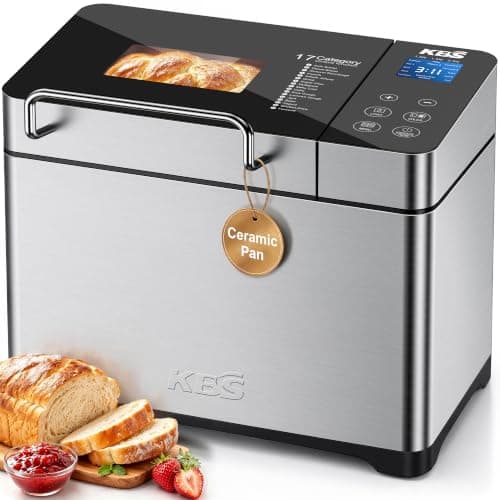
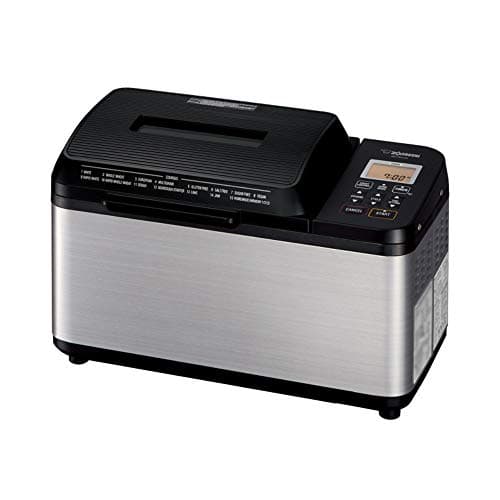
Buy the Zojirushi Virtuoso Plus if loaf quality is what you are paying for — it is the benchmark, and the reason is specific: dual heaters, top and bottom, brown a crust more evenly than any single-element machine, and its horizontal two-paddle pan bakes a standard rectangular loaf rather than a tall tower. Buy the KBS 17-in-1 if you want the most machine for the moneyand can accept a less even crust: seventeen programs, an automatic fruit-and-nut dispenser, a stainless body and a viewing window, at a fraction of the Zojirushi's price.
This is not a close fight on loaf quality and it is not a close fight on value, which makes it an unusually clean decision. The two machines are good at genuinely different things, and the mistake is buying the expensive one for features it does not have, or the cheap one expecting a crust it cannot produce.
Where the Zojirushi earns its price
Dual heaters. Most bread machines have one heating element, in the base. That bakes the bottom hard and leaves the top pale, which is why so many machine loaves come out looking like they were only half-committed. The Virtuoso Plus has heaters top and bottom. It is the single clearest mechanical reason it produces the most even crust colour of any home machine, and it is not something a cheaper machine can match with software.
A normal loaf shape.The Virtuoso Plus uses a horizontal pan with two paddles, so you get a standard rectangular loaf that slices like supermarket bread. Most machines, including the compact Zojirushi further down this page, use a single paddle in a vertical pan and bake a tall loaf with a hole in the base. If sandwiches are the point of owning the machine, the shape matters more than people expect — our loaf sizes explained guide covers what each pan shape gives you.
Three programmable custom courses. You can set your own knead, rise and bake times and save them. This is the feature that turns a bread machine from an appliance that makes its bread into one that makes yours, and it is the reason the Virtuoso Plus is our best overall pick.
Where the KBS wins
Features per dollar, by a wide margin.Seventeen programs including yogurt and jam, an automatic fruit-and-nut dispenser that drops add-ins at the right point in the cycle, a gluten-free setting, a stainless body, a viewing window and an interior light. The dispenser in particular is a feature that normally appears only on premium machines — the Virtuoso Plus does not have one, so with the Zojirushi you are setting a timer and adding raisins by hand. Our how to add fruit and nuts to a bread machine guide explains why the timing matters.
Up to a 2-lb loaf.Both machines reach a full 2-lb loaf, so the KBS is not a compromise on quantity — this is not a case of paying less and getting a smaller machine. If a big loaf is the requirement, see best for large loaves.
The honest cons.KBS's long-term durability record is shorter than the established Japanese and US brands — not bad, just shorter, and a shorter record is genuinely less information. The manual's translation is rough in places, which matters more than it sounds on an appliance whose whole job is following a program. And fit and finish are not premium: this is a well-equipped machine, not a beautifully made one.
Loaf quality, judged honestly
We score the Zojirushi higher on loaf quality and crust control, and lower on value; the KBS is the reverse. Those are judgments from published specifications and aggregated owner reports, not measurements — we do not run a lab and how we pick says so in those words. What we can say concretely is mechanical: a machine with one heating element cannot brown the top of a loaf the way a machine with two can, and a single-paddle vertical pan cannot make a horizontal loaf. Those are design facts, not opinions, and they are where the difference actually lives.
Everything else — will it make good white bread, will it make good wheat bread, will the delay timer work — both machines do fine. Neither will disappoint you on a basic loaf, and if your plan is one white loaf a week on a timer, the KBS will feed you perfectly well for far less money. Our are bread machines worth it guide is the page to read if you are not yet sure you want either.
The third machine on this page
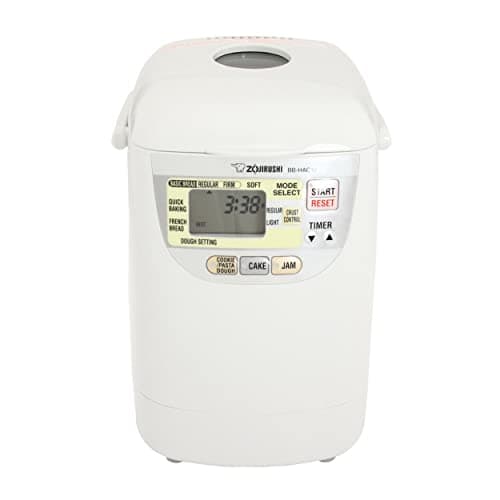
Zojirushi Home Bakery Mini (BB-HAC10) — for one or two people.If the reason you are comparing a premium machine with a value machine is that the premium one looks too big for your counter, this is the pick that solves the actual problem. It is the smallest footprint of the three, with Zojirushi build quality, and it bakes a right-sized 1-lb loaf with less waste for a small household. Be clear on the trade: it is expensive for its size, 1 lb is too small to feed a family, and it uses a single paddle, so you get a tall loaf with a hole in the base — exactly the shape the Virtuoso Plus avoids. See best compact bread machines and our Virtuoso vs Mini comparison for that decision.
The rule:you care most about crust and loaf shape, and you will use custom programs → Zojirushi Virtuoso Plus. You want the most features and the dispenser, and the price gap is the deciding factor → KBS 17-in-1. One or two people and a tight counter → Zojirushi Mini.
Choosing between the Zojirushi and the KBS
Buy the Zojirushi Virtuoso Plus if…
You want the most even crust available in a home machine, you want a standard horizontal loaf you can slice for sandwiches, and you are likely to use the custom programs rather than pressing “basic white” forever. It is also the right buy if you expect to own the machine for a decade: Zojirushi's track record is the longest here, and a bread machine is an appliance you either use weekly or abandon — the ones people keep using are the ones that make bread they like.
Buy the KBS if…
The Zojirushi's price is the thing stopping you, or the fruit-and-nut dispenser is genuinely appealing because you bake raisin and walnut loaves. Seventeen programs is more than most people will ever use, but jam and yogurt cycles are real additions rather than marketing, and a dispenser saves you standing by the machine waiting for the beep. Go in knowing the crust will not be as even and the durability record is shorter.
Buy neither if…
You want genuine sourdough with a long cold ferment, or artisan loaves with an open crumb and a blistered crust. No bread machine does that, including the Zojirushi — the paddle and the fixed program are the wrong tools, and our bread machines for sourdough page is honest about where the limit is. For that bread you want a mixer and a Dutch oven: see bread machine vs stand mixer and the best Dutch ovens for bread.
What to check before you buy either
Loaf shape, not just loaf size
Two machines can both say “2 lb” and give you very different bread. A horizontal two-paddle pan bakes a rectangle; a vertical single-paddle pan bakes a tall column with a larger hole in the base. If the bread is for toast and sandwiches, the rectangle is worth paying for. If it is for tearing at dinner, the shape barely matters. Our guide to why the paddle gets stuck in the loaf covers the practical side of that hole.
The gluten-free setting is not all the same
Both machines list a gluten-free cycle, and a cycle is not a guarantee of a good gluten-free loaf — the dough behaves differently and the mixing requirement is different. If gluten-free is the main reason you are buying, read can you make gluten-free bread in a bread machine before you choose, because it changes which features matter.
Footprint, honestly measured
The Virtuoso Plus has a large footprint. Measure your counter, and specifically measure under your wall cabinets — a bread machine needs clearance to open its lid, and that is the dimension people forget. If the machine has to live in a cupboard and be lifted out each time, it will not get used, which makes the cheapest machine you actually run a better buy than the best one you do not.
Programs you will use versus programs on the box
Seventeen programs sounds decisive and mostly is not. Count the ones you will genuinely run: basic, whole wheat, dough-only and a delay timer covers almost everyone. Where extra programs do earn their place is jam, yogurt and a dough cycle you can hijack for pizza — see the bread machine dough cycle guide and how to make pizza dough in a bread machine. Three custom programmable courses, which only the Zojirushi has, are worth more than ten fixed ones you will never press.
Where the money is better spent
If the gap between these two machines is the whole decision, consider what else that money buys. A KBS plus a digital scale and a thermometerwill improve your bread more than a Zojirushi alone, because weighing flour and baking to temperature fix more loaves than any machine feature does. If you already weigh and probe and your loaves are still not what you want, that is when the Zojirushi's dual heaters start to be the real answer.