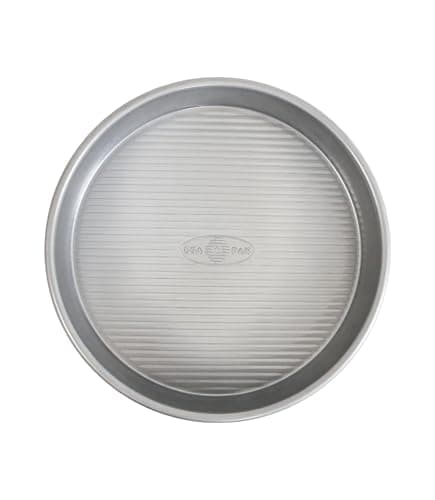
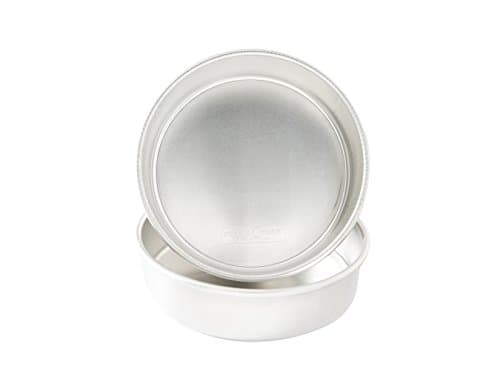
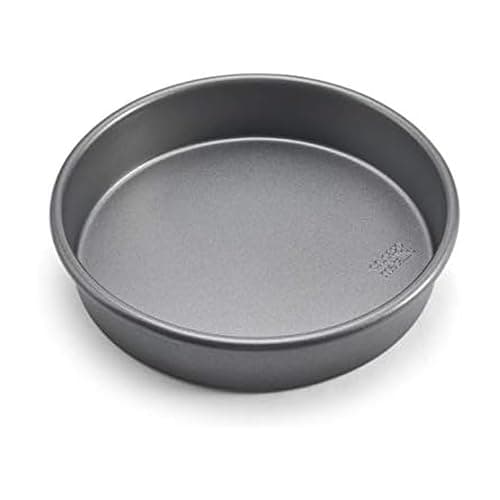
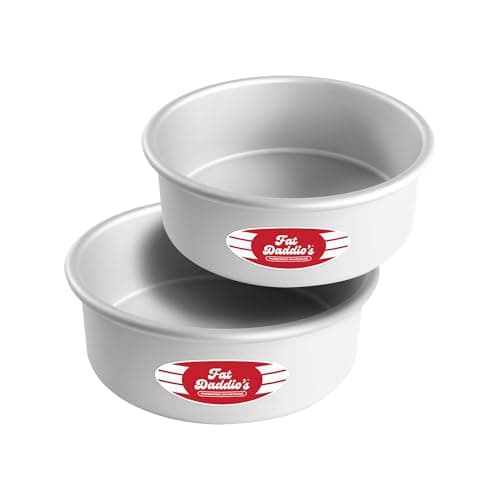
Buy the Fat Daddio's 8 x 3-inch anodized two-pan set. Anodized aluminum is a hardened surface rather than a coating, so there is nothing to peel, flake or wear out; the pans are seamless with straight sides, so layers come out square instead of tapered; Fat Daddio's publishes a 550°F rating and a lifetime warranty; and crucially it is sold as a pair, which is the number of pans a layer cake needs. Take the USA Pan 9-inch nonstick instead if you want the easiest release and the size most American recipes are written for. The Nordic Ware Naturals 9-inch 2-pack is the value pick: bare aluminum, an encapsulated steel rim, made in the USA, lifetime warranty. The Chicago Metallic Commercial II is the cheapest coated pan here and the only one rated dishwasher safe.
Depth is the spec that decides what you can bake
Round cake pans are sold in two depths that cost almost the same and are not interchangeable. The 2-inch pan is the American default: nearly every layer-cake recipe in a US cookbook assumes two 8 or 9-inch pans, 2 inches deep, filled a little over halfway. The 3-inch pan is the pastry-kitchen standard, and it changes the job. One 3-inch pan bakes a layer tall enough to split horizontally into two thin layers, which is how a four-layer cake gets built from two pans. It also gives a batter that rises enthusiastically somewhere to go, instead of cresting over the rim.
The trade is batter volume. A 3-inch pan wants roughly half again as much batter as a 2-inch pan of the same diameter to reach the same fill level, so a recipe written for 8 x 2 pans will look thin and bake short in 8 x 3 pans. That is not a problem if you scale deliberately, and it is a problem if you do not notice. If you mostly bake from American recipes as written, the 2-inch pans are the straightforward choice; if you want the pan to stop limiting you, go deeper and learn to scale.
Diameter matters for the same reason and is easier to get wrong than it sounds: an 8-inch round holds noticeably less batter than a 9-inch round, so the same recipe baked in 8-inch pans gives taller layers that need longer in the oven. King Arthur's guide to baking pans, cited below, is the reference worth bookmarking for the arithmetic.
Coating, anodizing or bare metal
The surface question is the second decision, and the honest answer is that it is a trade between convenience now and durability later.
Nonstick coating (USA Pan, Chicago Metallic).A coated pan releases a cake with a light greasing and wipes clean, which is a real pleasure. It is also a consumable: the coating is the part that wears, and a metal server or a scouring pad shortens its life considerably. USA Pan's Americoat is a silicone-based surface the company states is made without PTFE, PFOA or BPA, and it is rated to 450°F. Chicago Metallic's dual coating is rated the same and is unusual in being listed as dishwasher safe, though the maker still recommends hand washing to extend its life.
Anodized aluminum (Fat Daddio's).Anodizing is an electrochemical treatment that hardens the metal's own surface. There is no layer to come away, which is why Fat Daddio's can state the pan will not peel, rust, flake or chip, and why the rating goes to 550°F. The cost is that anodized aluminum is not a release surface: you grease the pan and line the base with a parchment round every bake. For anyone who already does that out of habit, this is all upside.
Bare aluminum (Nordic Ware Naturals).Pure aluminum conducts heat beautifully and browns gently, which suits a sponge, and Nordic Ware's encapsulated steel rim is the detail that stops a light pan from warping. Like anodized, it needs greasing and lining, and it will discolor over time. Also like anodized, it will outlast every coated pan here.
Published specifications of the four picks
| Pan | Published size | Surface | Oven ceiling | Pans in box |
|---|
| Fat Daddio's PRD-83SET | 8 x 3 in, 5-cup | 16-gauge anodized aluminum | 550°F | 2 |
| USA Pan 1070LC | 9 x 9 x 2 in baking surface | Americoat nonstick on aluminized steel | 450°F | 1 |
| Nordic Ware Naturals 9 in | 9 x 9 x 2.4 in | Uncoated aluminum, encapsulated steel rim | Not published as a limit | 2 |
| Chicago Metallic Commercial II | 9 in diameter, 2 in deep | Dual nonstick on aluminized steel | 450°F | 1 |
Figures are the manufacturers' or their retailers' published numbers, cited in Sources below; we have not measured these pans. One note on the Nordic Ware row: bare aluminum has no coating to blister, so Nordic Ware publishes no oven ceiling for the Naturals line in the way the coated pans do — that is an absence of a stated limit, not a verified unlimited rating, and we will not present it as one.
Buy two pans, matched, at the same time
A layer cake is two layers baked simultaneously, and two identical pans bake identically. Two pans from different lines — one coated steel, one bare aluminum — brown at different rates and finish at different times in the same oven, so you end up with mismatched layers and a cake that has to be trimmed level. It is the most common avoidable annoyance in cake baking, and the fix is to buy a pair rather than accumulate singles.
Two of our four picks ship as pairs for precisely this reason, and they sit at opposite ends of the price range: the Fat Daddio's anodized set for bakers who want pans they will never replace, the Nordic Ware Naturals 2-pack for the lowest sensible price on two matched pans with a lifetime warranty behind them.
Lining the pan, which matters more than the pan
Three of these four pans need greasing and a parchment round on the base, and the fourth works better with one. The method is quick: grease the pan, stand it on parchment, draw around the base, cut just inside the line, press the round in, then grease the parchment too. A cake released from a lined pan comes out flat and intact; a cake released from a bare, greased pan comes out most of the time, and the exception ruins the bake. How to grease and line a pan covers the technique on a loaf pan and the principle is identical for a round.
A note on flouring: dusting a greased pan with flour helps release but leaves a pale, faintly floury film on the sides of the cake. For a cake you are going to frost completely this is irrelevant. For a naked or lightly dressed cake, use parchment on the base and grease alone on the sides.
Which size should you actually buy?
If you bake from American recipe books: 9 x 2 inch, which is what those recipes assume. The USA Pan is the pick for easy release, the Chicago Metallic for the lowest price, the Nordic Ware 2-pack if you want two at once.
If you want taller layers and more room to grow:8 x 3 inch, which is the Fat Daddio's set. Taller layers look better, they split cleanly into two thin layers for a four-layer cake, and a 3-inch wall gives a lively batter somewhere to rise. Expect to scale recipes up by roughly half.
If you bake cheesecake:neither of these is the right tool — a cheesecake wants a removable base or a springform, because you cannot invert a cheesecake out of a solid pan. That is a different purchase from a layer-cake pan, and buying a deep solid pan expecting it to do both is the most common mistake here.
What a good cake pan cannot fix
- Over-mixed batter. Once flour is in, mixing develops gluten and a cake goes tough and tunneled. Mix to just combined — and if you are using a stand mixer, that means the paddle on low, not the speed you creamed the butter at. See the best stand mixers for cake batter.
- Badly creamed butter and sugar. Creaming is how air gets into a butter cake, and it is a step people cut short. How to cream butter and sugar has the visual cue for when it is done.
- Measuring flour by volume. A cup of flour varies by up to a fifth depending on how it was scooped, and in a cake that is the difference between tender and dry. Weigh it, with one of our ranked kitchen scales.
- An oven that lies.Most domestic ovens are out by 15 to 25°F somewhere in their range, and a cake is the bake that shows it first — domed, cracked tops are usually an oven running hot rather than a pan problem.
- Cooling in the pan. Ten minutes in the pan, then out onto a rack. Leave a cake in its pan to cool completely and the base steams itself damp. Our best cooling racks page covers the rack, and why you want two.
Care: what each surface asks of you
The coated pans (USA Pan, Chicago Metallic) want a soft sponge and no metal utensils; the Chicago Metallic is rated for the dishwasher but will last longer out of it. The anodized Fat Daddio's and the bare Nordic Ware pans are hand wash only — aluminum reacts in a dishwasher and comes out dulled and spotted. None of them should be cut in: slicing a cake in the pan is how a coating gets scored and a bare pan gets gouged.
Discoloration on bare aluminum is cosmetic and permanent, and it has no effect on how the pan bakes. If that bothers you, buy coated or anodized; if it does not, bare aluminum is the best value in bakeware.
Where this sits
Cake pans are the cheap end of cake baking. The expensive end is the mixer, and it is also where the biggest difference in result comes from: properly creamed butter and a well-aerated batter beat any pan upgrade. The best stand mixers for cake batter ranks the machines, the best hand mixers for cakes is the cheaper route to the same job, and how to make buttercream in a stand mixer covers what goes between the layers. For the rest of the bakeware, see the best baking sheets and the best loaf pans.