Skip to content
Plug & Prep

Hub 05 · Guides · Guides & Comparisons

SMEG vs KitchenAid stand mixer

One wins on looks and build, the other on doing more for less. Here's the honest split — and the single question that decides it.

By Stephen V.Updated How we pick
#ad

We earn a commission when you buy through our Amazon links, at no extra cost to you. It never changes our rankings, and we say so when the cheaper product is the better buy. How this works.

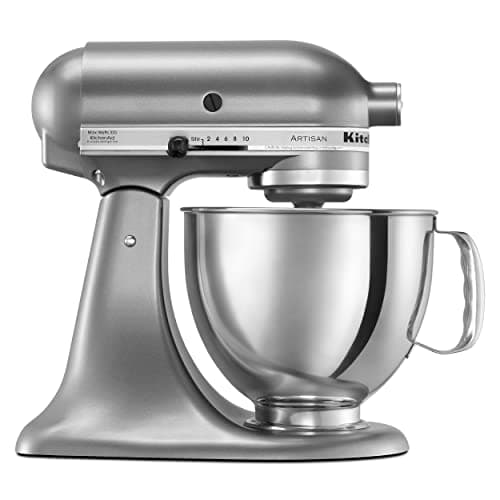
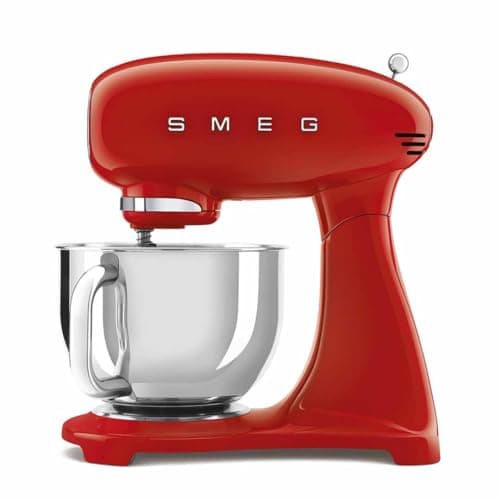
This is a comparison between two philosophies more than two machines. The SMEG SMF03 is a design object first — a die-cast, retro-styled mixer built to be the best-looking thing on your counter. The KitchenAid Artisan is the default for a reason: a mature, versatile 5-quart workhorse with the deepest attachment ecosystem in the category. Both make good cake, cookies and whipped cream. The honest differences are in build, in dough, in what you can bolt on, and in price.

On design and build, the SMEG wins, and it is not particularly close. Its die-cast aluminum body and heavy base feel more substantial than the KitchenAid, and the 50s-retro styling and color range are the reason people buy it. The KitchenAid is an icon in its own right and comes in plenty of colors, but it is a more workmanlike object. If the mixer's presence on the counter is part of the purchase, the SMEG is the more special thing to own.

On dough performance and value, the KitchenAid wins. Despite the SMEG's higher 800-watt rating, reviewers consistently find it can bog down on stiff, enriched dough and big meringues, while the Artisan's 5-quart planetary action handles the everyday range reliably — and the Artisan does it for meaningfully less money. Wattage is a poor proxy for kneading torque, as our wattage-to-dough guideexplains, and the SMEG's number does not translate into class-leading dough handling.

Attachments are the KitchenAid's decisive edge. The front PowerHub turns the Artisan into a platform — pasta rollers, grinders, spiralizers, ice-cream bowls — that nothing in the SMEG world matches in the US. If you might ever want your mixer to do more than mix, the KitchenAid is the one that grows with you; the SMEG largely is what it is out of the box (albeit a well-equipped box, with a flex-edge beater included). Our attachments guide covers what that ecosystem is actually worth.

The rule: buy the SMEG if the look and feel of the mixer genuinely matter to you, you bake mostly cakes, cookies and the occasional loaf, and you are happy to pay a premium for design and build. Buy the KitchenAid Artisan if you want the most capable, expandable, best-value everyday mixer and the styling is secondary. Read our full SMEG review and KitchenAid Artisan review for the detail behind each.

The short answer

Quick picks

#ProductBest forScorePrice
01
SMEG SMEG 50s-Style Stand Mixer (SMF03)
SMEG 50s-Style Stand Mixer (SMF03)

The design-first stand mixer. SMEG's die-cast body and retro colorways make it the best-looking mixer on most counters, and the build genuinely feels premium. On paper it has an 800-watt motor and a full attachment set — but reviewers consistently note it can lag a KitchenAid or Bosch on stiff, enriched dough, and you pay a steep premium for the styling.

Design-led kitchens
7.8
$599.95Amazon
02
KitchenAid KitchenAid Artisan 5-Qt Tilt-Head (KSM150)
KitchenAid Artisan 5-Qt Tilt-Head (KSM150)

The default for a reason: 5-qt tilt-head, a mature attachment ecosystem, and enough motor for a couple of loaves a week. Not the mixer for daily heavy dough — but that's a small slice of home bakers.

Most home bakers
8.4
$495.00Amazon

#ad · Live prices from the Amazon Product API, as of Aug 5, 2026. Where we have no verified live price we show none — a gap beats a number that has rotted.

In detail

The picks, in full

01
SMEG SMEG 50s-Style Stand Mixer (SMF03)

Design-led kitchens

SMEG 50s-Style Stand Mixer (SMF03)

800 W rated~5-qt bowl10 speedsTilt-head4 attachments incl. flex edge
7.8/10

The design-first stand mixer. SMEG's die-cast body and retro colorways make it the best-looking mixer on most counters, and the build genuinely feels premium. On paper it has an 800-watt motor and a full attachment set — but reviewers consistently note it can lag a KitchenAid or Bosch on stiff, enriched dough, and you pay a steep premium for the styling.

Motor / dough
7.5
Capacity
8
Build & durability
9
Ease of use
8
Value
6.5

Pros

  • Die-cast aluminum body and zinc base feel more premium than most rivals
  • Comes with four attachments, including a flex-edge beater, plus a dishwasher-safe stainless bowl
  • Iconic 50s-retro styling in a wide range of colors, and runs relatively quietly

Cons

  • Reviewers report the 800 W motor can struggle on stiff, enriched dough and big meringues
  • Heavy (~20 lb) and priced well above better-performing mixers
  • Owners note frequent bowl-scraping and a fiddly pouring shield

Don't buy this if…

you're buying on kneading power per dollar — a Bosch Universal Plus or a KitchenAid bowl-lift out-muscles it for less, and you're paying here largely for the look.

$599.95View on Amazon

Price as of Aug 5, 2026. Prices change — Amazon's at checkout is the one that counts.

#ad · we may earn a commission from this link to SMEG 50s-Style Stand Mixer (SMF03)

02
KitchenAid KitchenAid Artisan 5-Qt Tilt-Head (KSM150)

Most home bakers

KitchenAid Artisan 5-Qt Tilt-Head (KSM150)

325 W rated5-qt bowl10 speedsTilt-headPowerHub port
8.4/10

The default for a reason: 5-qt tilt-head, a mature attachment ecosystem, and enough motor for a couple of loaves a week. Not the mixer for daily heavy dough — but that's a small slice of home bakers.

Motor / dough
8
Capacity
8
Build & durability
8.5
Ease of use
9
Value
8.5

Pros

  • Huge attachment ecosystem (grinder, pasta, ice cream) via the front PowerHub
  • 5-qt bowl handles roughly a double batch of cookie dough or 2 loaves of bread dough
  • Holds resale value and parts availability better than any rival brand

Cons

  • Tilt-head flex shows on very stiff, low-hydration dough
  • 325 W rated motor is mid-pack — it will bog if you knead dense dough daily

Don't buy this if…

you knead stiff bagel or heavy rye dough every day — a bowl-lift or a Bosch has the motor headroom you'll keep asking for.

$495.00View on Amazon

Price as of Aug 5, 2026. Prices change — Amazon's at checkout is the one that counts.

#ad · we may earn a commission from this link to KitchenAid Artisan 5-Qt Tilt-Head (KSM150)

Choosing between the SMEG and the KitchenAid

Buy the SMEG if…

The mixer's design is part of why you want it, you value a premium die-cast build, and your baking is everyday rather than heavy bread work. You are paying more for looks and feel, and with the SMEG you get more of both than anyone else offers. Just go in knowing it is not the strongest dough machine for the money.

Buy the KitchenAid Artisan if…

You want the most capable and expandable everyday mixer, the best value of the two, and the option to add pasta rollers, grinders and the rest over time. It is the safer all-round buy for most bakers, and the one to pick if performance and versatility outrank styling. If you bake a lot of bread, our bread-dough roundup points at even stronger options.

The deciding question

Ask yourself: am I buying a beautiful object that also bakes, or the most useful machine that also happens to look fine? Answer honestly and the choice makes itself. There is no wrong answer — only a mismatch if you buy the SMEG expecting a workhorse, or the KitchenAid expecting a showpiece.
How we picked

We don't run a testing lab

We read the manuals, compiled the published specifications, did the wattage-to-dough math and weighed aggregated owner reviews, then scored each product against a published rubric. The scores are judgments from documented research — they are notmeasurements we took, because we do not have a lab and we're not going to pretend we do. Every spec is the manufacturer's published figure, cited in Sources.

Questions

Frequently asked

Is SMEG or KitchenAid better for baking?
For everyday baking both are capable, but the KitchenAid Artisan handles dough more reliably and offers a far deeper attachment ecosystem for less money. The SMEG wins on design and build quality. Choose the KitchenAid for performance and value, the SMEG for looks and feel.
Why is the SMEG mixer more expensive than a KitchenAid?
You're paying for the SMEG's die-cast build and retro design rather than extra performance. It's priced above the KitchenAid Artisan, which out-performs it on dough and offers more attachments — so the premium buys aesthetics and build, not baking power.
Does the SMEG take the same attachments as a KitchenAid?
No. KitchenAid's front PowerHub accepts a wide range of first-party attachments — pasta rollers, grinders, spiralizers and more — that the SMEG doesn't match in the US. The SMEG comes well-equipped out of the box but isn't the platform KitchenAid is.

Keep reading

Receipts

Sources

We don't run a testing lab, and we don't pretend to. Specs are the manufacturer's published figures, cited above; scores are our judgments from that research. Where we couldn't verify something, we say so on the page rather than quietly leaving it out. Read our full method.