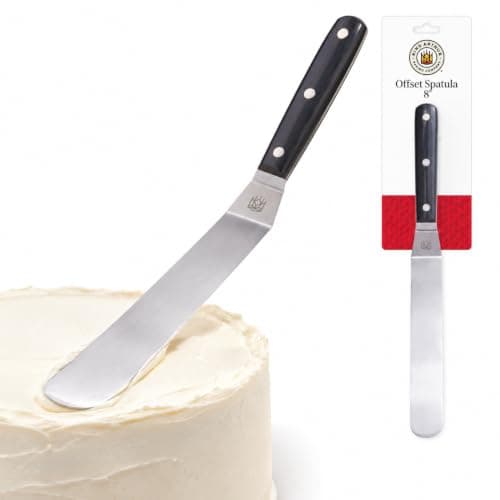
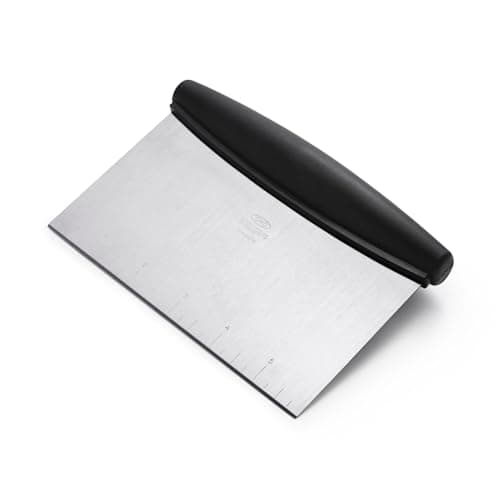
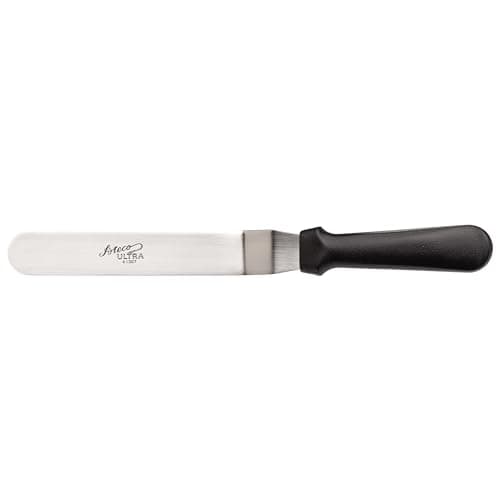
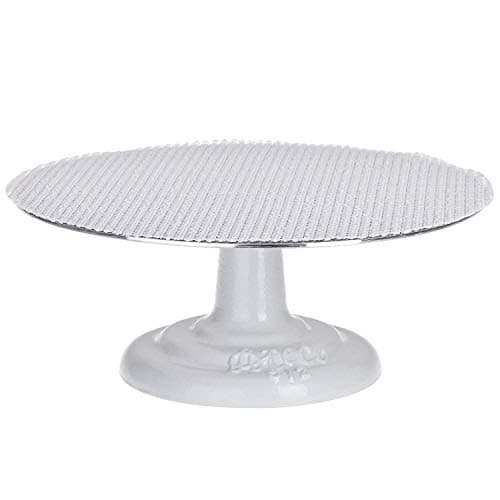
Buy the Ateco 12-inch revolving cake stand first, and if you only ever buy one decorating tool make it this. A cast-iron base and a 12-inch aluminum top are what let you hold a spatula completely still and spin the cake underneath it — which is the entire technique behind a smooth side, and something no amount of spatula skill replaces. Second, one good offset spatula: the King Arthur 8-inch, a flexible Japanese-stainless blade with a rounded tip, which is the right single size for layer cakes. Third, a straight edge for the sides, and the OXO Good Grips Scraper & Chopper does it for a fraction of a dedicated icing smoother. The budget pick is the Ateco Ultra 7.75-inch offset spatula— the cheapest tool on this page and the best price per inch of blade here, which is where to start if the budget is tight. Live prices for all six are in the Quick picks table with the date they were fetched.
Why it is three tools, not thirty
Walk into any kitchen store and the cake decorating aisle is a wall of kits: forty piping tips, eight couplers, a dozen plastic combs and a flower nail. Almost none of that changes whether a cake looks finished. Three things do, and they do it in this order.
1. A turntable, because the cake should move and the tool should not. This is the single biggest step change in how a decorated cake looks, and it is the one most people skip. The reason is simple geometry: a human arm sweeping around a stationary cake travels an arc of varying pressure and leaves ridges. A hand held still against a spinning cake applies constant pressure for a full revolution, which is what produces a smooth surface. You are not buying a convenience; you are buying the only technique that works.
2. An offset spatula, because the bend keeps your knuckles out of the frosting. An offset blade steps down from the handle, so the blade can lie flat on a cake top while your hand stays above the rim. A straight knife forces you to come in at an angle, which is why the frosting ends up with a dragged edge. The bend is the whole product.
3. A straight edge, because flat sides are a different job from a flat top. Sides get smoothed by holding a tall, rigid, perfectly straight edge vertically against the cake and spinning the turntable once. A flexible spatula cannot do it — it follows the bumps instead of cutting them off. A bench scraper is stiff, flat and tall, which is exactly the geometry required, and costs a fraction of something sold as an icing smoother.
That is it. Everything else in a decorating kit is for a specific decorative effect you may or may not want, and none of it rescues a cake that was frosted without those three.
The criteria we ranked on
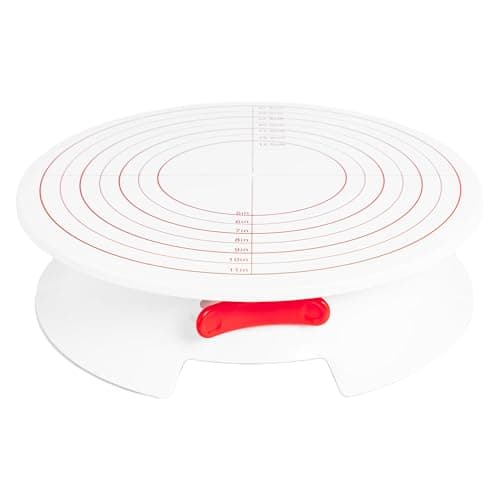
Turntables: mass and top diameter.A light turntable walks across the counter when you press on it, which ruins the one thing you bought it for. The Ateco pick publishes a cast iron base, a 12-inch aluminum top, 1/8 in top thickness and a retailer-published 200 lb load rating. The Fat Daddio's TT-123B is ABS plastic with a locking brake and a printed inch-and-centimeter guide on the top — lighter, cheaper, and the brake is a genuinely useful feature the heavy one does not have.
Spatulas: blade length, flex and tip shape.Blade length should roughly match the radius of what you decorate, which for an 8 or 9-inch layer cake means a blade in the 7-to-9-inch range — all three spatulas here sit in or near it. Flex matters more than people expect: a stiff blade pushes frosting around, a flexible one follows the surface and leaves it smooth. A rounded tip, which King Arthur publishes, is what stops you digging a corner into the crumb.
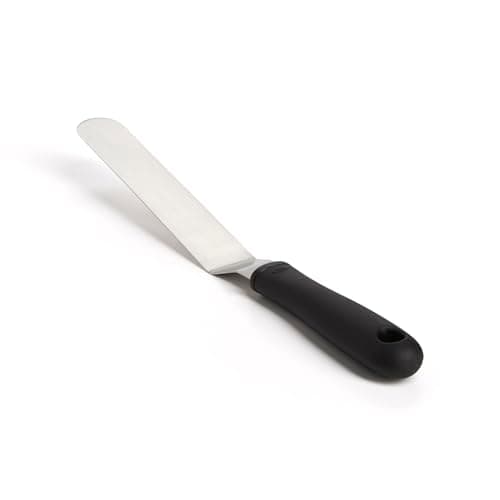
Handles, because a decorating session is long.This is the OXO bent icing spatula's case: a soft non-slip handle, which over an hour of frosting is not a luxury. The Ateco Ultra's polypropylene handle is the cheapest and the hardest work.
What is published and what is not.Neither OXO tool publishes a blade dimension, which is annoying for a page built on specs, and we say so in the table rather than estimating one. Both publish a dishwasher rating. The Ateco turntable's height and load figures come from a named retailer rather than Ateco, and are labeled that way.
The six tools on published specs
| Tool | Job | Published size | Material | Care |
|---|
| Ateco revolving cake stand, 12 in | Spin the cake | 12 in top, 1/8 in thick; approx. 5 in tall (retailer) | Aluminum top, cast iron base | Do not immerse in water |
| King Arthur offset spatula, 8 in | Top and crumb coat | 8 in blade; 12.52 x 1.14 x 2.2 in overall | Japanese stainless, extra flexible, rounded tip | Dishwasher safe |
| OXO Good Grips Scraper & Chopper | Flat sides | Not published; 1 in markings on the blade | Stainless blade, soft non-slip grip | Dishwasher safe |
| Fat Daddio's TT-123B revolving stand | Spin the cake, on a budget | 12 x 3.2 in (published) | ABS plastic, locking brake | Hand wash |
| OXO Good Grips bent icing spatula | Long sessions | Not published | Flexible stainless, bent offset, soft handle | Dishwasher safe |
| Ateco Ultra offset spatula, 7.75 in | A first offset spatula | 7.75 x 1.25 in blade | Taper-ground stainless, polypropylene handle | Dishwasher safe |
How to actually use them
Crumb coat, chill, then frost
The step that separates a clean cake from a crumby one costs nothing. Spread a thin, deliberately scruffy layer of frosting over the whole cake with the offset spatula, pushing crumbs into it rather than fighting them, then refrigerate for twenty minutes until it firms. The final coat then goes on over a sealed surface and stays clean. Nobody who skips this gets a smooth cake, whatever tools they own.
Hold still, spin the cake
For the sides: load more frosting than you need, hold the bench scraper vertically against the side with its edge just touching the cake, brace your wrist against the counter, and turn the turntable one full revolution with the other hand. Do not move the scraper. Scrape the excess off into the bowl and repeat. Two or three revolutions is a smooth side. For the top: lay the offset spatula flat, barely touching, and spin again.
Warm the blade for the final pass
Dip the spatula in hot water and wipe it dry before the last pass over the top. A warm blade melts the surface of the buttercream a fraction and leaves a finish you cannot get any other way. Dry it properly — water in buttercream makes it dull and streaky.
Buy the turntable before the piping tips
If you are deciding between a turntable and a kit of tips, buy the turntable. Piping tips make decorations; a turntable makes the cake underneath them look finished, and a beautifully piped border on a lumpy cake still reads as a lumpy cake.
What we did not feature, and why
Piping bags, tips and couplers are the largest category in cake decorating and none are in our registry, so there is nothing we can honestly rank. They are also a second-stage purchase: tips add decoration to a finished cake rather than making a cake look finished. We would rather tell you that than fill a slot.
Plastic icing smoothers and side scrapers are sold for exactly the job our bench scraper pick does and are usually flexible enough to follow bumps rather than cut them, which defeats the purpose. A stiff stainless bench scraper is the better tool at a similar price, and the best bench scrapers ranks the category.
Decorating combs, stencils and fondant tools are for specific effects rather than general finish, and recommending them to someone asking what decorating tools to buy would be answering a different question.
Cake levellers with a wire frame work, and so does a long serrated knife and a turntable, which most people already have after reading this page. We have not ranked one because none is in the registry.