Skip to content
Plug & Prep

Hub 03 · Bread Machines · Bread Machines

The best bread machines under $200

Two hundred dollars buys a machine that makes a genuinely good loaf. What it does not buy is a horizontal pan, a second kneading paddle or a twenty-year motor - and it is worth knowing which of those you will miss.

By Stephen V.Updated How we pick
#ad

We earn a commission when you buy through our Amazon links, at no extra cost to you. It never changes our rankings, and we say so when the cheaper product is the better buy. How this works.

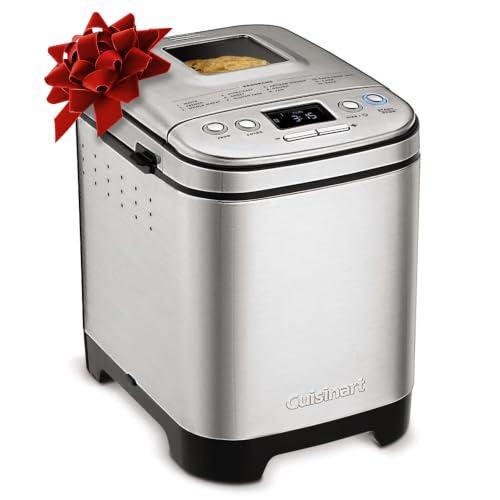
Buy the Cuisinart CBK-110. It makes the best loaf of the three machines in this band, it has the most genuinely useful cycle list — including a dough-only cycle that turns it into a dough mixer for pizza and rolls — and Cuisinart's documentation is the best written in the category, which matters more than it sounds when you are converting your own recipes. The Hamilton Beach 29882 is the one to buy if you want the biggest loaf and the simplest machine: fewer options, a 2-pound capacity, and nothing to learn. The budget pick is the KBS 17-in-1, and it brings one feature neither of the others has at any price in this band: an automatic fruit-and-nut dispenser that drops add-ins at the right point in the cycle so they do not get pulverised by the paddle. Every price on this page came from our last refresh and is stamped with its as-of date in the table above.

What $200 buys, and what it does not

The useful thing about a band page is that it tells you what sits on the other side of the line. Here it is, plainly.

What you get under $200: a machine that mixes, kneads, proves and bakes a 1.5 to 2-pound loaf unattended; a delay timer so you can wake up to bread; a crust-colour setting; a selection of cycles including whole wheat and usually a gluten-free and a dough-only cycle; and a removable nonstick pan. That is the entire core function of a bread machine, and none of it is compromised at this price. A loaf from the Cuisinart is a good loaf.

What you do not get:

A horizontal pan with two paddles. This is the biggest single difference and it is the thing a premium machine is really selling. Machines in this band use a tall, narrow vertical pan with one paddle, so the loaf comes out as a tall tower rather than a conventional rectangular sandwich loaf, and the single paddle leaves one larger hole in the base. The Zojirushi Virtuoso Plus and the Breville Custom Loaf use a horizontal pan with two paddles and produce a loaf shaped like a loaf. If you want sandwich slices, that is what you are paying the extra for. Our best bread machines for sandwich bread page covers the shape question properly.

A heater in the lid. Premium machines heat from above as well as below, which browns the top crust. Machines in this band brown the sides and base well and leave the top pale. It is cosmetic, and it is also the first thing people notice.

Programmable custom cycles. You get a fixed menu of cycles rather than the ability to define your own knead, rise and bake times. That is the one genuine functional limitation for anyone pursuing a specific bread — sourdough in particular, which needs long rises a fixed menu will not give you. Our programmable bread machine page explains which machines allow it and why it matters.

A twenty-year motor. This is unfalsifiable from published specs and we are not going to pretend otherwise, but the mechanical difference between a machine at this price and a Zojirushi is real: heavier gearing, a better-sealed shaft, a more substantial pan. If you bake three loaves a week for a decade, that is the argument for spending more.

How to choose between the three

Choose the Cuisinart if you want the best bread. Three loaf sizes, a dough-only cycle, a well-documented cycle list and the most predictable results. It is also the machine that most rewards learning to convert recipes, which our recipe conversion guide covers. Full detail in our Cuisinart CBK-110 review.

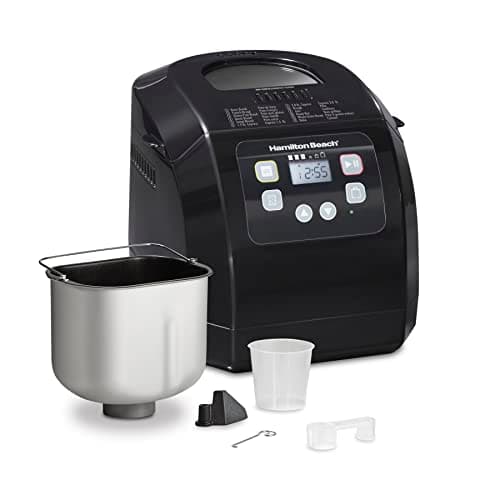
Choose the Hamilton Beach if you want the biggest loaf and the least to think about. A 2-pound capacity suits a household that eats bread rather than a household that makes bread as a project, and the control panel is the simplest here. See our Hamilton Beach 29882 review.

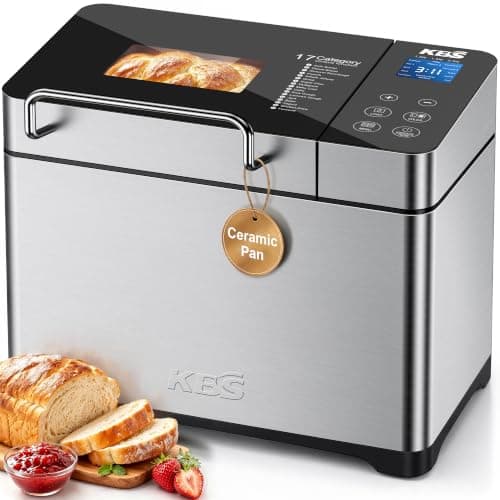
Choose the KBS if you put things in your bread. The automatic dispenser is genuinely useful: raisins, walnuts and seeds added at the start of a cycle get chopped to dust by the kneading paddle, and the standard workaround is standing by the machine waiting for the beep. The dispenser removes that. It is also the cheapest machine here. See our KBS bread machine review, and how to add fruit and nuts to a bread machine for the manual method.

The honest caveat about cycle counts

The KBS is marketed as 17-in-1 and machines in this part of the market compete on that number. Treat it as a feature list, not a quality signal.

Most of what a long cycle list contains is a variation on time and temperature: a yogurt cycle, a jam cycle, a cake cycle, several bread cycles that differ by a few minutes of rising. They are not fake — a jam cycle really does make jam, and our jam guide uses it — but a machine with nine well-chosen cycles is not worse than one with seventeen. The cycles that actually matter are basic white, whole wheat, dough-only, and a crust-colour control. Our cycles explained page goes through what each one does.

What matters more than the cycle count, and is harder to find on a spec sheet, is whether the manual tells you the length of each cycle stage. That is what lets you work out whether your recipe will fit, and it is one of the places the Cuisinart documentation is better than its rivals.

Is a machine in this band worth buying at all?

Yes, with one condition: buy it because you want unattended bread on a schedule, not because you want the best possible loaf. A stand mixer plus an oven makes a better loaf than any bread machine at any price, and a Dutch oven makes a crust a bread machine cannot. What a bread machine does that neither can is take four ingredients at nine at night and hand you a warm loaf at seven in the morning with no further involvement.

If that is the thing you want, this band buys it. We argue the whole question in are bread machines worth it and bread machine vs stand mixer.

The short answer

Quick picks

#ProductBest forScorePrice
01
Cuisinart Cuisinart Automatic Bread Maker (CBK-110)
Cuisinart Automatic Bread Maker (CBK-110)

The sensible middle. Twelve programs, three crust shades and three loaf sizes in a compact vertical footprint. Not as even a baker as the Zojirushi, but a big step down in price and shelf space.

Compact all-rounder
8.3
$106.79Amazon
02
Hamilton Beach Hamilton Beach Bread Maker (29882)
Hamilton Beach Bread Maker (29882)

The beginner's machine. Twelve programs including gluten-free, an express bake and two loaf sizes, at a price that makes trying bread-baking low-risk. It's basic, and that's the point.

Best for beginners
8.0
$109.95Amazon
03
KBS KBS Bread Machine (17-in-1)
KBS Bread Machine (17-in-1)

The value-loaded option. Seventeen programs, a fruit-and-nut dispenser and a stainless body at a mid-range price. Fit and finish aren't premium, but you get a lot of machine for the money.

Most features for the money
8.0
$129.19Amazon

#ad · Live prices from the Amazon Product API, as of November 22, 2026. Where we have no verified live price we show none — a gap beats a number that has rotted.

In detail

The picks, in full

01
Cuisinart Cuisinart Automatic Bread Maker (CBK-110)

Compact all-rounder

Cuisinart Automatic Bread Maker (CBK-110)

Up to 2-lb loaf12 programs3 crust shadesVertical pan13-hr delay
8.3/10

The sensible middle. Twelve programs, three crust shades and three loaf sizes in a compact vertical footprint. Not as even a baker as the Zojirushi, but a big step down in price and shelf space.

Loaf quality
8
Ease of use
8.5
Crust & settings
8
Build & footprint
8.5
Value
8.5

Pros

  • Compact vertical build fits under most cabinets
  • 12 programs cover gluten-free, sweet and low-carb
  • 13-hour delay timer for fresh bread on waking

Cons

  • Single paddle makes a tall, square loaf
  • Crust browning is less even than dual-heater machines

Don't buy this if…

…you want the most even crust and a standard loaf shape — that's the Zojirushi's job.

$106.79View on Amazon

$169.9537% off

Price as of November 22, 2026. Prices change — Amazon's at checkout is the one that counts.

#ad · we may earn a commission from this link to Cuisinart Automatic Bread Maker (CBK-110)

02
Hamilton Beach Hamilton Beach Bread Maker (29882)

Best for beginners

Hamilton Beach Bread Maker (29882)

Up to 2-lb loaf12 programsExpress bakeGluten-free cycleBudget price
8.0/10

The beginner's machine. Twelve programs including gluten-free, an express bake and two loaf sizes, at a price that makes trying bread-baking low-risk. It's basic, and that's the point.

Loaf quality
7
Ease of use
9
Crust & settings
7
Build & footprint
8
Value
9

Pros

  • One of the cheapest ways to start baking bread
  • Express cycle bakes a loaf in well under two hours
  • Simple button set — nothing to overthink

Cons

  • Thin pan and single paddle; crust control is limited
  • Louder kneading than pricier machines

Don't buy this if…

…you already know you'll bake weekly and want great crust — you'll out-grow it quickly.

$109.95View on Amazon

Price as of November 22, 2026. Prices change — Amazon's at checkout is the one that counts.

#ad · we may earn a commission from this link to Hamilton Beach Bread Maker (29882)

03
KBS KBS Bread Machine (17-in-1)

Most features for the money

KBS Bread Machine (17-in-1)

Up to 2-lb loaf17 programsFruit/nut dispenserGluten-freeStainless body
8.0/10

The value-loaded option. Seventeen programs, a fruit-and-nut dispenser and a stainless body at a mid-range price. Fit and finish aren't premium, but you get a lot of machine for the money.

Loaf quality
7.5
Ease of use
8
Crust & settings
8
Build & footprint
7.5
Value
9

Pros

  • Automatic fruit-and-nut dispenser at a mid-range price
  • Wide program range including yogurt and jam
  • Viewing window and interior light

Cons

  • Long-term durability record is shorter than the big brands
  • Manual translation is rough in places

Don't buy this if…

…you want the most proven long-term reliability — the established Japanese and US brands have the track record.

$129.19View on Amazon

$159.9919% off

Price as of November 22, 2026. Prices change — Amazon's at checkout is the one that counts.

#ad · we may earn a commission from this link to KBS Bread Machine (17-in-1)

How to buy and use a sub-$200 bread machine

Decide about loaf shape before you decide about price

This is the one decision the band genuinely forces. Under $200 you get a tall vertical loaf from a narrow pan with one paddle. If you specifically want rectangular sandwich slices, no amount of shopping inside this band will get you there, and you should either spend more or use the dough-only cycle and bake in a loaf pan in your oven.

Weigh the flour, even here

Bread machines are less forgiving than hands, because nothing adjusts mid-cycle. A cup of flour can vary by ten grams depending on how it was scooped, and in a fixed-time machine cycle that shows up as a dense or a collapsed loaf. A kitchen scale is the cheapest upgrade to any bread machine, and measuring flour by weight has the conversions.

Add the ingredients in the order the manual says

Usually liquids first, then flour, then yeast in a well on top, kept away from the salt and the water until the machine starts mixing. This is not fussiness: yeast that sits in salty water for an hour on a delay timer is dead yeast, and that is the single most common cause of a loaf that did not rise. See why didn't my loaf rise.

Use the delay timer, but not with dairy or eggs

The timer is the main reason to own one of these, and it is safe with flour, water, salt, sugar, oil and yeast. It is not safe with milk, butter, eggs or anything else that should not sit at room temperature for eight hours. Our delay timer guide covers which recipes can take it.

Take the loaf out as soon as it finishes

Leaving bread in the hot pan steams the crust soft and makes the base soggy, and the keep-warm cycle will dry the loaf out if left for hours. Turn it out onto a cooling rack straight away and let it cool properly before slicing — and pull the paddle out of the base while the loaf is still warm, which is much easier than later. See why is the paddle stuck in my bread.

Never put the pan in the dishwasher

The pan has a nonstick coating and a sealed shaft bearing in the base, and a dishwasher attacks both. Warm soapy water, a soft cloth, and no soaking — water that gets into the shaft seal is what eventually makes a pan leak and seize. Our cleaning guide has the routine.
How we picked

We don't run a testing lab

We read the manuals, compiled the published specifications, did the wattage-to-dough math and weighed aggregated owner reviews, then scored each product against a published rubric. The scores are judgments from documented research — they are not measurements we took, because we do not have a lab and we're not going to pretend we do. Every spec is the manufacturer's published figure, cited in Sources.

Questions

Frequently asked

Is a bread machine under $200 good enough?
For unattended bread on a schedule, yes. Under $200 you get mixing, kneading, proving and baking of a 1.5 to 2-pound loaf, a delay timer, crust colour control and a useful cycle list - the whole core function, uncompromised. What you give up is the loaf shape, because machines in this band use a tall vertical pan with a single paddle, a browned top crust, and the ability to program custom cycle times.
What is the difference between a $150 bread machine and a $450 one?
Mainly the pan and the heating. Premium machines use a horizontal pan with two kneading paddles, which produces a conventionally shaped sandwich loaf and mixes more evenly, and they heat from the lid as well as the base so the top crust browns. They also allow fully programmable cycle times, which matters for sourdough and for anything needing a long rise, and the gearing and seals are built for years of daily use. The loaf from a good sub-$200 machine is still a good loaf.
Why is my bread machine loaf a tall tower instead of a sandwich loaf?
Because the pan is vertical. Machines in this band use a tall narrow pan with one paddle in the base, so the dough rises upward into a tower shape and the slices are square-ish and small. Nothing is wrong with the machine. If you want rectangular sandwich slices, you need a machine with a horizontal pan and two paddles, or you can use the dough-only cycle and bake the dough in a conventional loaf pan in your oven.
Does a 17-in-1 bread machine do more than a 9-cycle one?
On paper. Most of what a long cycle list adds is a variation on time and temperature - several bread cycles that differ by a few minutes of rising, plus yogurt, jam and cake cycles. Those work, but a machine with nine well-chosen cycles is not worse than one with seventeen. The cycles that matter are basic white, whole wheat, dough-only and a crust-colour control; what matters more is whether the manual publishes the length of each cycle stage, which is what lets you fit your own recipe to it.
Can you make sourdough in a bread machine under $200?
Not a real one. Sourdough needs rise times measured in hours and judged by how the dough looks, and a fixed-menu machine gives you a cycle measured in minutes on a timer. What works is using the machine as a mixer and prover — the dough-only cycle — and then shaping and baking in your oven, which is the approach our bread machine sourdough guide takes. Machines with fully programmable custom cycles get closer, and those sit above this band.

Keep reading

More in this category

More bread machines

All bread machines →

Receipts

Sources

We don't run a testing lab, and we don't pretend to. Specs are the manufacturer's published figures, cited above; scores are our judgments from that research. Where we couldn't verify something, we say so on the page rather than quietly leaving it out. Read our full method.