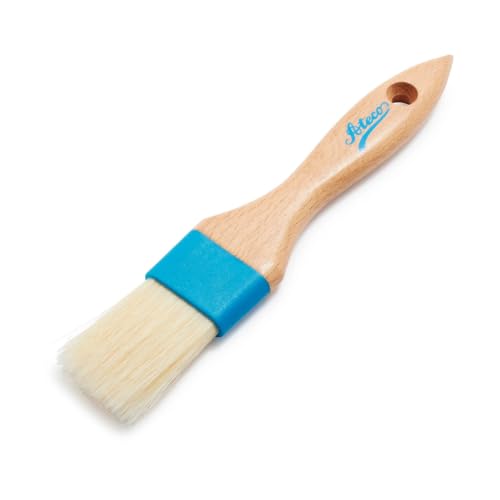
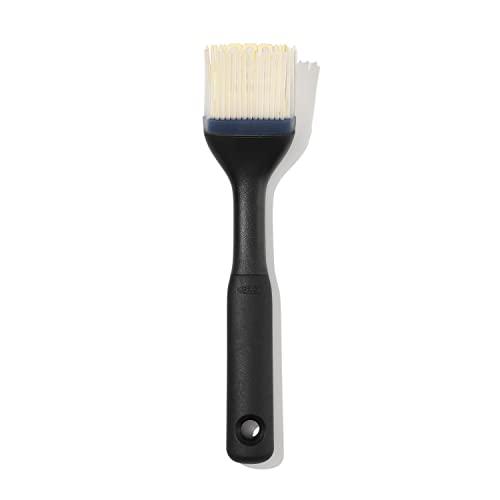
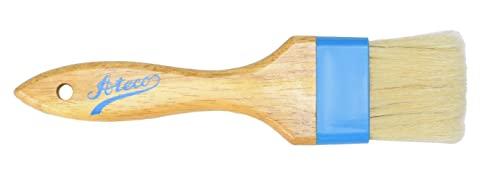
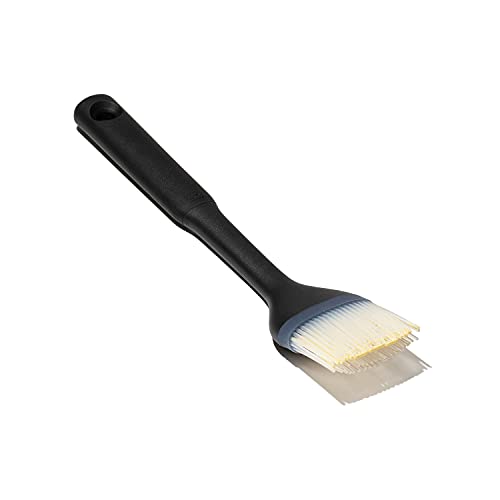
Buy the large OXO Good Grips silicone basting and pastry brush if you want one brush. Silicone cannot shed a bristle into your pie crust, it is dishwasher safe, and OXO publishes that its bristle design does not retain odors — which is the other way pastry brushes die, as the brush that smells of last month's garlic butter. But if the job you care about is a thin, even egg wash on enriched dough, croissants or a pie lattice, the Ateco 1.5-inch natural boar bristle brush is genuinely better at it and costs about the same: natural bristles hold liquid between the hairs and release it as a film, where silicone pushes it around in a thick coat. The small OXO is the detail brush for muffin wells and ramekins, and the budget pick is the Ateco 2-inch — the cheapest brush here, and the one to grab for a tray of rolls or for dusting flour off a bench.
The material is the decision
Everything else about a pastry brush is a detail. The material determines what it is good at, and the two options genuinely trade against each other.
Natural boar bristle is what bakeries use, and the reason is capillary action: liquid sits between the hairs and gets drawn out as the brush drags, giving a thin, even film. That is exactly what you want from an egg wash, where too much liquid pools in the seams, bakes into a shiny scab and runs down the side of the loaf. The costs are real. Natural bristles can shed, which is unpleasant in a finished tart. They must be hand washed and dried bristles-down, because water sitting in the ferrule rots the glue. And they should stay away from hot fat and anything approaching a grill.
Silicone fixes the two things people hate. It cannot shed, and it washes in a dishwasher, which means it is the brush you will actually use on raw-egg jobs without worrying about what is living in the ferrule. It also handles heat far better, so it is the brush for basting something in a pan. The cost is precision: silicone bristles do not hold liquid between them, so they carry a bead of wash and lay it down thickly. On a pie top that is fine. On a delicate croissant it is visibly worse.
If you can own two, own one of each, which is why this page ranks two of each in two sizes rather than pretending there is a single winner.
The criteria
1. Head width, matched to what you brush. A 1.5-inch head is the all-rounder: wide enough to wash a loaf or a pie top without twenty passes, narrow enough to follow a lattice or the rim of a tart. A 2-inch head is for volume — a tray of rolls, a sheet of pastry, a whole bench. The small OXO at 7.6 inches overall is for places a wide brush cannot go: inside a muffin well, a ramekin, the corner of a loaf pan.
2. The ferrule. The metal or composite band that holds the bristles is where a brush fails. A cheap crimped metal band rusts and lets go; both Ateco picks here publish a composite ferrule, which does not. On a silicone brush the equivalent question is whether the head is moulded into the handle or clipped on, and the OXO brushes are moulded.
3. Handle length. The large OXO is 10.8 inches overall, and the reason that matters is not pastry — it is reaching into a hot oven or over a pan without putting your knuckles in it. The 7.6-inch small OXO is the opposite trade: more control, less clearance.
4. Whether you will keep it clean. This is the quiet one. A pastry brush handles raw egg and melted butter, and both go rancid in a ferrule. If you know you will not hand wash and air-dry a natural brush properly, buy silicone and put it in the dishwasher — a clean silicone brush beats a neglected boar bristle one every time.
What a pastry brush is for, beyond egg wash
More than people use it for, and most of the extra jobs want a brush you do not mind getting floury.
Greasing pans. Melted butter brushed into the corners of a loaf or bundt pan gets into the detail that a paper towel cannot — see greasing and lining a loaf pan.
Sugar syrup on cake layers. A light brush of simple syrup is the standard fix for a layer cake that will sit overnight, and it is a job where a thick silicone coat actually helps.
Dry work. A clean dry brush dusts excess flour off shaped dough before it proves, sweeps crumbs off a cake before icing it with an offset spatula, and cleans the screen of a flour sifter. Keep a cheap wide brush for this and never put it near liquid.
Washing down the sides of a sugar pan. A wet brush around the inside of the pan dissolves the crystals that would otherwise seed the whole batch. This one genuinely needs natural bristles and water, not silicone.
How to choose and use a pastry brush
Own two: a silicone and a 1.5-inch boar bristle
Together they are about twenty-five dollars and they cover the whole category. Silicone for anything hot, anything greasy and anything you want in the dishwasher. Boar bristle for egg wash, glaze and sugar syrup, where the thinness of the coat is visible in the finished bake.
Brush an egg wash in one direction, and do not flood the seams
Load the brush, wipe most of it off on the rim of the bowl, and lay the wash down in single strokes in one direction. Pooled wash in a seam or a score line bakes into a dark glossy scab and can glue a lame cut shut — which undoes the work in our sourdough scoring guide. Two thin coats, the second after five minutes, beat one thick one.
Dry natural bristles bristles-down
Wash a boar bristle brush in warm soapy water, rinse, shake it out and stand or hang it so the bristles point down. Water that runs into the ferrule stays there, rots the adhesive and is what makes a brush start shedding. Never soak one, never put one in the dishwasher, and never leave one in the sink.
Replace a shedding brush, do not persevere
Once a natural brush starts losing hairs it will keep losing them, and finding one baked into a tart is worse than the twelve dollars. This is the argument for silicone as the everyday brush and natural bristle as the one you keep for jobs that need it.
Keep a dry brush separate
Label or set aside one wide cheap brush for dry work — flour dusting, crumb sweeping, cleaning a sifter screen. A brush that has had butter or egg through it is never properly dry again, and dragging butter residue across the top of shaped dough leaves marks.
Do not use silicone for sugar work
Washing down the walls of a caramel pan needs bristles that hold water, so that is a natural brush job. Silicone will take the heat happily and carry almost no water, which is the opposite of what the technique needs.